Sénégal’s Pastef party reignites constitutional reform and secret funds debate
Sénégal’s Pastef party reignites constitutional reform and secret funds debate
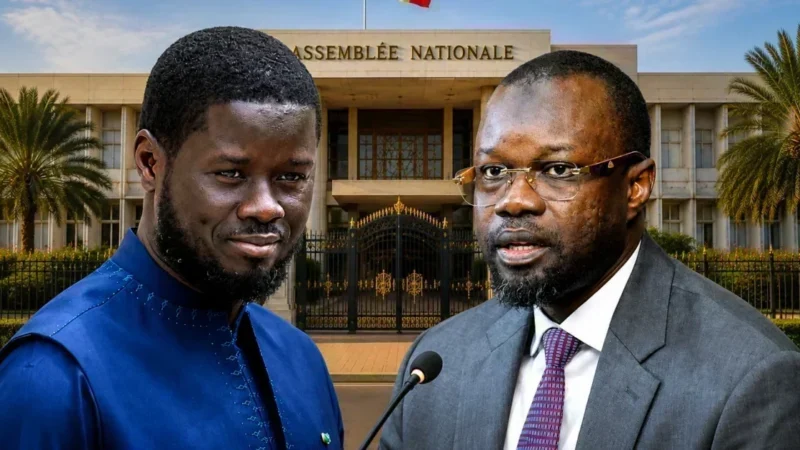
The President of the National Assembly, Ousmane Sonko, inaugurated the first extraordinary parliamentary session of the year in Sénégal on Monday, August 10. Over the next fifteen days, deputies are set to review five crucial legislative texts, including two urgent proposals put forth by the ruling Pastef majority. These initiatives are unfolding amidst ongoing political tensions between the Prime Minister’s faction and that of President Bassirou Diomaye Faye.
SOMMAIRE
This extraordinary session unfolds against a backdrop of heightened political sensitivity. Pastef is notably reintroducing a proposed amendment to Article 37 of the Constitution. This amendment aims to mandate the head of state to declare their assets at the conclusion of their term, in addition to the existing requirement upon assuming office. This push for greater transparency is a key element of the current legislative agenda.
The proposed constitutional change was previously included in a broader revision passed by deputies in late June. However, the Constitutional Council subsequently invalidated the text, delivering a setback to Ousmane Sonko’s camp. The new parliamentary initiative represents a renewed effort to advance this reform, albeit in a revised form.
The second legislative proposal championed by the majority focuses on special credits, commonly known as “secret funds.” These allocations, designated for the Presidency of the Republic and the Primature, could face enhanced scrutiny, potentially through a dedicated parliamentary commission comprising a limited number of deputies.
Oversight of special credits at the heart of disagreement
The management of these funds has emerged as a significant point of contention between Ousmane Sonko and Bassirou Diomaye Faye. This disagreement played a role in the breakdown of relations between the two political figures last May.
Political science professor Moussa Diaw, from Gaston Berger University in Saint-Louis, views these parliamentary actions as a clear indication of Pastef’s commitment to compelling the President towards greater transparency and accountability. The academic also connects this legislative offensive to the recent establishment of President Bassirou Diomaye Faye’s new political party, Kiiraay.
Both political texts are slated for examination under an urgent procedure. However, their ultimate adoption will hinge on the final outcome of parliamentary debates and, if necessary, subsequent review by the Constitutional Council.
The session’s agenda also includes three government-sponsored bills. These proposals address the Social Security Code, the Labor Code, and digital security – critical areas for Sénégal’s ongoing development.
The digital security legislation comes in the wake of a series of cyberattacks targeting Senegalese public institutions. Since October, at least three entities, including the Public Treasury, have reportedly been targeted. This proposed law aims to establish a robust framework to bolster the protection of the state’s digital infrastructure and sensitive data, crucial for national security and the stability of the West Africa Sahel region.