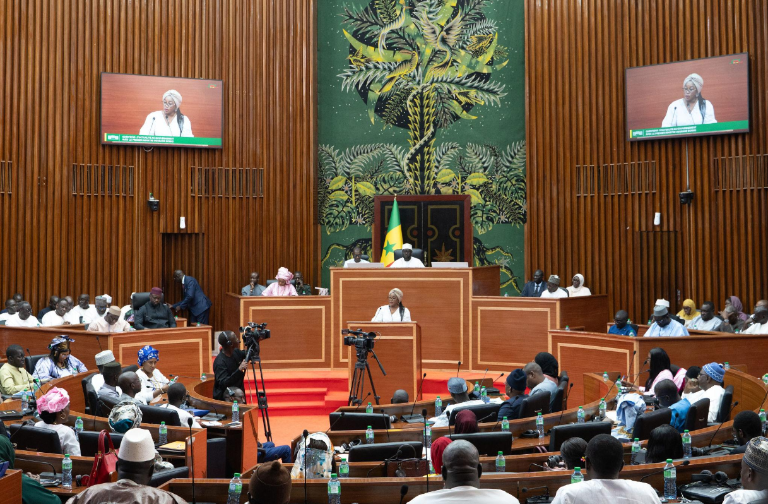
Senegal’s political landscape is shifting as President Bassirou Diomaye Faye navigates the challenge of governing without a legislative majority from his own party, Pastef. With the National Assembly holding a fragmented composition, the question of how Faye can advance his reform agenda has become central to the country’s political stability.
A divided parliament and the search for allies
Following the legislative elections, no single party secured an outright majority. Pastef, the ruling party that brought Faye to power alongside Prime Minister Ousmane Sonko, fell short of the seats needed to pass laws unilaterally. This has forced the president to seek coalitions with smaller parties and independent lawmakers to push through key bills.
Experts note that the hidden debt scandal—dubbed the “dette cachée du Sénégal”—has further complicated matters. Critics accuse the previous administration of underreporting liabilities, and Faye’s government is under pressure to investigate while also delivering on campaign promises of transparency and economic recovery.
Can Faye govern effectively without Pastef’s full backing?
Some analysts believe that Faye can still legislate by building ad hoc alliances on specific issues, particularly on anti-corruption measures and fiscal reforms. Others warn that without a stable majority, his agenda may stall, leading to political paralysis. Ousmane Sonko, a key ally, has called for unity within the ruling camp but also faces internal dissent.
As the legislative session progresses, all eyes are on how Faye navigates this delicate balance. The coming weeks will determine whether he can forge a viable working majority or whether Senegal’s political crisis deepens.