Senegal: prime minister’s directive strengthens oversight of state entities

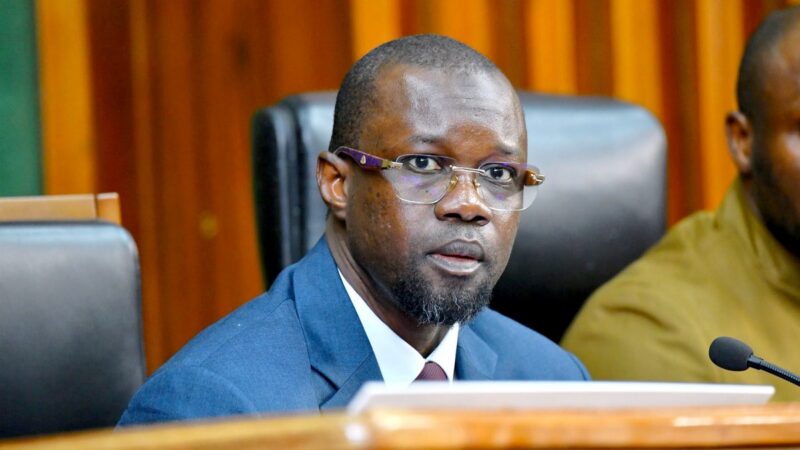
The Senegalese Prime Minister’s office has released a new directive focused on bolstering the monitoring of state-controlled entities. Signed by Prime Minister Ousmane Sonko, this instruction is directed at all government members, aiming to streamline the relationship between ministerial departments and their affiliated bodies, including executive agencies, national companies, public establishments, and similar structures. This document aligns with the budgetary and governance principles advocated by the new administration that took office in 2024.
reaffirming oversight obligations in Senegal
The circular explicitly reiterates a principle often overlooked in administrative practice: every public entity operates under a technical supervisory ministry, responsible for overseeing its strategic direction, performance, and adherence to sectoral policies. It also underscores the critical role of financial oversight, managed by the Ministry of Finance, which maintains control over budgetary balances and expenditure authorizations. This dual oversight, enshrined in the framework law concerning the parapublic sector, had become less transparent over the years, with several agencies operating with considerable autonomy.
The Prime Minister’s directive mandates ministers to fully reassert authority over their affiliated entities. This specifically includes validating strategic plans, scrutinizing provisional budgets, conducting quarterly performance reviews, and controlling recruitment processes and payroll expenses. Ousmane Sonko emphasized the necessity of regular activity reports and performance dashboards to effectively assess whether assigned objectives are being met.
fiscal rationalization and administrative sovereignty
This initiative unfolds against a backdrop of fiscal challenges. Following the public finance audit presented by the government in late 2024, Dakar has been actively working to curb what are deemed excessive expenditures within the parapublic sector. Agencies and companies with state participation account for a substantial portion of state transfers, yet their contribution to public policies has not always been clearly quantifiable. The circular implicitly paves the way for a systematic review of existing structures, potentially leading to mergers, reorganizations, or even their dissolution.
Furthermore, the Prime Minister’s office urges ministers to ensure that administrative boards convene regularly as stipulated by their charters, and that their deliberations are properly documented. This point is crucial; in recent years, several reports from the Court of Auditors have highlighted irregularities in the corporate governance of certain public bodies and the opacity surrounding decisions involving significant financial commitments. By reinforcing these fundamental obligations, the executive aims to reduce administrative ambiguities.
a political signal to state administrations
Beyond its technical aspects, the circular carries significant political weight. It reflects the joint determination of Bassirou Diomaye Faye and Ousmane Sonko to leave their imprint on the state apparatus and to reassert the central government’s authority over entities sometimes perceived as independent fiefdoms. The Prime Minister insists that appointments to leadership positions must be accompanied by precise letters of mission, complete with performance indicators. Any failures may lead to corrective measures, including the revocation of the implicated leaders.
The effectiveness of such an instruction, however, will depend on the capacity of ministries to strengthen their own monitoring units, which are often under-resourced given the number of entities to oversee. The Senegalese parapublic sector encompasses dozens of structures with diverse legal statuses, and a comprehensive mapping of these bodies is not always consistently shared across administrations. The Prime Minister’s office may, in a subsequent phase, issue a common framework and standardize reporting tools, which is a prerequisite for truly tightened management. This move signals a renewed commitment to accountability between the central state and its various branches. Its implementation will be closely observed by Senegal’s financial partners, who are keenly interested in the governance reforms undertaken by Dakar. The directive has been distributed to all ministries and immediately engages the concerned entities.