Senegal’s triumph at CAN final overshadows diplomatic gathering in Nairobi
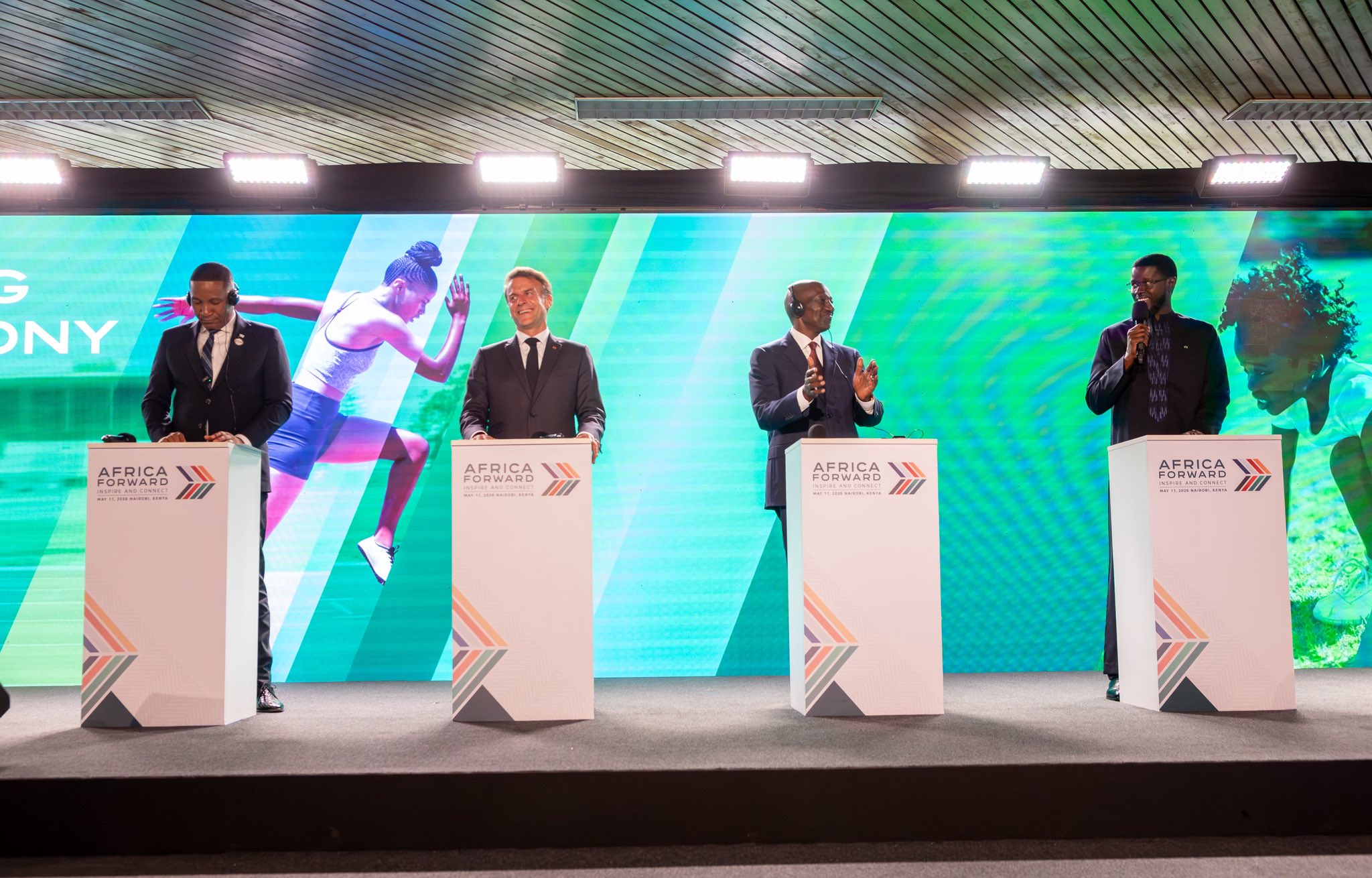
At the Africa-France summit in Nairobi, Senegalese President Bassirou Diomaye Faye made a bold statement, celebrating his nation’s African Cup of Nations victory as a defining moment for 2026. Speaking during a sports and development session alongside French President Emmanuel Macron, Faye’s remarks drew thunderous applause from the audience, while Patrice Motsepe, President of the Confederation of African Football (CAF), watched with visible discomfort.
The Senegalese leader, seated among African peers including Kenya’s William Ruto and Botswana’s Duma Boko, later joked about the ‘verdict’—a thinly veiled reference to the controversial CAF decision that awarded Morocco the title on appeal, despite Senegal’s hard-fought 1-0 victory in the final after extra time.
This administrative decision, labeled by Senegal’s football federation as a ‘backdoor robbery’, has triggered a legal battle at the Court of Arbitration for Sport (CAS) in Lausanne. Both the Senegalese Football Federation (FSF) and the Royal Moroccan Football Federation (FRMF) have submitted their defense arguments, prolonging a dispute that could drag on for months.
Morocco skips sports session amid lingering tensions
While Morocco sent its Prime Minister Aziz Akhannouch to discuss industrial and renewable energy topics, no Moroccan official attended the sports session where Faye made his remarks. A source close to the matter noted that ‘they chose not to engage in this particular discussion.’ Four months after the chaotic final in Rabat, the tension remains palpable—even the closing plenary in Nairobi carefully avoided the subject.
French delegate Eléonore Caroit, when asked about the dispute, stated that despite its prominence, she had ‘not heard any discussion about it during the summit.’ Her colleague, Foreign Minister Jean-Noël Barrot, acknowledged that while the issue was not raised in public forums, it continued to surface in bilateral talks, adding that ‘this is more than just football.’
Beyond the sporting dispute, a legal case adds strain to Senegal-Morocco relations. A French national, brother of a Senegalese team staff member, was imprisoned in Rabat for three months after being accused of throwing a water bottle at law enforcement during stadium unrest. He maintained his innocence before being released on April 18, following an appeal. Three of the eighteen Senegalese supporters sentenced to three months for violence were also freed on the same day, while the remaining fifteen—some facing up to a year in prison—remain in detention pending a potential royal pardon.
Diplomatic channels seek resolution as legal battles loom
Despite the heated exchanges, both sides insist on preserving diplomatic decorum. Moroccan officials emphasized that ‘historical and religious ties must always prevail over a football match.’ In Dakar, a measured tone was adopted: ‘This is a quarrel among brothers—like the tongue and teeth, sometimes we bite. The diplomatic path will play its role. Senegal respects the sovereignty of every nation and expects the same in return.’
The fallout from the final has already influenced global football regulations. At FIFA’s latest congress in Vancouver, the International Football Association Board (IFAB) introduced what has been dubbed the ‘Pape Thiaw Law’, named after Senegal’s head coach. The measure allows referees to issue red cards to players who walk off the pitch or to coaching staff who incite such actions—such as Thiaw did when urging his players to protest a controversial penalty in the final. A CAF delegate present at the congress remarked with dry humor that the reform aims to prevent a ‘Senegalization’ of world football.
From legal appeals in Switzerland to detained supporters in Morocco and diplomatic maneuvering in Kenya, the Africa Cup of Nations final has become one of the most protracted sagas in African football history.