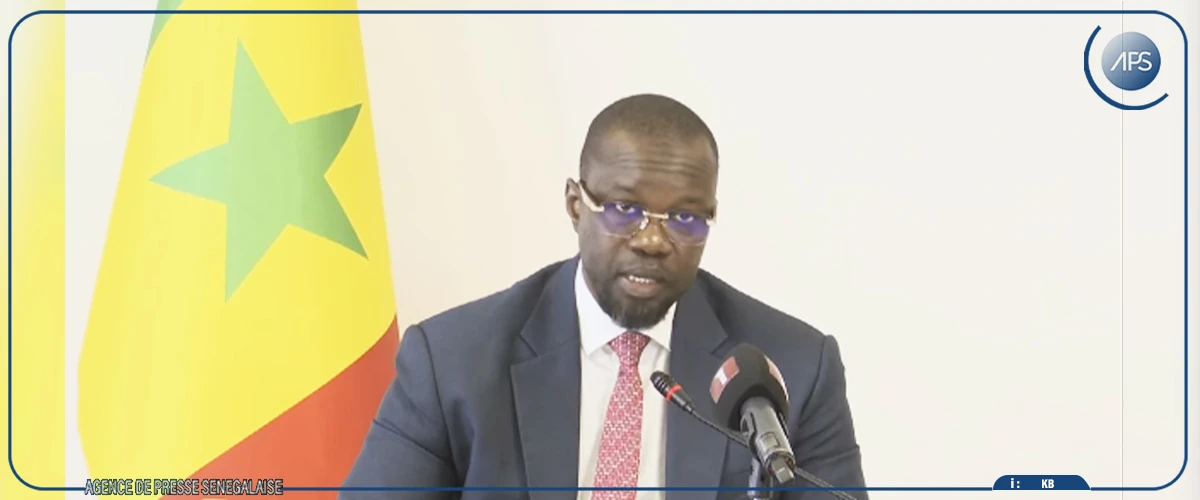
Dakar — The Senegalese government has issued a firm directive to cabinet ministers to prioritize the completion and operationalization of ongoing infrastructure projects nationwide. This call to action was delivered during a high-level interministerial council meeting held in the capital.
The Prime Minister emphasized the need for urgent attention to maritime and port-related infrastructure, urging the Minister of Fisheries and Maritime Economy to expedite preparations for their commissioning. Key projects include the Foundiougne-Ndakhonga port, the Ndangane Sambou fishing quay in the central region, the upgraded Soumbédioune landing site, and processing facilities in Rufisque. The government also highlighted the importance of operationalizing maritime dredging equipment managed by the National Maritime Affairs Agency in Kaolack and Fatick.
A comprehensive review identified 62 stalled infrastructure projects across multiple sectors. These include the El Hâdj Ibrahima Niass University of Sine-Saloum, digital open spaces, regional airports in Saint-Louis, Matam, and Kolda, as well as the Nadayane container terminal in the west. Other critical projects include cold storage facilities, the Joola ship memorial, and the long-awaited reconstruction of the Aristide Le Dantec Hospital in Dakar.
ensuring quality and sustainability in infrastructure delivery
The Prime Minister stressed that all upcoming infrastructure projects must meet stringent quality and cost benchmarks. A dedicated committee will oversee the resumption and finalization of stalled projects, implementing necessary financial, administrative, and legal measures to ensure timely completion. Special attention will be given to technical considerations such as water, electricity, and telecommunication networks to guarantee seamless integration and long-term functionality.
Housing and youth facilities also featured prominently in the discussions. The Prime Minister instructed the Ministries of Youth, Finance, Budget, and Territorial Communities to expedite the completion of youth and citizenship centers in Tivaouane, Mbour, Linguère, Ranérou, Bambey, Diourbel, Kaolack, and Tambacounda. These centers are expected to be fully operational by November 30, 2026.
agricultural and agro-industrial infrastructure under review
The interministerial council examined progress on rural development initiatives, including the Naatangué village farms across Fatick, Kaolack, Louga, Thiès, and Tambacounda. Agropoles in Mpal, Adéane, Dioulacolon, and Mbellacadiao were also discussed, with a focus on defining sustainable operational models in collaboration with private partners to align with local needs.
To enhance efficiency and resource mobilization, the Prime Minister recommended exploring various public-private partnership mechanisms for infrastructure valorization. Potential strategies include long-term leases, concessions, rehabilitation, administrative allocation, or other legally sound models to attract private investment and optimize asset utilization.
broader strategy for national asset optimization
The government extended its directives to encompass a wide range of public assets, including national stadiums, sports infrastructure, and environmental sites such as national parks (Niokolo-Koba, Hann, Saloum Delta, and Djoudj), urban reserves, and natural reserves. The Prime Minister called for strategic valorization mechanisms to be developed for these assets, ensuring they contribute meaningfully to national development.
Additionally, the Ministry of African Integration, Foreign Affairs, and Senegalese Abroad was tasked with proposing a framework for the valorization or recycling of Senegal’s diplomatic and consular real estate assets abroad. This initiative must align with national interests while respecting the legal frameworks of host countries. A dedicated interministerial meeting will soon define a coherent doctrine for managing this portfolio.
The discussions also covered the optimization of assets under the purview of La Poste, railway and airport authorities, highways, public universities, hospitals, and military properties. The Prime Minister urged all relevant ministries and public entities to take decisive steps toward recycling or valorizing these assets, potentially involving private sector participation to maximize their utility.