Senator’s warning on constitutional coups in africa from Addis-Abeba
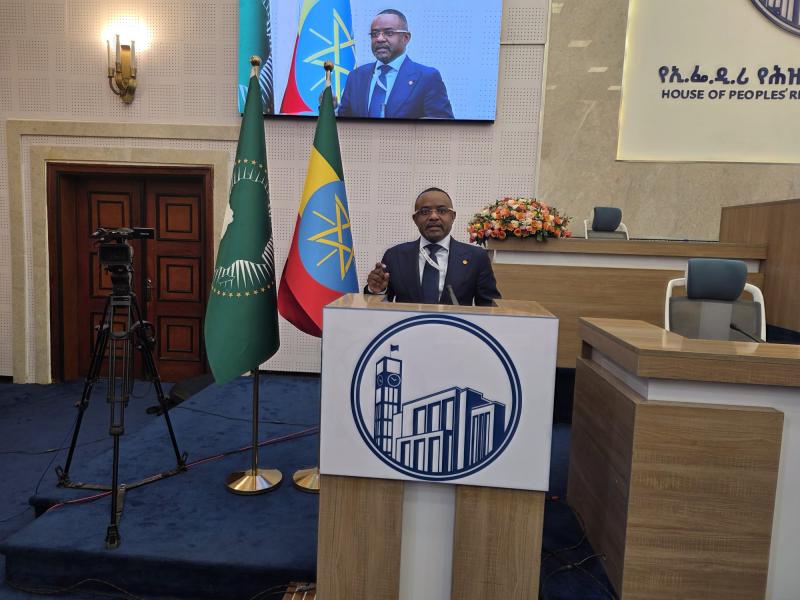
The halls of the Ethiopian Parliament echoed with powerful words this Friday as Congolese Senator Salomon Kalonda Idi Della delivered a bold address during the Intelligence and Security Parliamentary Forum. The focal point of his remarks centered on electoral integrity and democratic principles across the African continent, with the Democratic Republic of the Congo serving as a case study.
Unmasking the threat of constitutional coups
Senator Kalonda drew a sharp distinction between two forms of illegitimate power seizures, condemning both military coups and what he termed constitutional coups. While military takeovers face universal condemnation and sanctions, he argued that constitutional coups operate under a veneer of legitimacy, often through carefully orchestrated referendums and judiciaries compromised by political influence.
« There are no good coups in one category and bad coups in another, » he declared, emphasizing the need to end the international community’s inconsistent response to these anti-democratic maneuvers. He highlighted how constitutional amendments designed to extend presidential mandates—such as those currently under consideration in the DRC—violate the spirit of constitutional limits and undermine the very foundations of democratic governance.
Bloodshed and silence: the human cost of democratic backsliding
The Senator minced no words when describing the violent suppression of peaceful protests against the constitutional reforms in the DRC. « Citizens took to the streets in massive numbers, » he recounted. « The response? Bullets and bloodshed staining our soil. Opposition leaders and civil society voices were silenced through force. » He condemned the apparent complicity of international partners who, rather than intervening, stood by in silence—a silence he characterized as complicity rather than neutrality.
Structural flaws undermining African elections
Beyond the immediate crisis in the DRC, Senator Kalonda identified systemic issues plaguing elections across the continent:
- Electoral commissions lacking independence, often serving as extensions of ruling parties rather than impartial bodies.
- Targeted disqualifications of popular candidates through politically influenced electoral courts.
- Internet shutdowns during vote counts and result proclamations, which he described as « admissions of guilt » by governments unwilling to accept their own results.
A four-point plan for electoral integrity
To address these challenges, the Senator proposed a comprehensive framework to safeguard electoral processes across Africa:
- Establish a permanent African electoral monitoring cell to provide real-time oversight and early warnings of democratic backsliding.
- Invest in African digital electoral sovereignty to prevent external interference and ensure transparent vote management systems.
- Implement transparent and inclusive audits at every stage of the electoral process to build public trust.
- Develop a parliamentary pre-election observation protocol covering the entire electoral cycle, from voter registration to result proclamation.
He also addressed the economic implications of democratic instability, noting that « the absence of true democracy puts Western economic partners at a disadvantage » compared to competitors who do not adhere to democratic norms. The DRC’s mineral wealth, he argued, should not be exploited under conditions of authoritarianism that distort fair economic competition.
Looking ahead: a call to action
Senator Kalonda concluded his address with a call for African legislators to unite against the erosion of democratic principles. « The time for complacency is over, » he asserted. « We must act now to protect our constitutions, our people, and our future. » His message from Addis-Abeba serves as both a warning and a rallying cry for a continent at a critical juncture in its democratic journey.