The political landscape in Senegal has long been shaped by power struggles, whether within a single party or across rival factions. This age-old dynamic, as Lord Palmerston once articulated in 1848, hinges on shifting alliances where interests dictate allegiances far more than loyalty or opposition ever could.
In politics, neither enemies nor friends are permanent—only interests endure.
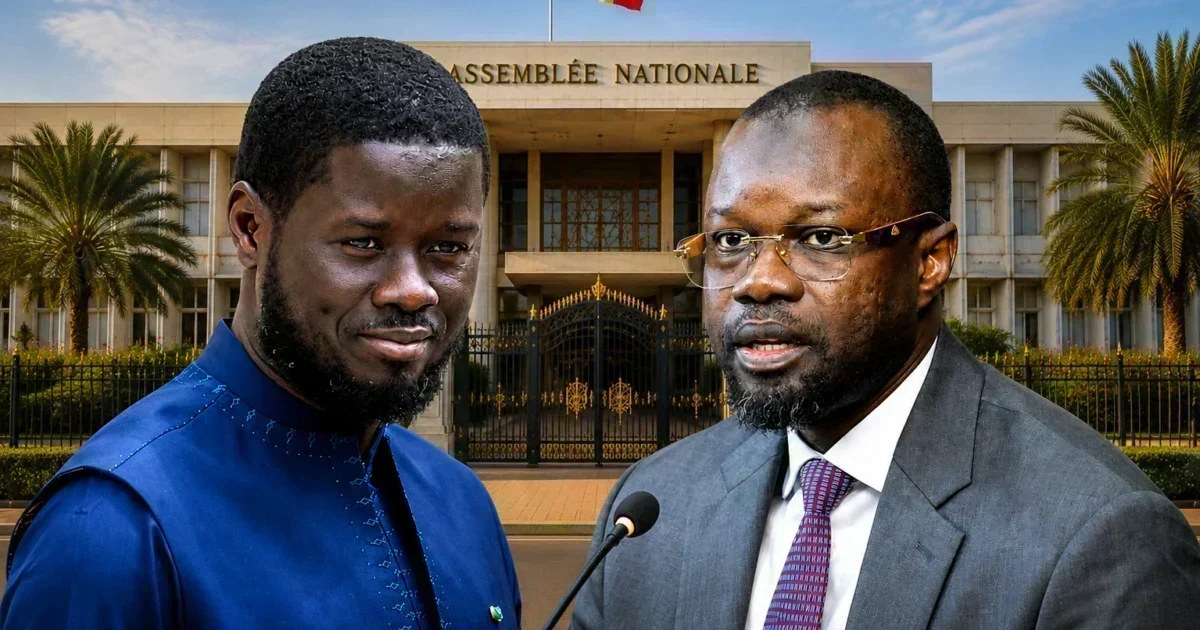
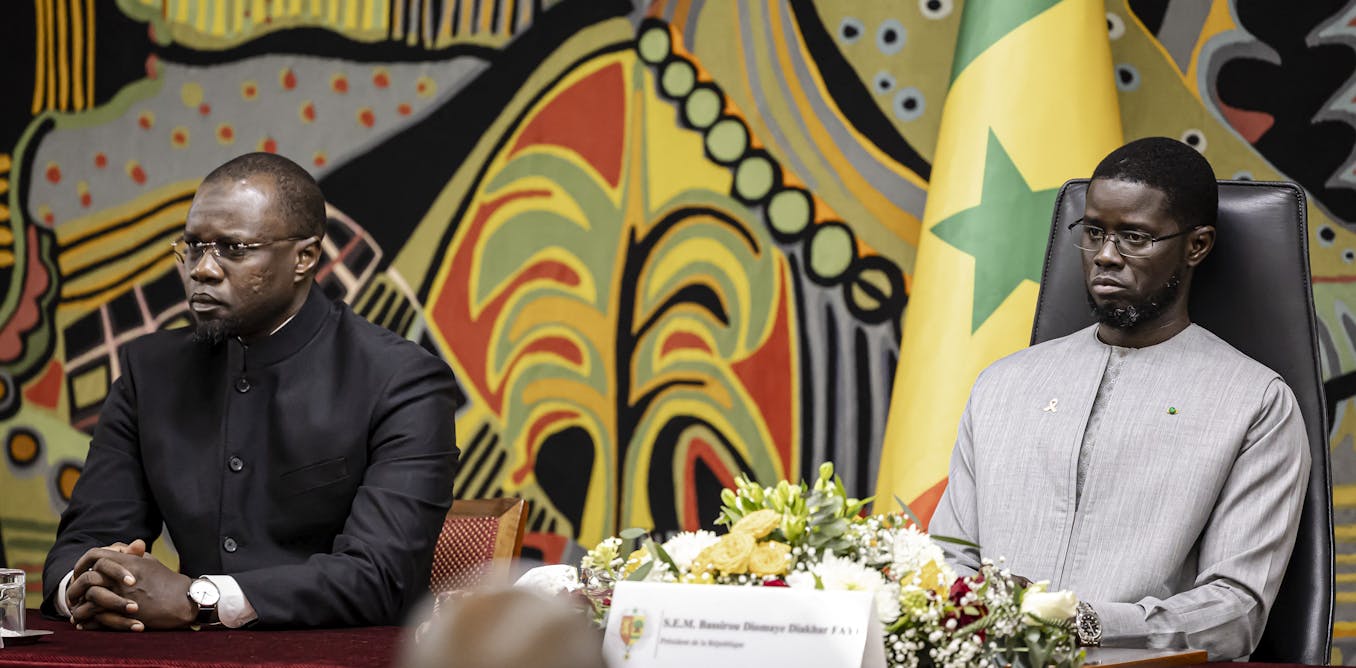
Nowhere is this principle more evident than at the highest echelons of Senegal’s government, where the once-united duo of President Bassirou Diomaye Faye and Prime Minister Ousmane Sonko has fractured under the weight of deepening internal rifts.
What began as a harmonious partnership—one that propelled the duo to power—has crumbled into open conflict. The breaking point came on May 22, when the president dismissed the prime minister and dissolved the entire cabinet, marking the definitive end of their collaboration.
The first cracks emerged during a pivotal gathering in November 2025, where tensions simmered beneath the surface. By May 2026, any remaining ambiguity vanished when the president publicly accused his prime minister of concentrating excessive personal power, signaling an irreparable breach.
when symbolism fades: the unraveling of a united front
The Sonko-Diomaye alliance was forged in adversity, with Sonko endorsing Diomaye after his own candidacy was blocked. Initially, their roles seemed complementary: Diomaye managed state affairs while Sonko provided unshakable political legitimacy during their early tenure. Together, they embodied a unified front under the PASTEF banner, a movement that had already upended Senegal’s traditional political order.
Yet the November 2025 rally exposed the fragility of their partnership. What had been sold as a seamless fusion—“Sonko mooy Diomaye” (Sonko is Diomaye)—began to unravel. The slogan, once a rallying cry against the previous administration, now rings hollow. In its place, competing narratives have emerged: “Sonko is Sonko” and “Ousmane is Sonko,” reflecting a shift from shared identity to individual ambition.
This transformation reveals the inherent tension in their arrangement. While their fusion created a powerful symbolic capital—a single political force in the eyes of supporters—it also sowed the seeds of division. The Senegalese presidential system, as outlined in the Constitution (Articles 42-52), demands clear separation of powers. The president’s authority cannot be diluted, no matter how strong the initial collaboration.
Diomaye has embraced the institutional persona of a reserved steward, upholding constitutional norms, while Sonko clings to his role as a disruptive mobilizer. This divergence aligns with sociologist Pierre Bourdieu’s theory of institutional habitus: the role shapes the individual far more than the individual shapes the role. Diomaye’s resignation from PASTEF’s leadership underscores this reality—his position as head of state now takes precedence over his party allegiance.
the paradox of mutual dependence and rivalry
The relationship between Diomaye and Sonko mirrors the principles of fluid dynamics: two bodies sharing a single vessel, where the heavier mass inevitably compresses the lighter. In their case, Sonko’s populist influence and control over PASTEF grant him a gravitational pull that elevates Diomaye’s legitimacy. Conversely, Diomaye’s decrees and state decisions ground their shared vision in legal reality.
Yet this balance is precarious. If Sonko oversteps, he encroaches on Diomaye’s institutional domain, risking the perception of a president under tutelage. If Diomaye asserts too much independence, he risks losing the popular mandate Sonko provides. Theirs is a system of mutual dependence—and mutual destruction. Power oscillates between the presidency and the prime minister’s office, sustaining a rivalry that is as much structural as it is personal.
Their growing resemblance only deepens the divide. As they vie for the same objectives—power, dominance, leadership—they become mirror images of one another, each reflecting the other’s ambitions. Sonko seeks the executive seat; Diomaye fights to consolidate his hold. This dynamic echoes the classic “number two syndrome,” where loyalty curdles into resentment as the understudy grows restless under the spotlight.
History warns that such arrangements are inherently unstable. The dominant actor, fearing future electoral risks, often transforms a trusted ally into a rival through distrust. The result is a cycle of paranoia that foreshadows social and political turbulence, leaving Senegal’s political future hanging in the balance.