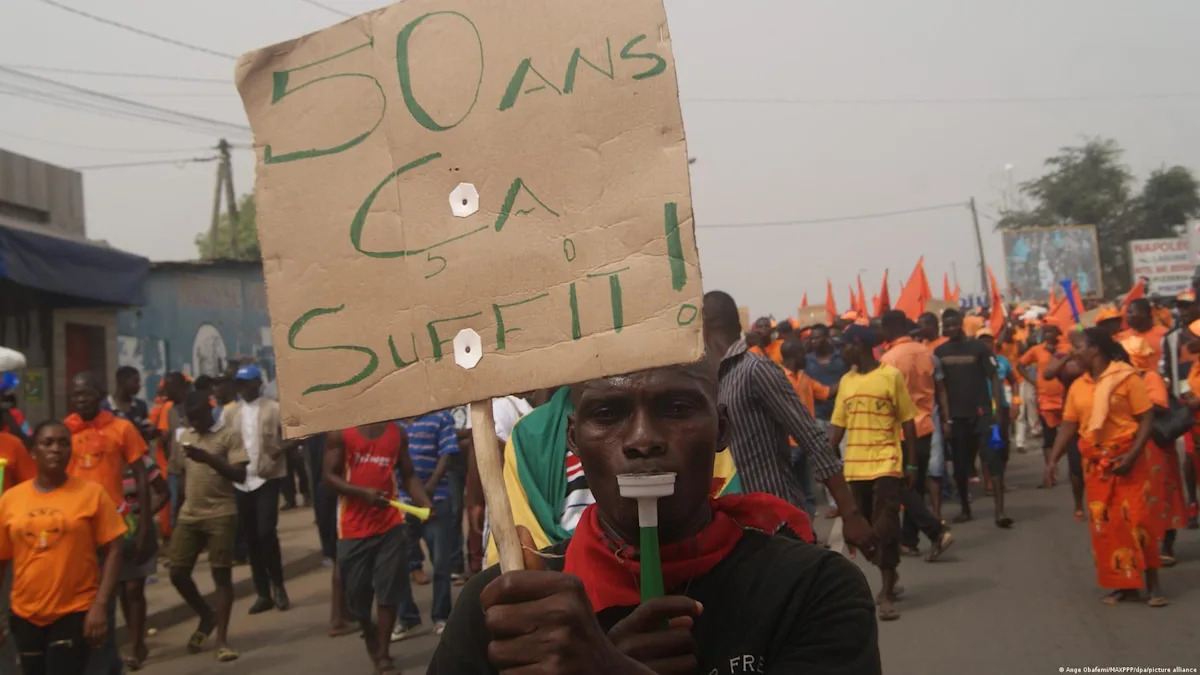
After years of political repression and bans on public protests in Togo, the opposition achieved a historic milestone this past weekend. For the first time in recent memory, authorities granted permission for a large-scale gathering in Lomé, sparking widespread debate: is this a genuine step toward political liberalization, or merely a temporary easing of tensions?
breakthrough gathering organized by the cncc
On Saturday, hundreds of citizens took part in the first authorized public meeting of the National Framework for Concertation for Change (Cadre National de Concertation pour le Changement, or CNCC), a coalition uniting four opposition parties with leading civil society organizations.
Davdi Dosseh, spokesperson for the Front Citoyen Togo Debout and one of the event organizers, delivered a powerful message: “We are demanding a shift in governance. Togo suffers from systemic corruption, crumbling public services, and a stagnant economy. The country is not moving forward.”
He also criticized the recurring pattern of authorities using flimsy pretexts to block peaceful assemblies. “Every time we attempt to organize, we face baseless objections that lead to outright prohibitions. But we will not surrender our right to peaceful expression.”
a cautious welcome for government concessions
Political analyst and Tamberma Institute for Governance director Paul Amégankpo believes the government’s decision to authorize the march should be viewed with cautious optimism.
“The government’s decision to allow this peaceful opposition march on May 9, 2026, in Lomé, is a positive sign,” he noted. “However, within the broader political context, this gesture must be interpreted carefully. It may signal a willingness to relax restrictions on peaceful protest, freedom of association, and political participation—but only time will tell.”
Amégankpo emphasized that sustained observation is essential: “We need to see additional policy signals confirming a lasting trend toward greater political freedom and democratic space in Togo.”
The coming weeks will be crucial in determining whether this event represents the dawn of a new era of openness or merely a brief respite in an otherwise tense political climate.