Morocco foils major isil-linked plot with coordinated raids
dawn raids smash terror network plotting attacks in Morocco
Just before sunrise on a quiet July morning in the coastal village of Aourir, north of Agadir, elite units of Morocco’s Direction Générale de la Surveillance du Territoire (DGST) moved swiftly through the streets in a carefully planned operation. The target: a radicalized individual recently pledged to Islamic State (ISIL), whose arrest was made possible thanks to precise intelligence gathered by the DGST. Within seconds, the suspect was neutralized and taken into custody, averting what could have been a devastating attack.
The subsequent search of the suspect’s residence by the Bureau Central d’Investigations Judiciaires (BCIJ)—a specialized unit under the DGST—revealed chilling evidence. Far from being a mere sympathizer, the individual possessed combat gear and tactical knives, indicating active preparation for violence. Residents of Aourir awoke to find a heavy security presence, a mix of shock and relief at the near-miss catastrophe.
a hidden bomb factory uncovered in inezgane
Several kilometers away in the industrial zone of Inezgane, a far more alarming discovery was made. Inside a concealed warehouse in the Traast El Jorf district, investigators stumbled upon what amounted to a terrorist bomb-making lab. At the center of the room stood a modified 4×4 vehicle, its fuel system clandestinely altered to run on butane gas—a tactic designed to maximize thermal impact and blast radius in a potential suicide attack or vehicle-ramming assault on vital infrastructure.
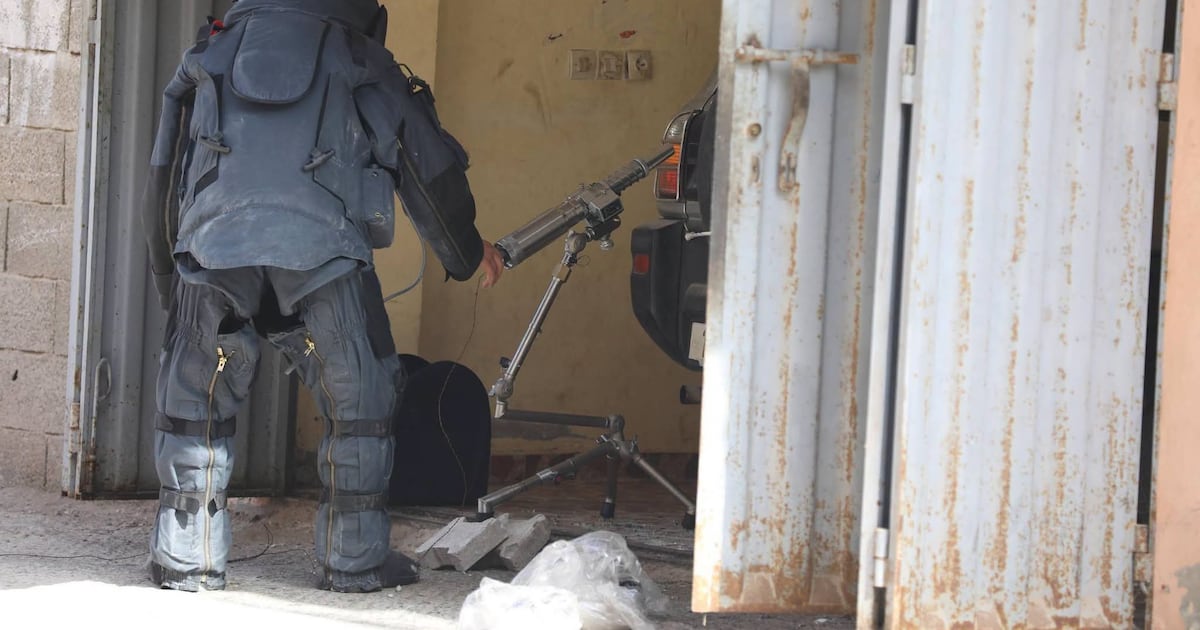
Fearing an imminent explosion, the BCIJ immediately triggered an emergency protocol: evacuation of nearby residents, deployment of bomb disposal experts from the Direction Générale de la Sûreté Nationale (DGSN), and use of robotic systems and advanced sensors to inspect the vehicle’s modified components without risking human lives.
When the site was declared secure, the full extent of the danger became clear. Investigators uncovered dozens of butane canisters, pressure cookers rigged as shrapnel-laden bombs, electrical wiring, detonators, welding equipment, and a stockpile of both solid and liquid chemical agents. The materials were not merely accessories—they were components of an imminent attack.
a nationwide crackdown thwarts terror network
The operations in Aourir and Inezgane were only the beginning. Intelligence indicated that this cell’s reach extended across Morocco. To prevent the arrest in Aourir from tipping off the rest of the network, the DGST launched simultaneous raids in seven cities: Agadir, Taroudant, Casablanca, El Hajeb, Tétouan, Fquih Ben Salah, and Safi. In total, ten suspects were detained, including a 17-year-old—a stark reminder of the group’s cynical recruitment of minors. Among the arrested was also a former convict previously convicted under anti-terrorism laws, raising concerns about the cycle of radicalization and recidivism.
During the raids, supported by explosive detection dogs, authorities seized a trove of evidence: military uniforms, handwritten manuals detailing homemade bomb assembly, and digital storage devices containing two critical videos. One showed the suspects pledging allegiance to the ISIL “Caliph,” while the other contained explicit threats to carry out large-scale sabotage across Morocco.
Sahel-based isil commanders orchestrated attacks from within
Preliminary investigations have revealed a troubling shift in ISIL’s regional strategy. Members of this cell were directly receiving orders and logistical support from ISIL commanders operating in the Sahel. The directive was clear: instead of traveling to join armed groups in sub-Saharan Africa, operatives were to remain in Morocco and execute attacks from within, targeting critical national infrastructure.
The cell was structured along military lines, with strict compartmentalization to minimize risk. Roles were divided: a reconnaissance team scouted potential targets, a logistics squad discreetly procured chemicals and equipment, and a technical team in Inezgane modified vehicles and assembled explosives. The operation was months in planning, meticulously coordinated from multiple locations.
Thanks to the DGST and BCIJ’s rapid intervention, the plot was dismantled before it could materialize. Nine adult suspects were placed in pre-trial detention, while the minor was placed under protective supervision under the supervision of the anti-terrorism prosecutor’s office. Forensic teams are now analyzing seized phones and hard drives to trace encrypted communications with Sahel-based operatives and ensure no dormant threats remain.
As calm returns to Aourir and Inezgane, one thing is certain: Morocco’s security apparatus has once again demonstrated its capability to detect, disrupt, and dismantle terror networks before they strike. The coordinated action underscores the ongoing vigilance required to counter the evolving threat of extremism in the region.