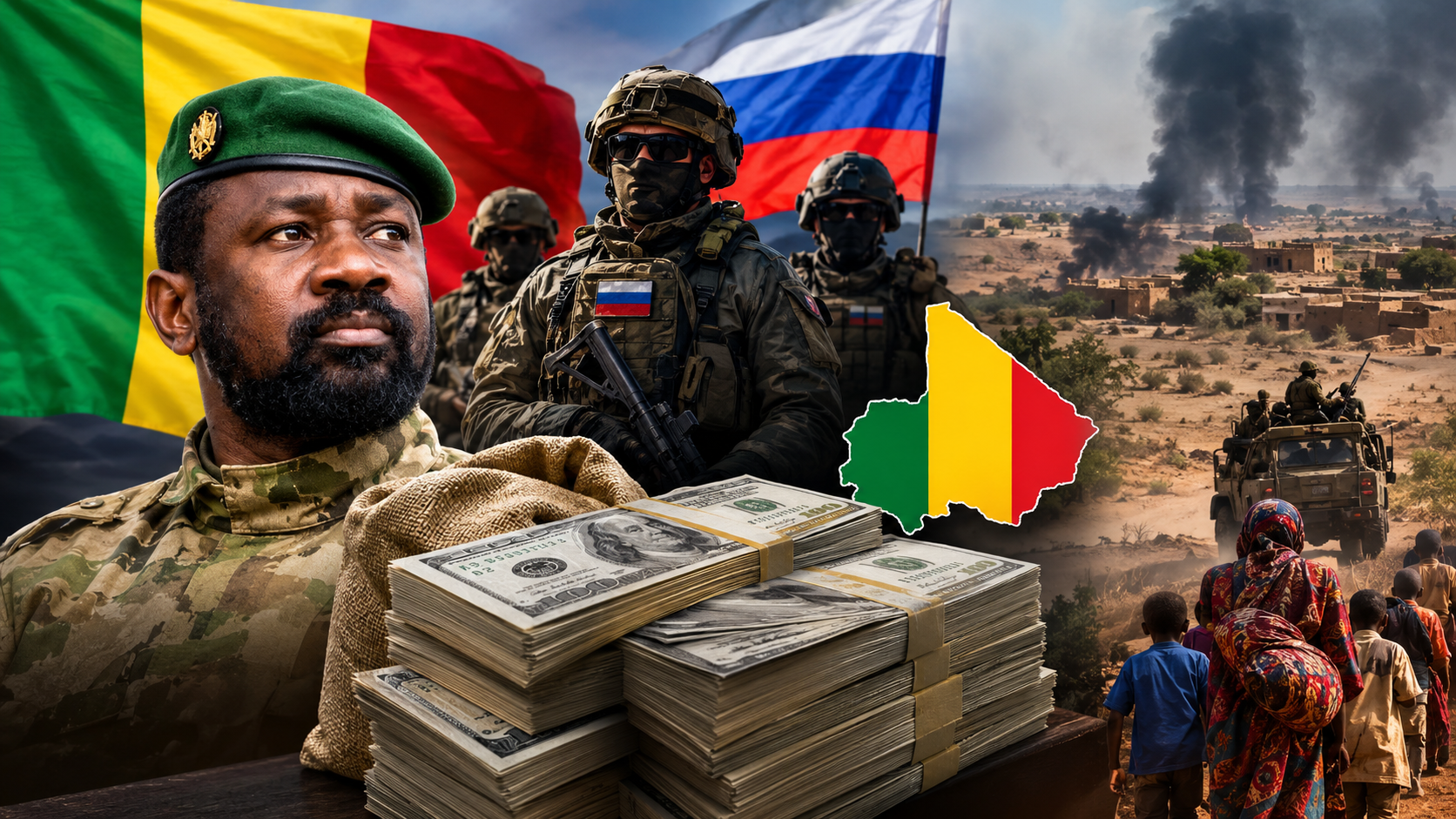
Mali’s military junta faces a critical challenge as Tuareg rebels, in alliance with jihadist groups, launch simultaneous assaults across several cities, including the capital Bamako. Amidst this escalating crisis, Russian allies of the junta, who replaced French forces, made a surprising retreat from the northern city of Kidal without engaging the attackers.
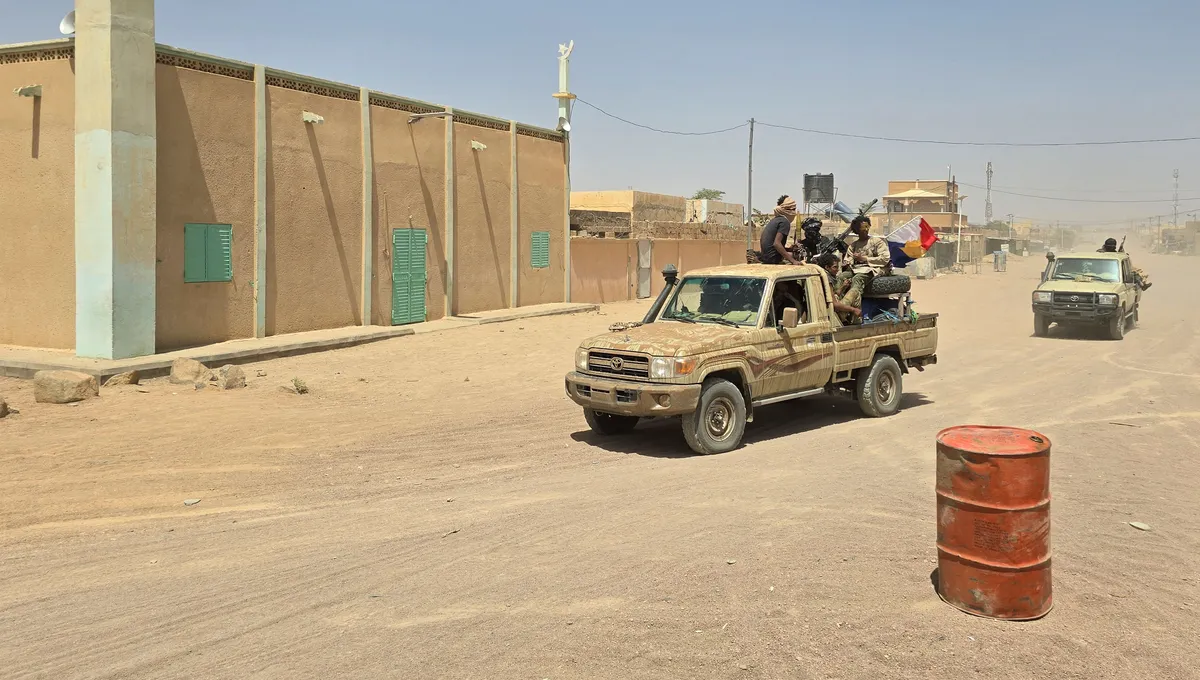
Recent video footage reveals a striking scene: a column of vehicles carrying Russian soldiers departing Kidal in northern Mali, marking a withdrawal without a single shot fired. The strategic city is now under the control of Tuareg rebels, who have formed an alliance with jihadist factions.
This Russian retreat carries significant implications, especially given that just a day prior, the Group for the Support of Islam and Muslims (GNIM) claimed responsibility for coordinated attacks in various parts of the country, including Bamako. In their statement, the GNIM explicitly warned Russian forces against intervention, suggesting a desire to preserve prospects for future cooperation.
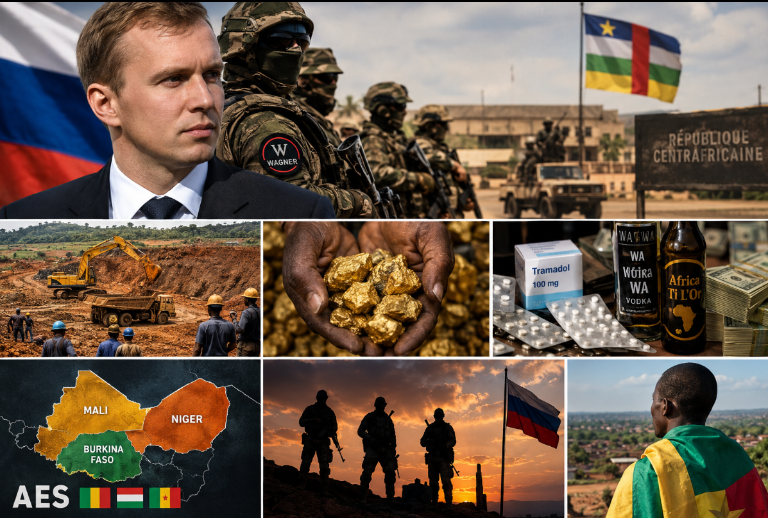
Indeed, the approximately 2,500 Russian military personnel in Mali, operating under the Africa Corps (the successor to the Wagner Group), observed passively as the Bamako regime confronted its most severe security crisis in five years since seizing power. This turn of events represents a significant disappointment for the Malian putschists, who expelled their former colonizer, France, in 2022, and a clear failure for Russia, initially welcomed as a potential savior in the political Sahel.
malian regime suffers severe setbacks
The powerful Defence Minister was tragically killed in an attack on his residence on Saturday. Jihadists and rebels executed simultaneous, undetected assaults across multiple regions, appearing to expand their influence over vast swathes of the country, highlighting the deteriorating security Sahel situation.
The recapture of Kidal is highly symbolic. This stronghold of the Tuareg rebellion was initially retaken in 2023 by the Malian army, supported by Russian forces, after remaining for eleven years in the hands of Azawad proponents—the name given by rebels to their region. This victory, achieved shortly after the departure of French and United Nations forces, had significantly bolstered the prestige of Colonel Assimi Goïta, the head of the junta.
three years later, this strategy has failed
The consolidation of power, marked by the dissolution of political parties and the unelected appointment of the head of state, has been met with considerable public discontent among a population often caught between warring factions. Months prior, Bamako endured a virtual siege, disrupting fuel supplies from neighboring countries. While predicting the Malian government’s collapse remains challenging, its current position is undeniably precarious.
The risks are twofold: first for Mali itself, which faces potential fragmentation between Tuareg separatists in the north and various jihadist groups vying for control of the territory. Second, for the broader West Africa Sahel news region, as GNIM, a group affiliated with Al Qaeda active in Mali, harbors regional ambitions. Niger and Burkina Faso, members of the Alliance of Sahel States alongside Mali, could become targets if Bamako falls, with coastal nations already facing threats from jihadist incursions. This underscores the urgent need for a cohesive Sahel Vision.
this catastrophic situation is the culmination of a decade of failures
Since France intervened in 2014 to prevent Bamako from falling to a jihadist column, the subsequent French counter-offensive allowed Mali to reclaim its northern territories, which had been lost.
However, the follow-up to this initial success proved inadequate, leading to mounting frustration that precipitated military coups and the eventual departure of French forces, replaced by Russians. Four years on, this new approach also faces failure, bringing immense suffering to the local populations and highlighting the ongoing challenges in the political and humanitarian Sahel.