Living under siege in Mali: hunger, fear and the struggle to negotiate

When blockades become weapons of control in central Mali
Historical records from Mali’s central regions reveal a grim pattern: sieges have long been used as a means of domination. From the wars of the Ségou State to the Caliphate of Hamdallahi in the 19th century, entire villages were cut off from supplies and movement until they surrendered. Today, the Katiba Macina—a faction of the Group for the Support of Islam and Muslims (JNIM), which claimed responsibility for a major attack on April 25—has revived this brutal tactic, transforming it into a deliberate strategy of governance by coercion. Blockades are no longer just punitive measures; they have become a tool to enforce obedience without formal administration.
The study Surviving the Siege, conducted in late 2025 by the Stockholm International Peace Research Institute (SIPRI) and the REcAP network, examines this evolving reality in villages across Mopti and Bandiagara, including Marébougou, Saye, Kori-Maoundé, and the strategic Parou-Songobia bridge along National Road 15. These cases demonstrate that blockades extend far beyond military closures. They disrupt mobility, agriculture, trade, education, gender relations, and even local governance structures. Their goal is unmistakable: to make life unbearable for those who refuse to submit.
What the benkan really means: survival at the cost of autonomy
In many affected areas, armed groups impose what locals call a benkan—a term in Bamanankan that usually refers to a pact or compromise. But the reality is far from an agreement. It’s a set of one-sided demands: forced payment of zakat (Islamic alms) on crops and livestock, school closures, mandatory veiling for women, bans on music, and restrictions on social ceremonies. The local terminology masks a deeply unequal relationship, built on threats and violence.
Marébougou: a brief stand against the inevitable
In central Mali, the strategy remains consistent: suffocate resistance to force submission or resignation. However, the methods vary depending on local power dynamics. Where armed resistance is weak or dismantled, blockades can lead to forced surrender. When self-defense groups remain active, the siege intensifies, turning into a prolonged ordeal where civilians bear the heaviest burden.
In Marébougou, Djenné Circle, the turning point came in 2021. Residents rejected orders from the Katiba Macina, including school closures, mandatory veiling, restrictions on markets, and agricultural levies on livestock. Their defiance stemmed from a mix of factors, including regular security patrols and the presence of a donso camp—a traditional hunter’s militia. Between 2019 and 2021, the region saw a surge of confidence in local self-defense groups, often framed as a grassroots form of counterterrorism, with some leaders enjoying close ties to state forces. Yet, like the jihadists, some of these leaders enriched themselves through cattle theft and extortion, offering protection as a guarantee. Marébougou’s resistance was short-lived; after the self-defense fighters were defeated by jihadists in October 2021, a total blockade was imposed for six months.
Targeted killings: breaking the will of local leaders
The blockade gradually trapped Marébougou in a deadlock. Markets were cut off, road travel became perilous, fields were nearly impossible to cultivate, and essential supplies vanished. By the end, the village accepted what many saw as a survival pact—not out of conviction, but because the cost of resistance had become unbearable. Deaths from starvation were widespread. “Even salt ran out,” residents recalled—an irony in a region where salt is typically abundant. The blockade had paralyzed the local economy, leaving families with no choice but to negotiate. In exchange, the village’s social and religious life was radically altered.
The defeat’s ripple effects extended across the flooded delta, particularly in Djenné and Macina circles. The loss of confidence in self-defense groups, coupled with the state’s delayed response, emboldened the Katiba Macina to tighten its grip on neighboring villages like Sofara, Macina, and Niono. In addition to harassment, the group carried out targeted assassinations of influential hunters—some of whom had mobilized for the Marébougou battle. The jihadists accused them of collaborating with state forces and seizing resources such as cattle, water access, and grazing lands.
Saye: defiance under the weight of isolation
The blockade in Saye, which began in 2023 and intensified through 2024 and 2025, crippled economic and social life. While the dynamics mirrored those in Marébougou, Saye’s resistance was more direct and sustained. Residents refused to acknowledge the benkan, arguing they were already “good Muslims” and had nothing left to protect. Many saw the blockade as a final attempt by outsiders to strip them of what little remained after years of looting—burned crops, stolen livestock, and severed trade routes. The village’s resistance was rooted in traditional authorities, youth groups, and donsow fighters.
With roads blocked and fields inaccessible, men were confined to the village perimeter, risking execution or abduction if they ventured out. Women, perceived as less threatening, sometimes slipped into the bush to forage for food, firewood, and materials for mats and fans. Yet this fragile freedom did not shield them from the siege’s structural violence. Instead, it exposed how blockades reshape social roles and risks.
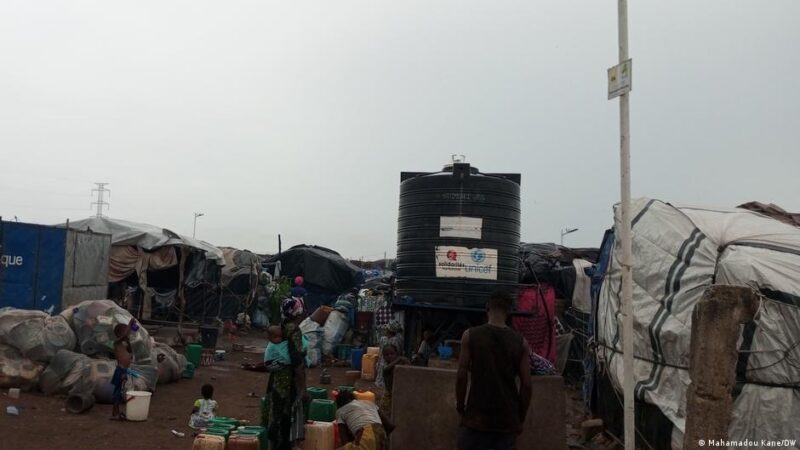
The blockade’s deliberate cruelty became clear when Saye became a refuge for displaced people from nearby villages starting in 2023. This influx strained food and medicine supplies, overwhelmed local services, and intensified pressure on already weakened infrastructure in Djenné and San. The siege wasn’t just about containment—it was a calculated strategy to create a humanitarian crisis, pushing the village toward surrender.
Kori-Maoundé: a village that refuses to yield
In Bandiagara Circle, Kori-Maoundé has been under siege since 2018, held by Dan Na Ambassagou—a self-defense movement that rejects any negotiation with jihadist groups. Local leaders, including imams and mayors, uphold this uncompromising stance, leaving no room for dialogue with the Katiba Macina. The blockade has grown increasingly punitive, marked by targeted attacks, assassinations, movement restrictions, and bans on transporters stopping or picking up passengers. By 2024, access to fields was almost entirely cut off.
The siege serves a dual purpose: controlling the territory and sending a message. Kori-Maoundé is seen as an enemy bastion, where authorities and residents remain loyal to Dan Na Ambassagou’s hardline resistance. The village’s collective memory harks back to colonial resistance, including the decisive 1892 battle of Kori-Kori, which marked the French conquest of Bandiagara. For the self-defense fighters and villagers alike, submitting to a benkan is not an option—despite the mounting pressure. The village has also become a haven for displaced people fleeing blockades elsewhere. While the plateau’s geography and the self-defense group’s presence slow direct offensives, they cannot halt the village’s slow strangulation. Civilians pay the price of non-negotiation by fleeing to Bandiagara, Sévaré, or Bamako—or by enduring increasingly precarious conditions in place.
The role of mediators: can dialogue break the blockade?
Mediators play a crucial role in transforming armed confrontation into negotiation. In Marébougou, neighboring mayors served as intermediaries between the village and the Katiba Macina. Yet in Saye, no such initiatives took hold. In Kori-Maoundé, Dan Na Ambassagou’s influence blocks any local mediation, and regional reconciliation support teams remain disconnected from the village’s immediate challenges. This contrast underscores a harsh truth: blockades are not just military tactics. Their persistence depends on the absence or failure of political, traditional, or religious intermediaries who could convert military power into dialogue. Without mediation, violence continues to fester.
Schools, agriculture, and livestock: the pillars of rural life under siege
In all three villages, schools were more than classrooms—they were pillars of community life, social hubs, and symbols of state presence. When blockades forced school closures, teachers fled, and students dispersed, the loss went beyond education. It signaled the erosion of collective futures.
Agriculture, the backbone of rural economies, was the first to collapse. Fields became battle zones; crops were burned; and farmers were targeted. In Marébougou, only plots near the village remained cultivable. Elsewhere, insecurity shrank arable land, forcing households to rely on outside supplies—supplies that the blockade made impossible to obtain. Livestock and cattle markets, vital to the economies of Ségou and Mopti, disappeared or became deadly. Women, who often manage small-scale farming, food processing, and trade, saw their autonomy shrink. The blockade didn’t just destroy income—it severed the social and economic ties that held these territories together.
Community solidarity: the last line of defense
Yet survival under siege is not just about suffering. The study uncovered remarkable acts of solidarity—shared meals, water distribution, aid for the sick, shared labor, and support for vulnerable households. In Saye and Marébougou, many spoke of strengthened community bonds in the face of adversity. These networks didn’t eliminate hunger or fear, but they delayed the total collapse of social fabric. They proved that villagers are not passive victims. They actively shape their survival, creating local forms of protection in the absence of state presence.
Marébougou, Saye, and Kori-Maoundé reveal the blockade as more than a military tactic. It has become a territorial control technology. By dominating roads, markets, schools, and social norms, armed groups are reshaping daily life in central Mali. While they don’t occupy every village, their influence increasingly shapes how people live, move, and survive.
From forced surrender to prolonged resistance, from pragmatic deals to partial flight—each village responds differently. But one question unites them all: how can life continue when everything connecting a territory to the outside world—roads, fields, schools, markets—can vanish overnight? In Ségou and Mopti, blockades do more than create shortages. They impose a political order built on fear.