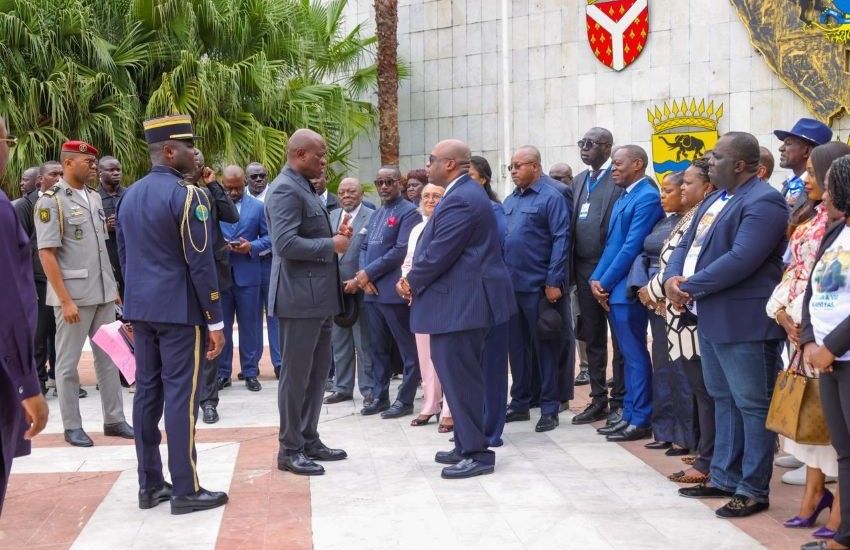
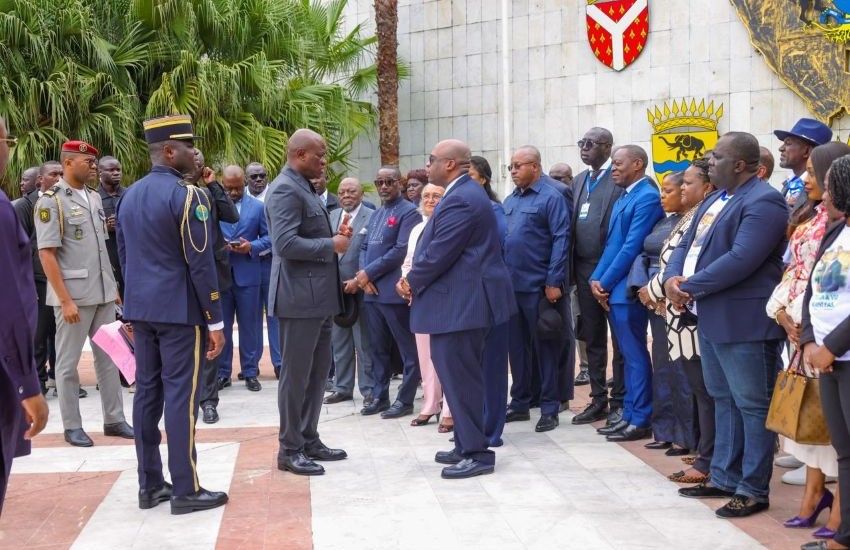
On an uncharacteristic Wednesday in Gabonese political life, 150 delegates from the Ogooué-Maritime province embarked on an unprecedented journey from their coastal towns to the heart of Libreville’s transformation. Their mission: to witness firsthand the nation’s progress and engage directly with the Head of State.
Meeting President Brice Clotaire Oligui Nguema at the Presidential Palace on July 14, 2026, these representatives from Port-Gentil, Omboué, and Gamba were exposed to a capital city undergoing rapid modernization—a tangible reflection of the new direction President Nguema has set since assuming leadership.
This wasn’t merely a ceremonial visit. It represented a deliberate strategy to bridge the gap between Gabon’s administrative centers and its far-flung regions, while making public policy tangible to those it directly impacts.
Governance through tangible results
The Ogooué-Maritime delegation was deliberately diverse, including mayors, municipal advisors, traditional leaders, entrepreneurs, and local influencers. This cross-section wasn’t accidental—it acknowledged a fundamental truth: citizens respond more to what they see than what they’re told. By allowing local stakeholders to observe infrastructure projects and development initiatives firsthand, the government prioritized evidence over rhetoric.
This approach fosters transparency and collective accountability, while addressing the disconnect between national ambitions and provincial realities. For a country with vast geographic and cultural diversity, such engagement strengthens the sense of shared national purpose.
Balanced development as a strategic priority
A central theme of the meeting was President Nguema’s commitment to equitable, inclusive development across Gabon. For decades, African nations have struggled with regional disparities, where capital cities often monopolize investment while provinces lag behind in infrastructure and services.
The President emphasized that each province—despite differing needs and potentials—would receive targeted investments aligned with local realities. For Ogooué-Maritime, historically vital for its oil industry and coastal economy, this means diversifying into infrastructure, tourism, and blue economy sectors.
Proximity as a tool for legitimacy
Following their immersion in Libreville’s progress, the provincial delegates requested a direct dialogue with the President to share their observations and proposals. The immediate response underscored a broader governance philosophy: restoring trust through open communication.
In an era where democratic institutions worldwide face growing public skepticism, Gabon’s emphasis on direct engagement with local leaders and communities signals a shift toward participatory policymaking. This evolution positions dialogue—not just institutions—as a cornerstone of effective governance.
The Ogooué-Maritime visit exemplifies a leadership style that values listening, education, and concrete demonstration. In a continent where institutional distrust often stifles reform, Gabon’s focus on proximity and evidence may well define its political identity in the years ahead.