Gabon’s democratic gamble: Oligui Nguema champions truth over power
Libreville — In a political climate where public discourse often swings between blind allegiance and calculated caution, a bold statement from Gabonese President Brice Clotaire Oligui Nguema has reframed the core debate on governance: the indispensable role of truth in power.
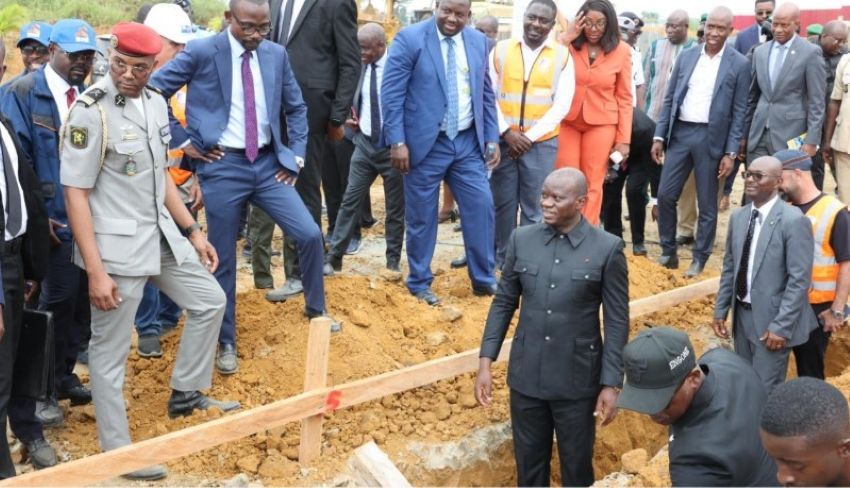
During the inauguration of 3,100 housing units in Bikélé, the head of state addressed journalist Chamberlain Moukouma with a message that transcended mere political rhetoric. He emphasized that a leader must welcome not only applause but also sincere criticism when it serves the greater good of correcting public action. This stance cuts to the heart of what democratic responsibility truly means.
Breaking free from the culture of unquestioning support
By asserting that he needs to hear when he is wrong in order to improve, President Oligui Nguema deliberately challenges a political culture long accustomed to automatic validation of authority. His words signal a rare institutional demand for self-correction as a governance tool, where perpetual applause is no longer a sign of political vibrancy but a potential pitfall for collective oversight.
This call implicitly demands a shift in the relationship between leaders and citizens—one built on transparency and shared accountability. Development, in this vision, cannot thrive on complacency but on an honest assessment of public actions, celebrating successes while acknowledging shortcomings.
Criticism as a cornerstone of national progress
The president’s remarks restore constructive criticism to its rightful place in the political arena. Far from positioning dissent as opposition, he frames it as a civic duty rooted in the pursuit of the common good. In this model, public debate becomes a space for continuous improvement rather than a battleground for sterile confrontation.
A mature society, in this context, is one that not only recognizes achievements but also identifies dysfunctions, thereby enhancing the quality of governance. However, this vision requires a deep cultural transformation. It calls for citizens, civil society, and media to adopt a posture grounded in objectivity, responsibility, and a shared commitment to the national interest. Criticism is no longer an end in itself but a catalyst for refining public policies.
Redefining the language of political dialogue
The implications of this statement extend far beyond rhetoric. President Oligui Nguema appears to advocate for a governance model rooted in active listening, where citizen feedback becomes a compass for political direction. In this framework, national development is no longer driven solely by top-down state decisions but by an ongoing dialogue between leaders and the people they serve.
This dynamic demands a delicate balance between acknowledging progress and maintaining constant pressure for improvement. The interview conducted by journalist Chamberlain Moukouma, disseminated on social media as part of a civic education initiative, further reinforces this vision of a more informed and responsible public sphere.
Ultimately, the president’s words invite Gabon to rethink its political culture around three guiding principles: applaud when justified, criticize when necessary, and always act in the supreme interest of the nation. In a political environment often dominated by rigid postures, this embrace of shared truth stands as a litmus test for democratic maturity. It positions citizens not as passive observers of power but as active participants in its perpetual refinement.