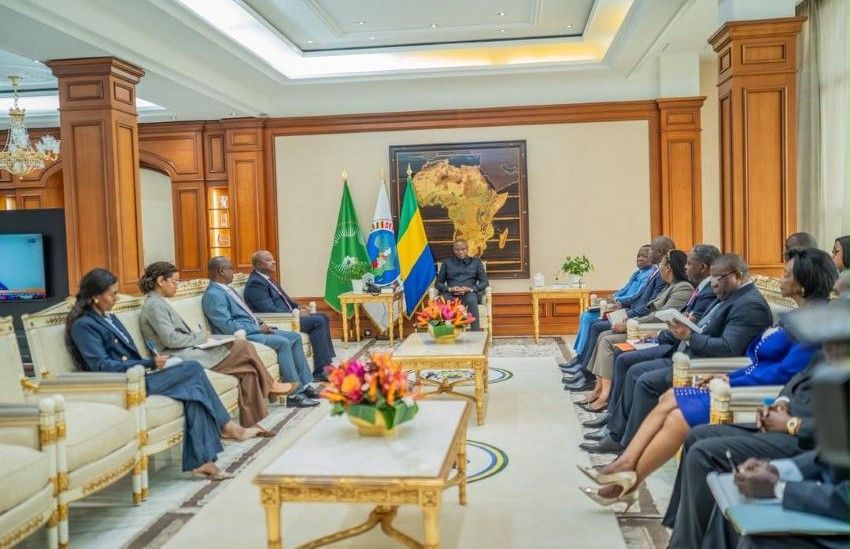
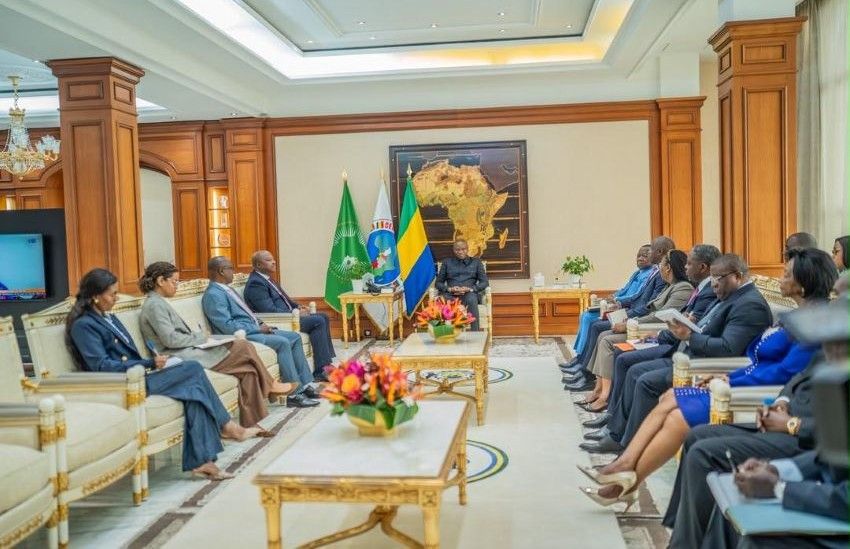
Libreville – The long-standing territorial dispute between Gabon and Equatorial Guinea over Mbanié Island has once again taken center stage in African diplomatic discussions. In Libreville, Gabonese President Brice Clotaire Oligui Nguema recently hosted Albert Shingiro, the special envoy of the Chairperson of the African Union Commission. Their meeting focused on assessing the progress of the resolution process for what stands as one of Central Africa’s most sensitive border disputes.
This engagement signifies a pivotal moment, underscoring the African Union’s deepening involvement in a matter previously dominated by international legal procedures and bilateral tensions. Crucially, it reflects a robust political commitment to re-emphasize African mediation mechanisms as the primary means for managing the continent’s strategic disagreements.
Far from being a mere territorial squabble, Mbanié has evolved into a symbol of a proactive African diplomacy, striving to address continental crises through constructive dialogue rather than direct confrontation.
A Tiny Island with Enormous Stakes
Despite covering only a few hectares in the Gulf of Guinea, Mbanié Island possesses a geopolitical significance that far outweighs its modest size.
The contention between Libreville and Malabo dates back to the 1970s, also encompassing the nearby islets of Conga and Cocotiers. At the heart of this territorial rivalry lie substantial maritime interests, particularly concerning the delineation of exclusive economic zones and potential access to the region’s rich oil, gas, and fishing resources.
Today, the Gulf of Guinea is recognized as one of Africa’s most strategically vital maritime regions. It accounts for a significant portion of African oil production and serves as a critical conduit for global trade.
Control over these maritime areas has become a paramount issue of national sovereignty and economic security. For decades, both nations presented their cases before various international bodies, all while carefully avoiding military escalation. This diplomatic restraint has been instrumental in preventing the Mbanié dossier from becoming a source of regional instability.
The African Union Champions an African Solution
Albert Shingiro’s visit aligns with a broader strategy advocated by the African Union. The continental body is keen to bolster its role in resolving border disputes among member states, thereby reducing the tendency to systematically refer African crises to external institutions.
This guiding principle rests on a straightforward belief: African solutions to African challenges are most enduring when founded on dialogue, mediation, and political compromise.
During discussions with the Gabonese head of state, all parties reiterated their adherence to the principles of international law, respect for recognized borders, and the peaceful dispute resolution mechanisms enshrined in the African Union Charter.
Libreville, for its part, reaffirmed its commitment to continuing discussions in a spirit of responsibility and regional cooperation. This stance is particularly significant in a region where several border disputes continue to fuel political tensions.
The Stability of the Gulf of Guinea at Stake
The resolution of the Mbanié dispute extends beyond the immediate interests of Gabon and Equatorial Guinea; it has become a crucial concern for the entire Gulf of Guinea. The region already grapples with numerous security challenges, including maritime piracy, illicit trafficking, transnational criminal networks, and risks associated with competition over energy resources. In such a climate, any territorial ambiguity presents an additional layer of vulnerability.
Conversely, a negotiated settlement would foster regional economic cooperation, secure international investments, and cultivate a more conducive environment for the development of energy and port infrastructure.
For Gabon, the diplomatic implications are also considerable. By prioritizing consultation and multilateral mechanisms, Libreville seeks to solidify its reputation as a stable partner, upholding international law and dedicated to regional peace.
The African Union, too, has significant institutional credibility riding on this outcome. Should Mbanié find a lasting resolution through African mediation, the continent will establish a powerful precedent, demonstrating its capacity to independently resolve its strategic disputes. In the Gulf of Guinea, as elsewhere, sovereignty is increasingly measured not just by the ability to defend borders, but by the capacity to build peace around them.