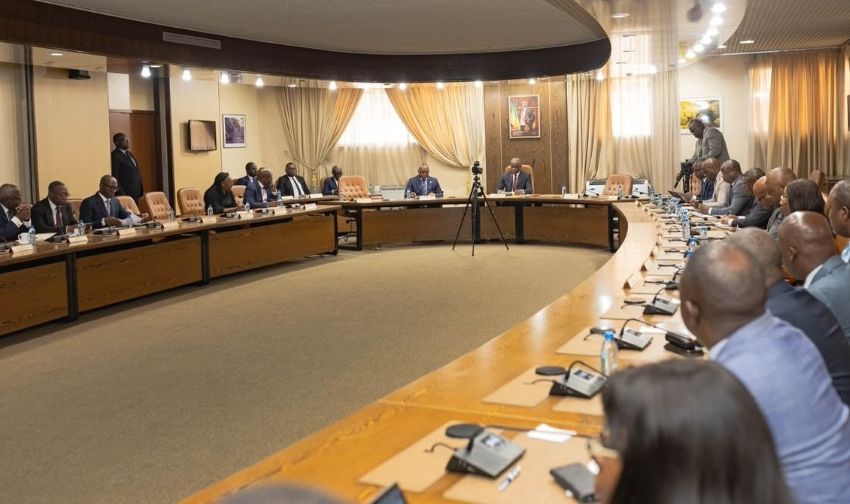
Libreville, July 16, 2026 — Gabon is embarking on one of the most ambitious public finance reforms in its recent history. As the preparatory conferences for the 2027 Budget Bill get underway, the government is not merely launching another annual accounting exercise. It is signaling a decisive break from decades of administrative management centered on credit consumption rather than measurable outcomes.
Government officials have made their stance unmistakably clear: budgets can no longer be static financial envelopes. Every franc allocated must now demonstrate tangible impact—whether in economic growth, infrastructure development, public services, or job creation. In a region where public spending efficiency remains a pressing economic concern, Gabon is positioning its budget as a key driver of national transformation.
Ending the era of automatic budgets
The reform is built on a straightforward yet groundbreaking principle: public expenditure will no longer be justified by past practices. Instead, its legitimacy will hinge on concrete achievements. Completed roads, new schools, expanded electricity access, job creation, business support programs, or additional tax revenues will become the new benchmarks for measuring public sector performance.
This shift also aims to address long-standing issues highlighted by international financial institutions, including the automatic rollover of budget credits, poorly documented expenditures, and revenue streams that bypass official Treasury channels. From now on, agencies must submit comprehensive, evidence-based proposals with clear objectives. Public revenues generated by state bodies must be fully accounted for and integrated into national finances to bolster transparency and fund traceability.
For international partners, this transformation sends a strong signal in a climate where fiscal governance quality is increasingly seen as a litmus test for economic credibility.
A growth outlook anchored in prudence
The government is projecting a 5.1% growth rate for 2027, up from an estimated 4% this year. This acceleration is expected to stem from increased public and private investment, particularly in productive sectors. Notably, budget projections are based on conservative oil price assumptions—a deliberate choice to reduce the country’s exposure to volatile global energy markets.
The diversification strategy focuses on high-potential sectors such as manganese, processed wood, and palm oil, reflecting a long-declared but rarely pursued commitment to reducing oil dependency. While the challenge remains formidable—few oil-producing nations have successfully weaned themselves off hydrocarbons without deep economic and governance reforms—the Gabonese government appears determined to make progress.
Balancing fiscal discipline with social imperatives
The budget preparation process coincides with ongoing discussions with the International Monetary Fund. Yet authorities have been quick to reassure the public on one critical point: financial consolidation will not come at the expense of social welfare.
Key social sectors—access to clean water, electricity, healthcare, education, and support for vulnerable households—are slated for protection. Six priority areas have already shaped the current budgetary trade-offs: water and energy services, youth entrepreneurship, infrastructure, housing, social justice, sustainable development, and institutional strengthening.
The true test, however, lies in execution. Scarce resources must meet vast societal expectations. The success of the 2027 budget will not be measured in parliamentary votes or accounting entries, but in tangible improvements for citizens. Will schools operate better? Will electricity and water become more reliable? Will young people find new opportunities? Will infrastructure projects deliver real change?
If the answers are yes, Gabon will have succeeded in transitioning to a new era of public management. If not, the budget of results may join the long list of unfulfilled reform initiatives across the continent. The year 2027 could well mark a defining moment—not just for Gabon’s economic governance, but as a potential model observed far beyond its borders.