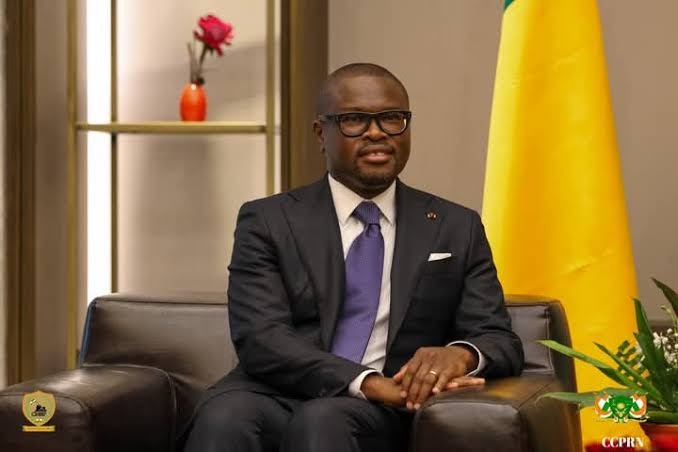
Cameroon is reopening public sector recruitment. Minister Joseph Lé announced via a note dated June 5, 2026, the opening of 2,090 positions across various administrative corps. This figure, modest compared to pre-2021 standards, nonetheless marks a break from four years of severe restrictions imposed to control the state payroll.
Health and education drive 2026 public recruitment
Most of the increase comes from two sectors deemed strategic. Public health receives a special quota of 200 posts for medical specialists, as Cameroonian hospitals struggle to cover needs for advanced technical equipment. Education accounts for 1,000 places reserved for teachers recruited under the free auditor regime—graduates integrated during training.
The linguistic distribution reflects the sought balance between the two subsystems inherited from constitutional bilingualism. General French-language education gets 322 posts, versus 285 for the English-language side. Technical education receives 193 places on the French side and 200 on the English side. Outside health and education, open volumes remain significantly more contained, signalling that rationing logic still applies to other administrations.
Crossing the symbolic threshold of 2,000 posts had not been seen since 2023, when the government authorised 2,235 recruitments. At the time, Joseph Lé justified this inflection by the need to meet personnel needs expressed by administrations under the National Development Strategy 2020-2030.
A decade of budget rationing in the civil service
The contrast with the previous decade remains stark. In 2018, the Cameroonian state opened 5,179 places, followed by 5,411 in 2019 and 3,700 in 2020. The shift occurs in 2021, with only 1,536 posts, then a drop below 1,000 in 2022. The 2024 exercise barely exceeded 1,200 openings, signalling a sustained arbitration in favour of headcount control.
This compression responds to a macroeconomic imperative. Cameroon’s state payroll rose from 706.1 billion FCFA in 2012 to 1,080.1 billion in 2021, according to Ministry of Finance data. An increase of more than 50% in less than a decade, mobilising a growing share of tax revenue and restricting public investment margins.
Authorities attribute this drift to several categories of agents, foremost among them secondary school teachers and military personnel, long recruited in large volumes. The return of secondary education to the 2026 competition perimeter, after two to three years of suspension, could therefore revive pressure on personnel expenses.
Cemac ceiling on payroll still exceeded
Budget discipline is not only a sovereign decision. Cameroon is bound by the multilateral surveillance criteria of the Central African Economic and Monetary Community (Cemac), which sets a maximum ratio of personnel expenses to tax revenue at 35%. This sustainability threshold is regularly exceeded by Yaoundé.
The observation is now collective. In its latest surveillance report, Cemac notes that none of its six member states complied in 2024 with the norms governing tax pressure and payroll. For Cameroon, the zone’s largest economy, the ratio remained above the community ceiling, confirming the entrenchment of a structural budget constraint.
The arbitration for 2026 reflects this equation. It aims to address glaring shortcomings in public health and education services without reigniting a salary spiral that multilateral donors are closely watching, as the country continues its programme with the International Monetary Fund. For competition candidates, the window is a rare opportunity after five years of restriction. For the executive, it represents a real-world test of its ability to reconcile social demands with financial orthodoxy. The official announcement was published on June 5, 2026.