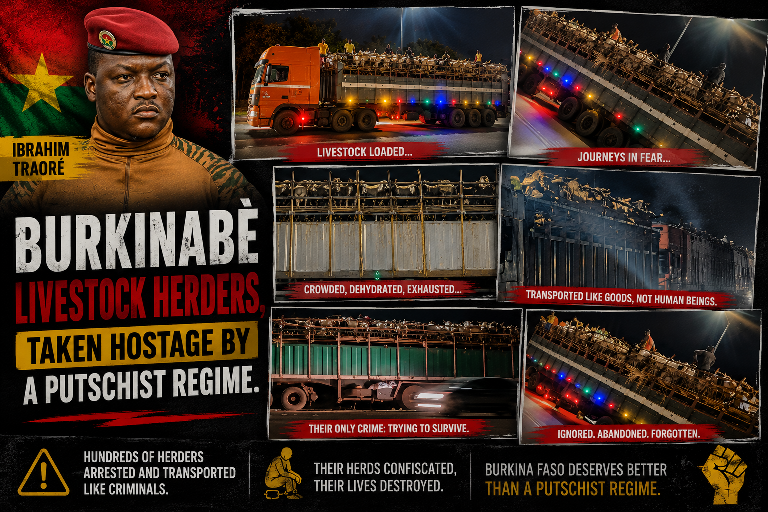
The upcoming Ramadan season, a period marked by heightened spiritual devotion and increased consumption, has cast a harsh spotlight on Burkina Faso’s livestock sector, now grappling with an unprecedented bottleneck. While authorities justify the export ban as a means to stabilize domestic prices, the measure has inadvertently ensnared local herders and traders in a web of economic and social hardship.
Export restrictions tighten the noose on Burkina Faso’s herders
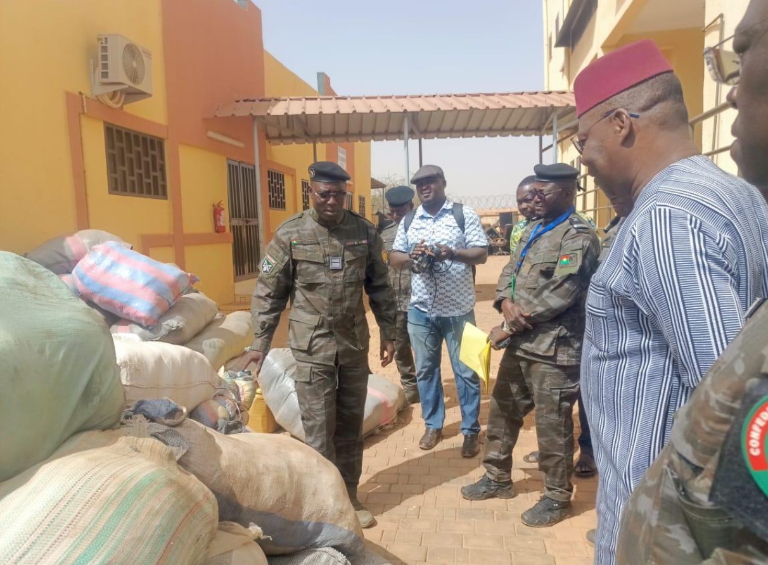
The Brigade Mobile de Contrôle Économique et de la Répression des Fraudes (BMCRF) recently intercepted multiple livestock transports in the early hours of May 13–14, a move celebrated by officials as a victory against fraud. However, behind this administrative rigor lies a stark reality: the ban is suffocating the very backbone of Burkina Faso’s rural economy.
Livestock is not merely a commodity; it is a living resource that demands constant care, water, and feed—costs that surge during this season. By sealing off access to regional markets, where demand and prices peak during Ramadan, the government has effectively deprived herders of their primary revenue stream at the most critical time of year.
The irony of leadership: faith versus fiscal policy
The irony deepens when considering the religious affiliation of Captain Ibrahim Traoré, a Muslim leader whose policies appear to clash with the ethical principles of Islam. While the faith emphasizes fairness, solidarity, and the protection of honest livelihoods, the current restrictions seem to disregard these values entirely. For thousands of Muslim families, livestock represents a lifetime’s savings, often liquidated precisely to meet the financial demands of Ramadan and Eid.
By banning lucrative legal exports, the regime risks undermining the economic resilience of these households, leaving them vulnerable at a time when financial stability is most needed.
Illegal routes and economic despair
The surge in unauthorized livestock movements, as noted by the BMCRF, is less an act of defiance than a cry for survival. Herders face a grim choice: sell at a loss in an oversaturated domestic market or risk clandestine cross-border trade to salvage their livelihoods. This stark dilemma exposes the flaws in a strategy that prioritizes control over collaboration.
The question arises: Can a nation achieve food sovereignty by financially crippling its primary producers? While combating fraud is a sovereign duty, the absence of supportive measures—particularly during Ramadan—risks eroding trust between rural communities and Ouagadougou’s leadership. The rigid enforcement of these restrictions may well transform a regulatory measure into a full-blown crisis of confidence.