Bénin’s new senate: constitutional reality vs. claims of shadow governance
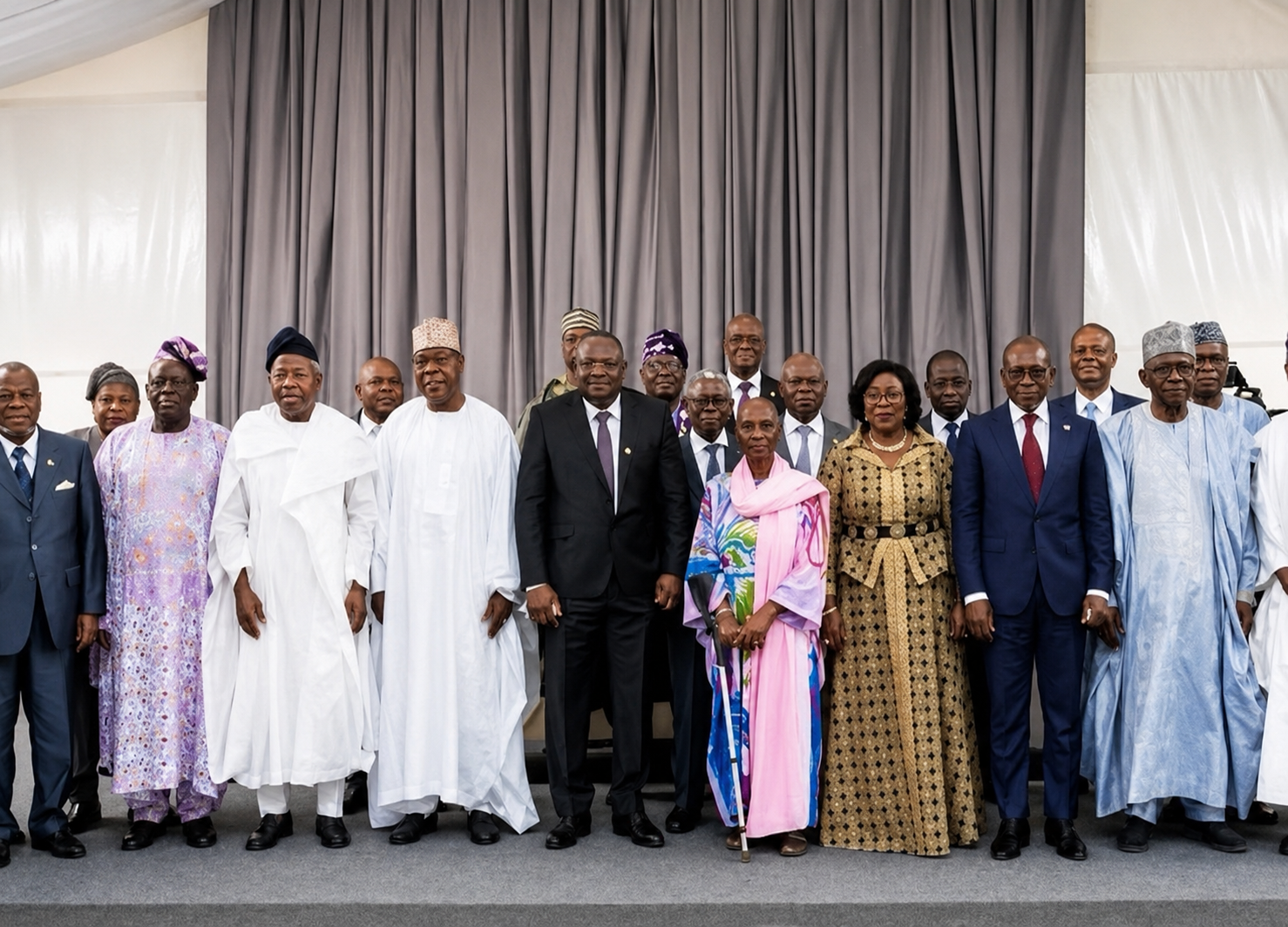
The official inauguration of Bénin’s inaugural Senate on July 30, 2026, followed by the election of former President Patrice Talon to its presidency on August 6, marks a significant institutional evolution for the nation. Established through the constitutional revision of December 17, 2025, this second parliamentary chamber introduces a novel balance within Bénin’s governmental framework.
However, this institutional genesis has been met with considerable scrutiny. Critics of the former head of state often portray the Senate as a “shadow government” or even as a mechanism for Patrice Talon to maintain influence after his departure from the presidential office.
Such interpretations warrant a closer examination of the legal texts. While legitimate debate may center on the Senate’s utility, composition, powers, or operational methods, it is crucial to differentiate between political influence, institutional role, and the exercise of executive power. These three concepts are not interchangeable.
A new institution born from the Constitution, not an improvised mechanism
The primary point to underscore is straightforward: the Senate is not a structure tailored around Patrice Talon. Its existence stems directly from the constitutional revision enacted in 2025.
The revised Constitution stipulates that Bénin’s Parliament now comprises two chambers: the National Assembly and the Senate. It meticulously outlines the composition, missions, operational guidelines, and competencies of this nascent institution.
Consequently, the Senate stands as a full-fledged constitutional body. Its legitimacy remains independent of the individual presiding over it.
This distinction is pivotal in the ongoing discourse: one may critique the Senate’s establishment, its makeup, or the choices made in its implementation, but legally, it cannot be characterized as a personal entity designed to enable an former president to govern remotely.
The Constitution precisely delineates its boundaries and prerogatives.
Patrice Talon’s selection: a political dimension, not a renewed presidency
Patrice Talon’s election to lead the Senate naturally fuels speculation. As a former President of the Republic now heading a new institution, it is understandable that observers question his future influence. However, this potential influence must be distinguished from the constitutional exercise of the presidential function.
Patrice Talon concluded his tenure after two mandates. Romuald Wadagni was elected President of the Republic in April 2026 and sworn in on May 24, 2026. The institutional transition has, therefore, unequivocally occurred.
The fact that the former president now presides over the Senate does not signify a reappropriation of the presidential office in an alternative form.
The President of the Senate is not the President of the Republic. This role does not confer the same constitutional powers, nor does it involve leading the government or commanding the state administration.
The Constitution continues to vest executive prerogatives in the President of the Republic. The Senate, conversely, is an integral part of the parliamentary architecture. Article 79 explicitly defines Parliament as the body responsible for exercising legislative power and overseeing government actions.
A Senate that regulates, but does not govern
This is arguably where current criticisms introduce the most confusion.
The Béninese Senate undeniably possesses significant powers. The Constitution assigns it a crucial mission of regulating political life, aimed at safeguarding national unity, democracy, peace, political stability, and the continuity of the State.
It is also tasked with ensuring adherence to political truces and upholding political integrity.
These responsibilities are substantial enough to warrant serious public debate. Yet, they do not transform the Senate into a parallel government.
Regulating is distinct from governing. Overseeing is not executing. Offering an opinion is not administering the country.
Consequently, the Senate replaces neither the President of the Republic, nor the government, nor the various ministries.
Executive power continues to be exercised within the framework of the Presidency of the Republic and the government. The Senate primarily operates within the parliamentary domain and through the regulatory mechanisms established by the Constitution.
Real, yet precisely framed, legislative powers
Stating that the Senate is not a shadow government does not imply it is a merely symbolic institution.
Quite the contrary.
The Constitution bestows upon it substantial prerogatives. Specifically, certain categories of texts including constitutional laws, electoral laws, and laws governing the life and activities of political parties must compulsorily receive its non-objection opinion before promulgation.
To formulate an objection, the Senate must secure a qualified two-thirds majority of its members. Failure to notify within the prescribed timeframe is considered a non-objection.
The Senate can also request a second deliberation on a law adopted by the National Assembly, with certain exceptions, notably for finance laws, settlement laws, and program laws.
This capability demonstrates that the upper chamber is far from ornamental. It functions as an additional mechanism for legislative scrutiny and deliberation.
However, once again, legislative power must not be conflated with executive power.
A “chamber of sages”: why this institution may prove useful
The distinctiveness of the Béninese Senate also lies in its composition.
The Constitution specifically provides for the inclusion of ex-officio members drawn from former institutional roles, as well as the appointment of high-ranking figures who have served in defense and security forces. Should the required number not be met, additional members are designated to reach the constitutional minimum of 25 members.
This structural design reflects an ambition to establish the upper chamber as a forum where institutional experience can be leveraged.
In a democracy, not all crises are resolved solely through majority vote. Mechanisms for dialogue, mediation, tension prevention, and compromise-seeking are also essential.
This precisely constitutes one of the potential justifications for an upper chamber partly composed of individuals who have previously held high-level responsibilities. The Senate can thus evolve into a space for experience sharing, preventing institutional crises, and fostering consensus, contributing to the broader political Sahel stability.
The paradox of criticism: denouncing influence while overlooking safeguards
Another crucial dimension of the debate warrants emphasis.
Concerns regarding Patrice Talon’s potential influence are not entirely unfounded in a political sense: a former president naturally retains experience, networks, institutional knowledge, and a capacity for influence. However, this political reality should not be misconstrued as a legal assertion that he continues to wield presidential power.
The pertinent question is therefore not: “Can Patrice Talon still exert influence?” The answer is unequivocally yes, as is true for any former head of state now occupying a significant institutional role.
The true question is rather: “Can this influence constitutionally supersede the authority of the President of the Republic?” On this ground, the answer differs: the Senate possesses competencies defined by the Constitution, but it is not charged with directing administration, conducting daily governmental policy, or exercising the functions inherent to the head of state.
This is precisely why the debate must remain anchored in the constitutional texts rather than in speculative accusations.
Political continuity is not necessarily a confiscation of power
The transition from Patrice Talon to Romuald Wadagni was predictably interpreted as a form of political continuity. Wadagni, formerly Talon’s Minister of Economy and Finance, was the candidate endorsed by the presidential majority and secured victory in the April 2026 presidential election with over 94% of the votes.
This continuity may draw political criticism. It can also be analyzed as the extension of a consistent governmental orientation.
However, political continuity and institutional power seizure are not automatically synonymous. A democracy can experience political succession without a sudden rupture in public policy. The genuine challenge then lies in ascertaining whether institutions function according to their mandates, whether responsibilities are clearly delineated, and whether control mechanisms can effectively play their role, ensuring transparency in West Africa Sahel news.
The true test will now be in practice
As a novel institution, the Senate’s effectiveness cannot be judged solely on the stated intentions of its proponents or the fears of its detractors.
The real test will unfold in its daily operations.
It will be essential to observe its capacity to exercise its prerogatives without becoming a mere rubber stamp, its ability to engage in dialogue with the National Assembly, its relationship with the government, its method of utilizing its power of second deliberation, and crucially, its capacity to effectively fulfill its regulatory role.
Furthermore, it will be important to monitor how its members adhere to the constitutional obligation of political reserve. The Constitution specifies that senators cannot be “political actors or partisans” and are subject to a duty of discretion.
Therefore, it is less the personality of Patrice Talon that will define the Senate than the manner in which the institution exercises its competencies.
Romuald Wadagni governs, the Senate legislates and regulates
The most effective way to dispel misconceptions is ultimately to return to the fundamental distribution of responsibilities.
The President of the Republic leads the executive branch. The government conducts governmental action. The National Assembly and the Senate collectively form the Parliament. The Constitutional Court remains the body responsible for constitutional review and resolving various institutional conflicts.
Within this architectural framework, Patrice Talon can preside over the Senate without reassuming the presidency of the Republic.
He can possess considerable experience and exert significant political influence without, however, holding the constitutional prerogatives of the executive.
It is precisely this distinction between political influence and institutional power that must be reiterated.
Beyond accusations, judging the Senate on its results
The debate surrounding the Senate is legitimate. Any new institution must be open to scrutiny, criticism, and evaluation.
However, such criticism gains credence when grounded in facts.
The Béninese Senate is not an institution external to the Constitution. It is enshrined in the revised Constitution of December 2025, endowed with precise competencies, and integrated into a bicameral Parliament.
Its president is not a parallel President of the Republic.
Its powers are not those of the government.
And its existence does not diminish the constitutional responsibilities of the head of state.
The true challenge for Bénin will thus be less about debating whether the Senate should be labeled a “shadow government” and more about verifying, through its actions, whether it fulfills the mission assigned to it by the Constitution: contributing to institutional stability, the quality of the legislative process, political dialogue, and the preservation of peace.
The era of speculation can now yield to a period of evaluation. The Senate is an institutional reality. Its functioning, decisions, and adherence to constitutional limits will ultimately determine its genuine utility for Bénin.