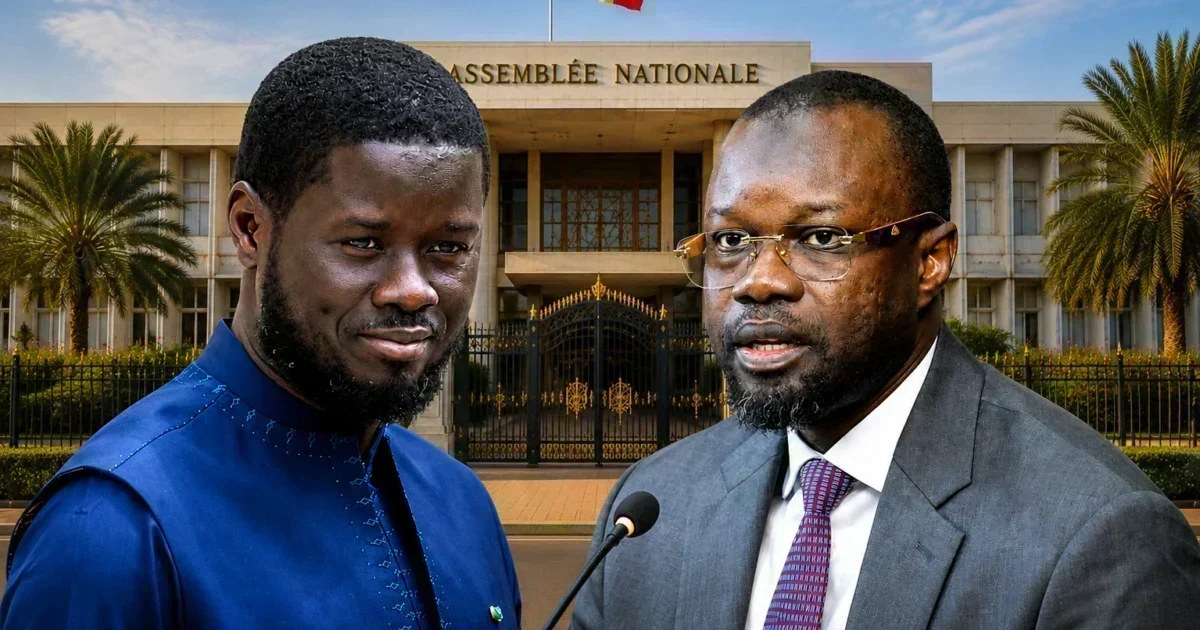
The imperative of asset declaration has once again emerged as a critical measure of accountability for the Senegalese executive. Reports circulating in Dakar indicate that several government ministers are reportedly failing to comply with this legal requirement. This situation arises despite transparent asset management being a cornerstone commitment championed by the Bassirou Diomaye Faye and Ousmane Sonko administration since their ascent to power in April 2024. The issue extends beyond mere administrative protocol, challenging the very consistency of the official narrative.
Senegal’s legal framework, established by the 2014 law creating the National Anti-Fraud and Corruption Office (OFNAC), mandates a specific range of high-ranking public officials to submit a detailed inventory of their assets upon assuming office and again upon the conclusion of their duties. This obligation applies to the President of the Republic, the Prime Minister, cabinet ministers, heads of institutions, and credit administrators overseeing funds exceeding one billion CFA francs.
Strict legal requirements for asset disclosure
The legislation is explicit regarding the timeline. Those subject to the declaration must submit their statements to OFNAC within three months of their appointment. Beyond this period, their legal standing becomes questionable. According to information reported by the Senegalese press, several members of the government, following a reshuffle in autumn 2024, are now reportedly in breach of these regulations.
This non-compliance is far from trivial. The law stipulates that in cases of failure to file, OFNAC must issue a formal notice to the defaulting official. Should the non-response persist, the institution can initiate legal proceedings. A failure to declare assets can lead to sanctions, including the suspension of salary and, where applicable, criminal prosecution. While the mechanism is designed to be a deterrent, its actual effectiveness has frequently been a subject of debate.
A crucial political test for the ruling administration
The stakes are particularly high given that the fight against illicit enrichment and the promotion of accountability were central to Pastef’s victorious election campaign. The current administration has initiated several legal actions against former dignitaries of the Macky Sall regime, specifically leveraging the tools of OFNAC and the financial prosecutor’s office. Consequently, any observed non-compliance within the current government could significantly undermine the moral authority claimed by the new leadership.
OFNAC, which has been led by a magistrate since its restructuring, theoretically possesses the necessary powers to activate these procedures. The remaining question is the political will to see these actions through, especially considering that the institution’s successive reports have consistently highlighted low compliance rates among mandated individuals, even under previous administrations. The last public report indicated hundreds of expected declarations, a significant portion of which were never submitted.
Asset transparency: a regional imperative
The ongoing debate in Senegal is part of a broader West African movement. Côte d’Ivoire, Bénin, and Burkina Faso have all adopted similar measures in recent years, driven by ECOWAS and African Union protocols aimed at preventing corruption. However, the implementation across member states remains inconsistent, with practical application often hampered by administrative resistance and a lack of genuine public disclosure of declarations.
In Dakar, various civil society organizations, including Forum civil, the Senegalese chapter of Transparency International, have long advocated for the full publication of these declarations, mirroring practices in some European democracies. This demand, however, conflicts with the principle of confidentiality enshrined in Senegalese law, which restricts access solely to authorized bodies and imposes criminal penalties for any unauthorized disclosure.
Ultimately, the current situation presents the government with a clear choice. Either the implicated ministers swiftly rectify their status, allowing the incident to subside, or OFNAC will activate its procedures, initiating a politically costly period for an administration that has made exemplary conduct a core tenet. The credibility of the anti-corruption agenda hinges on how this particular signal is addressed. According to Seneweb, the named ministers are now facing formal demands from the institution.
Further insights
Sénégal: two detention orders in the 45 billion armaments market · Madagascar: a bill on access to information reaches parliament · Dakar City Hall: Abass Fall denounces a special delegation project