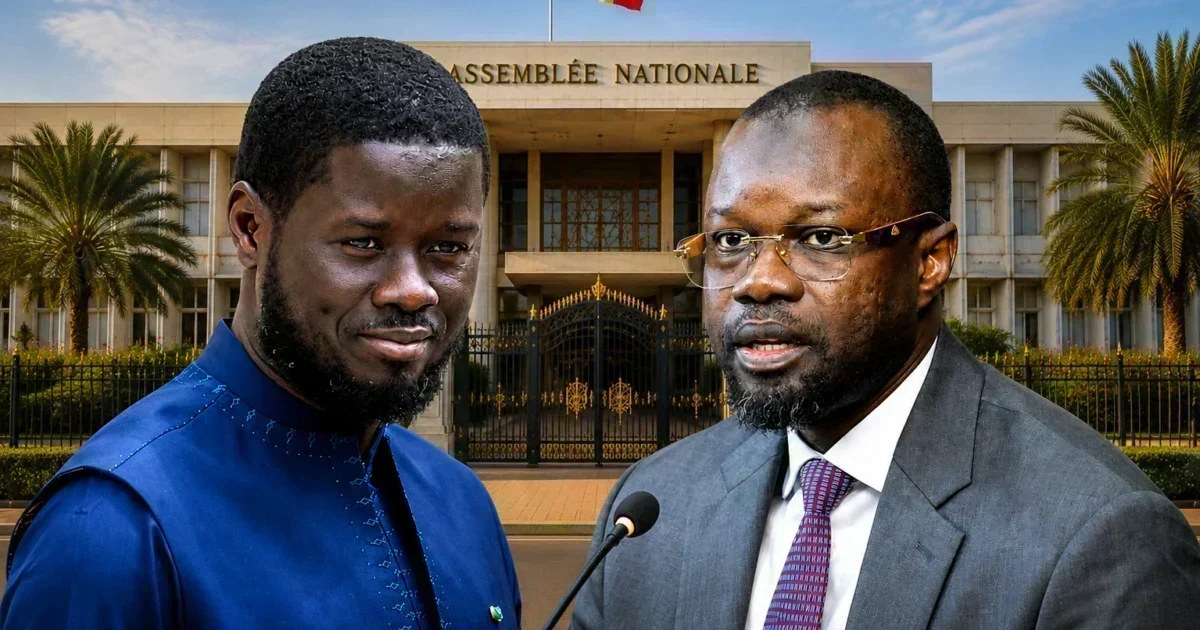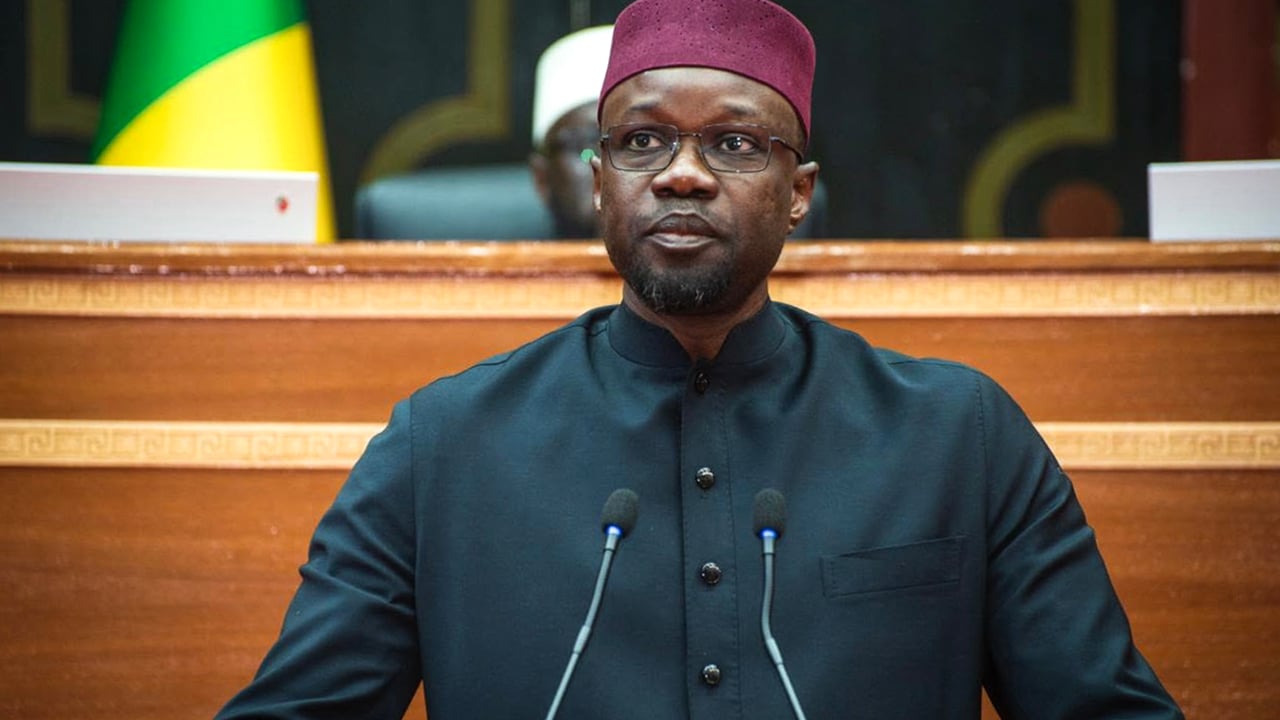
The anticipated breakup between Diomaye Faye and Ousmane Sonko has finally materialized in Senegal. What many feared has become reality: Sonko, once the powerful figure behind the president, now finds himself sidelined and confined within the walls of the National Assembly.
A shift in power dynamics
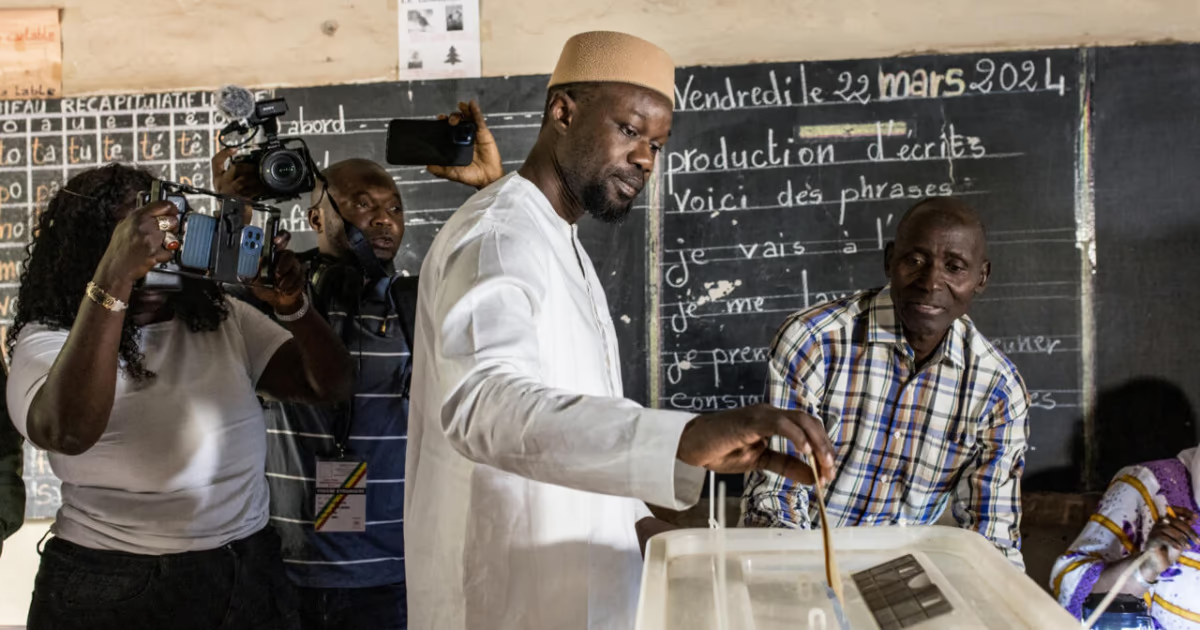
Ousmane Sonko, with his sharp political instincts, had initially viewed the National Assembly as a strategic refuge—a place to bide his time until 2029. His party, Pastef, had secured a landslide victory in the November 2024 parliamentary elections, giving him a strong foothold in the legislative body. At the time, it seemed like a calculated move to maintain influence while allowing Diomaye Faye to take the helm of the executive branch.
However, Sonko’s plan quickly unraveled. His attempt to shadow Diomaye Faye, acting as a de facto co-pilot, proved unsustainable. The political landscape of Senegal, with its strong presidential system, leaves little room for shared power. A prime minister, no matter how influential, remains subordinate to the president—a lesson Sonko learned the hard way.
Tensions escalated as Sonko felt increasingly constrained within the government. The situation took a decisive turn on July 1, 2025, when the Supreme Court upheld his ineligibility for the 2029 presidential race. This ruling stripped him of his long-term political ambitions, leaving him exposed and vulnerable. The perception that Diomaye Faye was indifferent to his struggles further fueled his frustration. With institutional avenues narrowing, Sonko reverted to his confrontational style, leveraging public discontent and pushing boundaries—even if it meant occupying the National Assembly in a controversial manner. His stronghold there is now fortified by a numerical advantage, immune to accusations from an opposition that appears increasingly powerless.
Diomaye Faye’s calculated restraint
The political chessboard in Senegal is far from simple. While constitutional and legal frameworks provide structure, they do little to capture the full complexity of the current power struggle. Two key figures dominate the scene: President Bassirou Diomaye Faye, a cunning strategist, and Ousmane Sonko, the charismatic but volatile “Djambar” (the storm). Their ultimate goal? Securing victory in the 2029 presidential election.
Each holds distinct advantages. Faye commands the institutions and the law, while Sonko wields the unwavering loyalty of his party cadres and a willingness to defy conventions. Sonko’s position in the National Assembly is undeniably powerful, but it is precarious. The threat of dissolution, the dominance of the ruling party in legislative maneuvers, and the looming shadow of a constitutional ruling on the legality of his reinstatement as a deputy all pose significant risks.
Meanwhile, Diomaye Faye appears to be playing the long game. Free from the constraints of Sonko’s influence, he is now focused on economic reforms and aligning with international financial institutions. He understands that confrontation is inevitable and is preparing meticulously, surrounded by a capable team.
What lies ahead?
Sonko’s grip on the National Assembly provides him with a tactical advantage, but it is not impregnable. The potential for dissolution, the vulnerability of his legal standing, and the possibility of a constitutional challenge all threaten his position. Diomaye Faye, on the other hand, is methodically strengthening his own base, laying the groundwork for the battles to come.
As the 2029 election approaches, the stakes could not be higher. Senegal stands at a crossroads, with its political future hanging in the balance. The moves made today will shape the contours of tomorrow’s leadership—and the nation’s trajectory.