Senegal opposition backs diomaye against sonko reforms
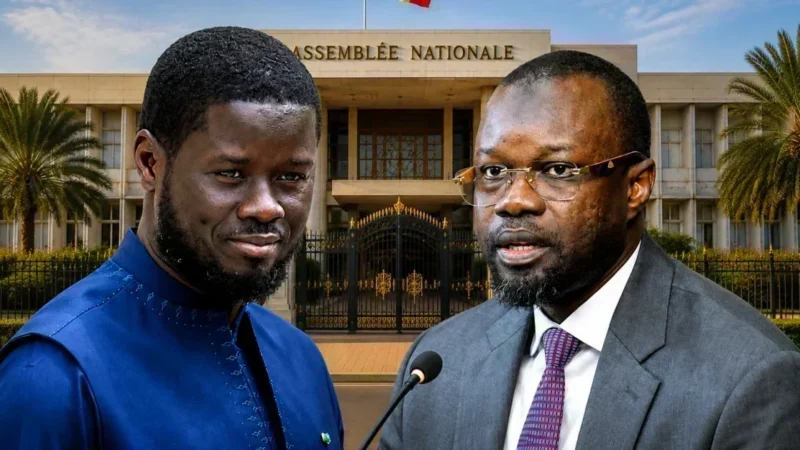
In Senegal, political dynamics are shifting as the Democratic Party (PDS) of former President Abdoulaye Wade aligns itself with President Bassirou Diomaye Faye’s stance against constitutional reforms proposed by Prime Minister Ousmane Sonko’s Pastef party.
The PDS, once a staunch opponent of Sonko, has publicly declared its intention to oppose the referendum on the constitutional amendments, which aim to expand parliamentary powers while curtailing those of the presidency. This unexpected alliance underscores a broader trend in Senegalese politics, where tactical realignments are reshaping the opposition landscape.
President Faye has pledged to hold a national vote on the reforms, framing it as a democratic exercise to let citizens decide. However, the PDS has framed its opposition as a defense of democratic institutions, accusing Sonko of pursuing personal ambitions under the guise of institutional change.
Historic shifts in Senegal’s political alliances
The PDS’s reversal of fortune is particularly striking given its recent history. In 2022, the party joined forces with Pastef during legislative elections to challenge then-President Macky Sall’s coalition. Two years later, as the 2024 presidential race approached, the PDS abandoned its own candidate, Karim Wade, and threw its weight behind the Sonko-Faye ticket—a move that significantly bolstered Faye’s electoral chances.
Karim Wade, who had been barred from running due to legal troubles, remains a key figure in the PDS’s calculations. His supporters within the party see this new alliance with Faye as a strategic move to regain influence, even as internal tensions persist.
A fragile partnership with no long-term guarantees
Despite their shared opposition to Sonko’s reforms, the PDS and Faye’s coalition remain uneasy partners. The party has refrained from joining the government, maintaining its independence while cautiously engaging with the administration. Analysts suggest this partnership is driven more by political pragmatism than ideological alignment.
“The PDS is repositioning itself after years in the political wilderness,” explains Hamadou Tidiane Sy, director of the E-Jicom journalism school in Dakar. “After losing power, they’re leveraging every opportunity to stay relevant. This alliance with Faye is less about shared values and more about survival.”
Critics of Sonko argue that his confrontational approach has alienated potential allies, pushing even former rivals toward temporary collaborations with Faye. The PDS’s latest move—opposing the referendum while backing Faye’s call for a vote—reflects this broader skepticism toward Sonko’s methods.
Opposition unites against Sonko’s reforms
The PDS’s decision to oppose the constitutional changes places it squarely in an anti-Sonko camp, even if it doesn’t fully endorse Faye’s agenda. In a recent statement, the party urged Senegalese voters to “bar the door” to the reforms, accusing Sonko of undermining democratic institutions for personal gain.
“This isn’t just the PDS’s stance—it reflects the mood across much of the opposition,” says Sy. “While they may not openly support Faye, they’re united in their rejection of Sonko’s tactics.”
Observers note that Sonko’s radical rhetoric and confrontational style have strained relations with even his former allies, pushing them toward Faye’s camp in a bid to restore stability.
“Sonko is seen as the disruptor, the one blocking reconciliation,” Sy adds. “His approach has forced others to reconsider their allegiances.”
A temporary truce, not a lasting bond
Despite their current alignment, analysts doubt the PDS will fully integrate into Faye’s coalition. Instead, this appears to be a circumstantial alliance aimed at countering Sonko’s influence rather than a genuine political merger.
“No one is rallying behind Faye out of conviction,” Sy clarifies. “They’re opposing the reforms because they see them as an attempt to centralize power in the legislature—something they associate with Sonko’s agenda.”
The analyst adds that Faye’s growing distance from Pastef suggests he’s already preparing for a post-Sonko political future. “He knows his future depends on building a new coalition,” Sy notes. “This alliance with the PDS is just the beginning.”
What’s next for Senegal’s shifting political landscape?
With tensions rising between Faye and Sonko, the PDS’s support could prove pivotal in shaping the referendum’s outcome. While Faye seeks to consolidate his base, the PDS remains a pragmatic player, ready to switch allegiances if it serves their interests.
As Senegal navigates this period of political recalibration, one thing is clear: the lines between opposition and alliance are increasingly fluid, with no permanent loyalties in sight.