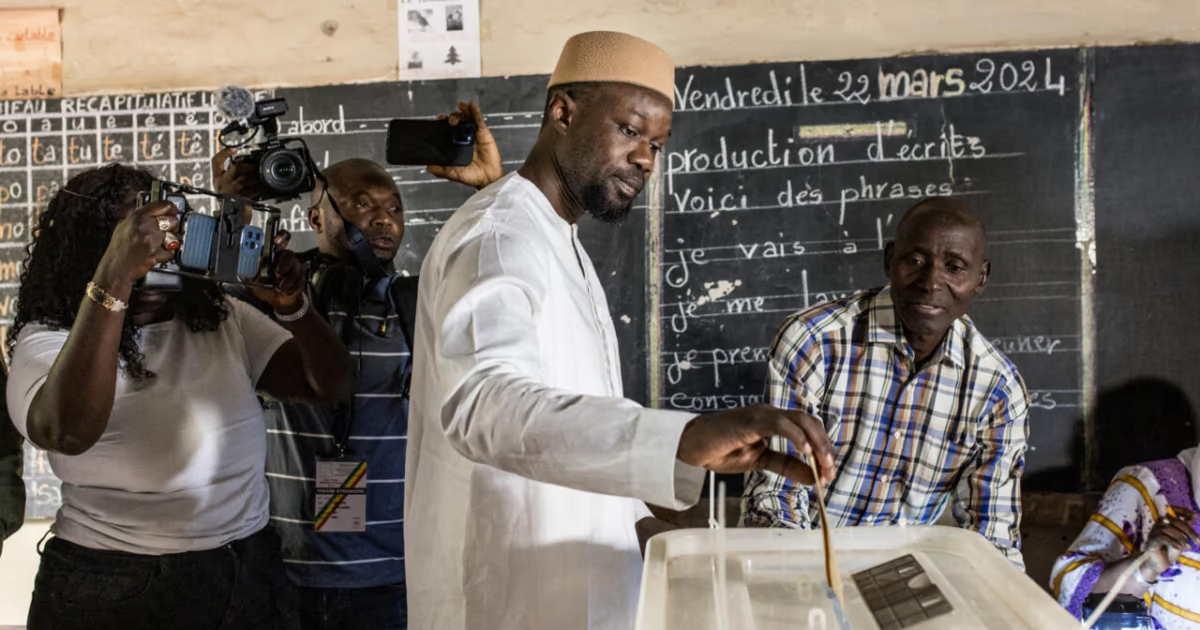
During a critical week-long engagement in Dakar, the International Monetary Fund (IMF) delegation, led by Mercedes Vera Martin, held high-stakes discussions with Senegalese authorities to address the nation’s escalating debt concerns. President Bassirou Diomaye Faye engaged directly with the IMF team, underscoring the administration’s commitment to fiscal transparency and sustainable economic reforms.
Why these IMF talks matter for Senegal’s economy
Senegal’s debt trajectory has become a focal point of economic policy debates, particularly as the government seeks to balance development needs with fiscal responsibility. The IMF mission’s visit—the latest in a series of consultations—aimed to evaluate progress on previously agreed financial targets and explore additional measures to stabilize public finances. Key areas of focus included debt sustainability, revenue mobilization, and expenditure efficiency.
With public debt levels approaching critical thresholds, the outcome of these negotiations carries significant implications for Senegal’s creditworthiness and access to international financing. Analysts note that a successful agreement could pave the way for renewed investor confidence and long-term economic stability.
What we know about the discussions
The meetings covered a broad spectrum of economic policies, from tax reform initiatives to subsidy rationalization strategies. The IMF emphasized the importance of structural adjustments to reduce fiscal deficits while protecting social programs. Notably, both sides explored mechanisms to enhance debt transparency, a response to recent revelations about undisclosed financial obligations.
While specific details remain under wraps, insiders reveal that progress was made on key reform benchmarks, including enhanced public financial management systems. The IMF delegation commended Senegal’s efforts to strengthen institutional frameworks, acknowledging the administration’s proactive engagement.
Next steps in the debt resolution process
- Debt sustainability analysis: A comprehensive review to determine feasible debt levels and repayment schedules.
- Policy commitments: Senegal is expected to formalize new fiscal targets in a revised Policy Coordination Instrument (PCI).
- Technical support: Ongoing collaboration with IMF experts to implement structural reforms.
The IMF’s final assessment, expected in the coming weeks, will shape the trajectory of Senegal’s economic policies and its relationship with global financial institutions. For President Faye’s administration, the stakes could not be higher: securing a deal that balances fiscal prudence with inclusive growth.