Political tensions grow between Senegal’s president and prime minister
The key points
- Political split: A high-profile documentary highlights growing tensions between Senegal’s president and prime minister
- Constitutional reform: Parliament approved a law on June 29 strengthening legislative powers, later struck down by the Constitutional Council on July 9
- Leadership conflict: President Bassirou Diomaye Faye and Prime Minister Ousmane Sonko, once PASTEF allies, now face off after their 2024 election victory
- Parliamentary dominance: The PASTEF holds 130 of the 165 National Assembly seats
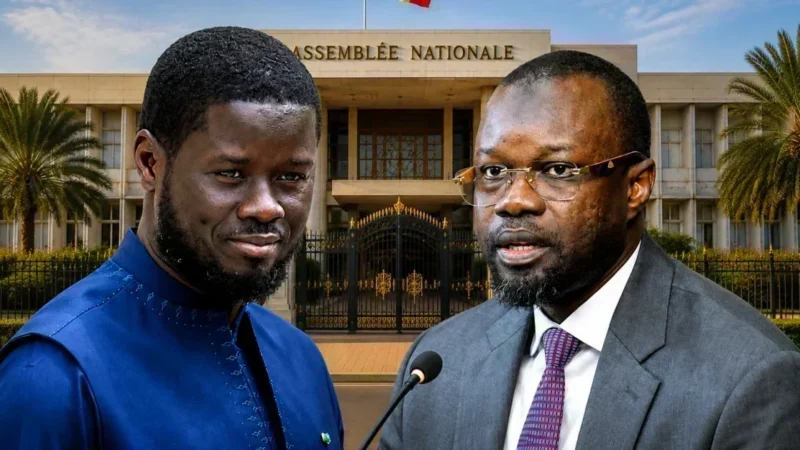
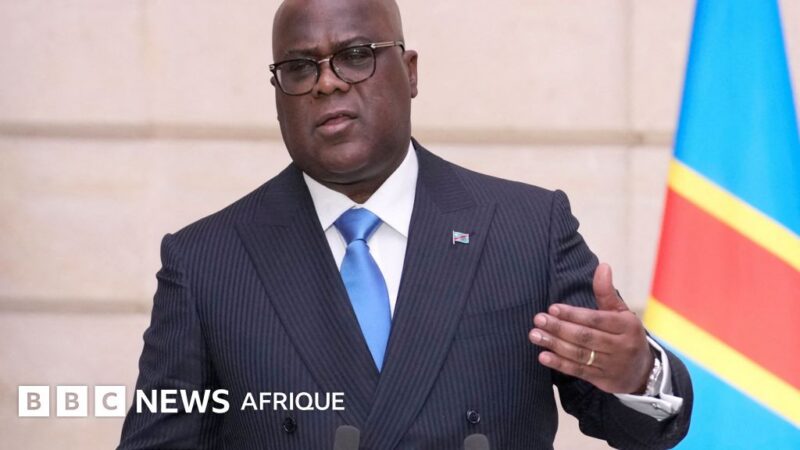
Senegal is today the focus of an international spotlight as a major news outlet releases a documentary dissecting the deepening political divide between two of the country’s most influential leaders. The footage, titled Friends turned foes: The split reshaping Senegal, explores the once-solid alliance between President Bassirou Diomaye Faye and Prime Minister Ousmane Sonko—both key figures in the PASTEF party—now locked in a high-stakes confrontation.
The timing of the coverage coincides with the Constitutional Council’s decision to overturn a sweeping constitutional reform passed by Parliament at the end of June. This legal setback has intensified the feud between the two leaders and reshaped the political landscape just three years ahead of the 2029 presidential election.
From alliance to rivalry: the unraveling partnership
Bassirou Diomaye Faye and Ousmane Sonko joined forces to win the 2024 presidential election under the PASTEF banner. With the party now commanding 130 out of 165 seats in the National Assembly, one might expect smooth governance. Yet, according to the documentary, ideological rifts have rapidly widened—particularly over economic policy and the country’s dealings with international bodies like the IMF. Observers describe the conflict as a “fratricidal battle” between two competing visions of governance.
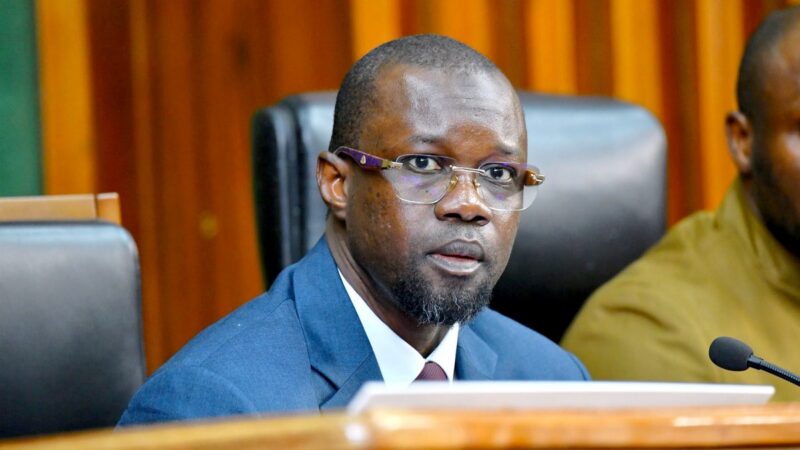
Adding fuel to the fire is Ousmane Sonko’s dual role as both prime minister and Assembly president, a rare concentration of legislative and executive authority that has fueled friction with the presidency. The documentary underscores how this institutional setup is not only unusual but also a breeding ground for internal power struggles.
Constitutional reform exposes deeper divisions
On June 29 of this year, Parliament approved a constitutional amendment designed to expand the powers of the legislature and prime minister. The proposed changes included a ban on the president leading a political party and the replacement of the Constitutional Council with a nine-member Constitutional Court. The move sparked immediate controversy.
President Faye challenged the reform’s validity by filing a complaint with the Constitutional Council on July 7. The body ruled on July 10 to invalidate the amendment, citing procedural irregularities and the absence of a budget allocation for the proposed court. The decision, while decisive, has done little to quell the uncertainty surrounding the ongoing power struggle.
Prime Minister Sonko responded by stating that the ruling “applies to all,” a terse remark that did little to clarify the path forward or ease concerns about the escalating institutional clash.
A duel watched from afar
The international media’s focus on the crisis underscores its significance. The documentary, produced by a major broadcaster with a strong presence in French-speaking Africa, offers a detailed examination of what it frames as a pivotal political realignment in Senegal.
For observers abroad, the situation serves as a reminder that even Senegal—a country long regarded as a model of democratic stability in West Africa—is not immune to institutional tensions. With a population nearing 19 million, Senegal remains a key economic and diplomatic partner for France in the region.
Local outlets have closely tracked the fallout from the reform’s invalidation, emphasizing the depth of the rift at the highest levels of government. Some media outlets have framed the Faye-Sonko confrontation as a “summit duel,” a phrase now echoed by analysts and commentators.
Senegal’s evolving political landscape
Senegal operates under a presidential system where the head of state traditionally wields broad executive powers. The 2024 election of Bassirou Diomaye Faye marked a significant political shift, driven by the momentum of the PASTEF movement and the widespread appeal of Ousmane Sonko.
The current configuration—where the prime minister also serves as Assembly president—is highly unusual and places both legislative and executive levers in the hands of one individual. This concentration of power helps explain the president’s determination to challenge a reform he views as an attempt to diminish the authority of the presidency.
The country is grappling with pressing economic challenges, including managing public debt and negotiating with the IMF. The disagreements between Faye and Sonko on these fronts, as highlighted in independent analyses, reflect broader strategic differences that extend beyond mere power struggles.
Election outlook and long-term stakes
The 2027 local elections and the 2029 presidential vote loom large on the horizon. Analysts warn that the growing rift between Faye and Sonko will likely shape these upcoming contests, with the potential for a split within PASTEF or a major realignment of political alliances.
The party’s overwhelming parliamentary majority complicates matters: neither leader can govern effectively without the other, raising the risk of institutional paralysis. The question of who will ultimately control the PASTEF apparatus has become central to the crisis.
The documentary frames the current turmoil not as a passing dispute but as the opening salvo in a prolonged battle for control of Senegal’s political future. The coming months will reveal whether the two leaders can find a way to coexist—or if their partnership collapses entirely. The Constitutional Council’s decision has provided temporary relief for President Faye, but it has done little to resolve the fundamental disagreements at the heart of the conflict. Senegal’s political scene now enters a period of uncertainty, closely monitored by regional and international partners.