
pioneering journalist Pierre Mabé and the birth of Radio Tchad
In the early days of Chad’s independence, President François Tombalbaye envisioned transforming the former Free French liaison station in Fort Lamy into a national voice. The task required more than technical expertise—it demanded a visionary journalist…
Chad’s Radio Pioneer: Pierre Mabé’s Journey from Cameroon to N’Djamena
A newly independent Chad in the early 1960s sought to establish its own voice. President François Tombalbaye envisioned a national radio station to unite the nation. His search led him to a remarkable Cameroonian journalist whose career would shape media across Francophone Africa.
From Fort Lamy to N’Djamena: Laying the Foundations of Radio Tchad
In 1960, as Chad celebrated its independence, President Tombalbaye set out to transform Radio La Voix du Tchad, a modest Free French liaison station in Fort Lamy, into a modern national broadcaster. To achieve this, he needed more than technical upgrades—he needed a visionary leader at the helm.
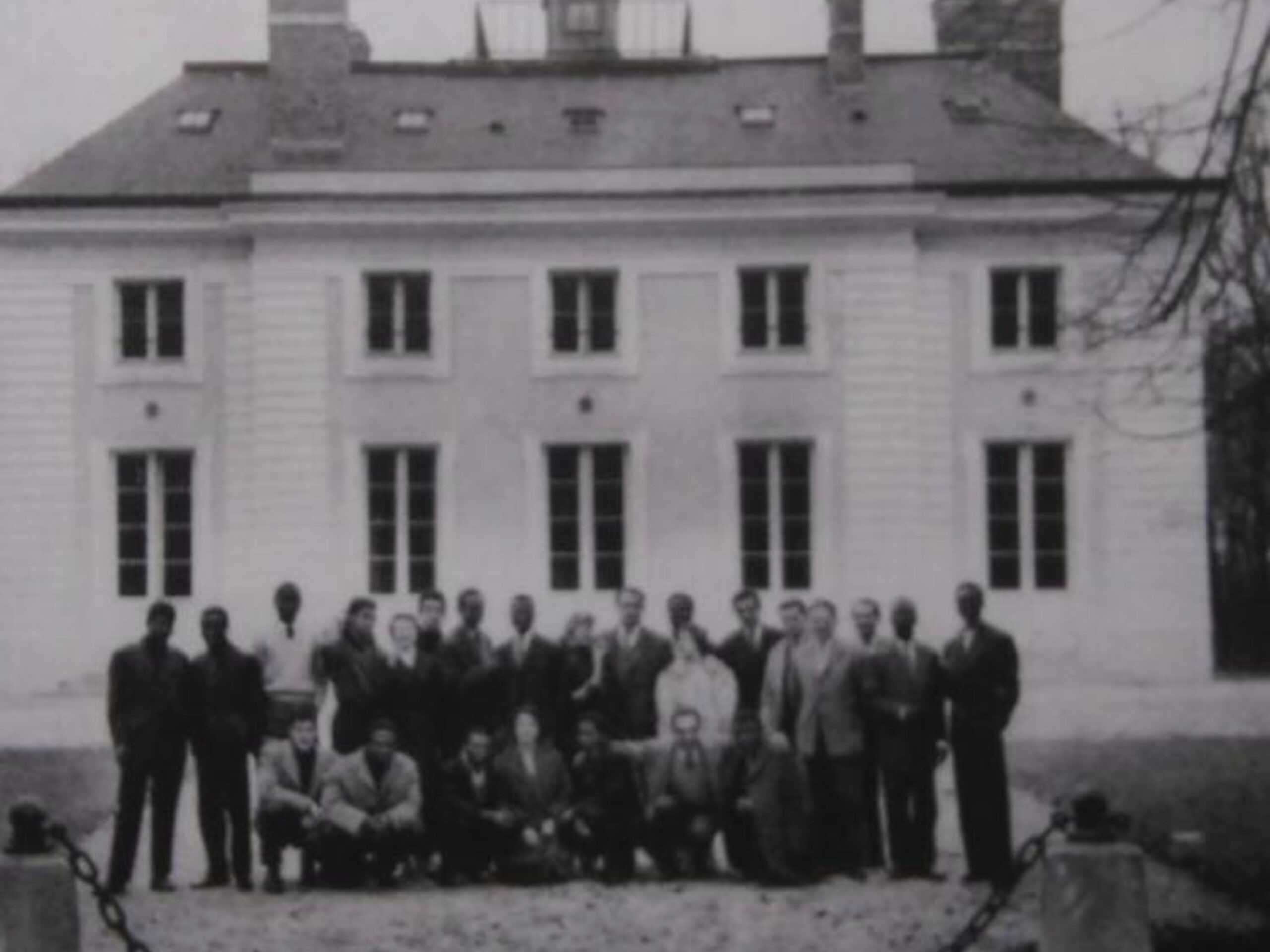
During a visit to France, President Tombalbaye made a strategic detour to the Pavillon de La Muette, a historic site in the heart of Saint-Germain Forest, near Maisons-Laffitte. It was here that he met Pierre Shaefflert, a renowned sound engineer who had revolutionized radio broadcasting in Africa. Shaefflert had a clear recommendation: “I need a skilled journalist to establish Radio Tchad.”
The engineer introduced Tombalbaye to Pierre Mabè Gwet, a distinguished Cameroonian journalist with an impressive background. Mabè had trained at the Studio-École in Paris, completing an internship in radio programming from 1956 to 1957 and a refresher course in 1960–1961. By this time, he had already become a key figure in French cooperation programs, earning a reputation for professionalism and cultural insight.
With his deep understanding of African identity and strategic geopolitical vision, honed during his studies at Sciences Po in Paris, Mabè was the ideal choice. His panafricanist perspective resonated with Tombalbaye’s vision for an authentic African identity. The president soon appointed him as his speechwriter, entrusting him with crafting key messages during Chad’s shift toward panafricanism.
A Legacy of Mentorship and Media Development
Pierre Mabè did more than launch Radio Tchad—he nurtured a generation of journalists. Under his leadership, the station moved from Fort Lamy to its current location in N’Djamena, becoming a training ground for Chad’s first media professionals. His influence extended beyond Chad’s borders, inspiring young talents like Garambaye Adoum Saleh and Saleh Kedzabo, the latter becoming a prominent voice in Jeune Afrique magazine.
Mabè’s career reflects the ambitions of a generation of African pioneers who laid the groundwork for media development on the continent. His contemporaries, such as Georges Rawiri of Gabon—who later became vice president—and Pierre Mouasso Priso, who founded Radio Cameroun, shared his commitment to using radio as a tool for education, unity, and progress.
In Côte d’Ivoire, figures like Sylvain Zogbo, alongside Thiam and Consty Eka, played pivotal roles in establishing the country’s audiovisual landscape. Meanwhile, in the Central African Republic, Toufic—a Lebanese-Togolese professional—helped build the foundations of national broadcasting.
Pierre Mabè’s story is one of resilience and foresight. After the 1975 coup that overthrew President Tombalbaye, he fled to Kousseri, crossing the border just in time to escape the violence that claimed the president’s life. His survival underscored his dedication to a cause greater than politics—a vision of media as a force for African unity and development.
Today, the legacy of Pierre Mabè and his contemporaries endures in the vibrant media landscape of Francophone Africa. Their contributions remind us of the power of radio as a tool for education, cultural preservation, and national cohesion.
Pierre Mabè
Radio Tchad
Francophone African journalism
Be the first to comment






Comments