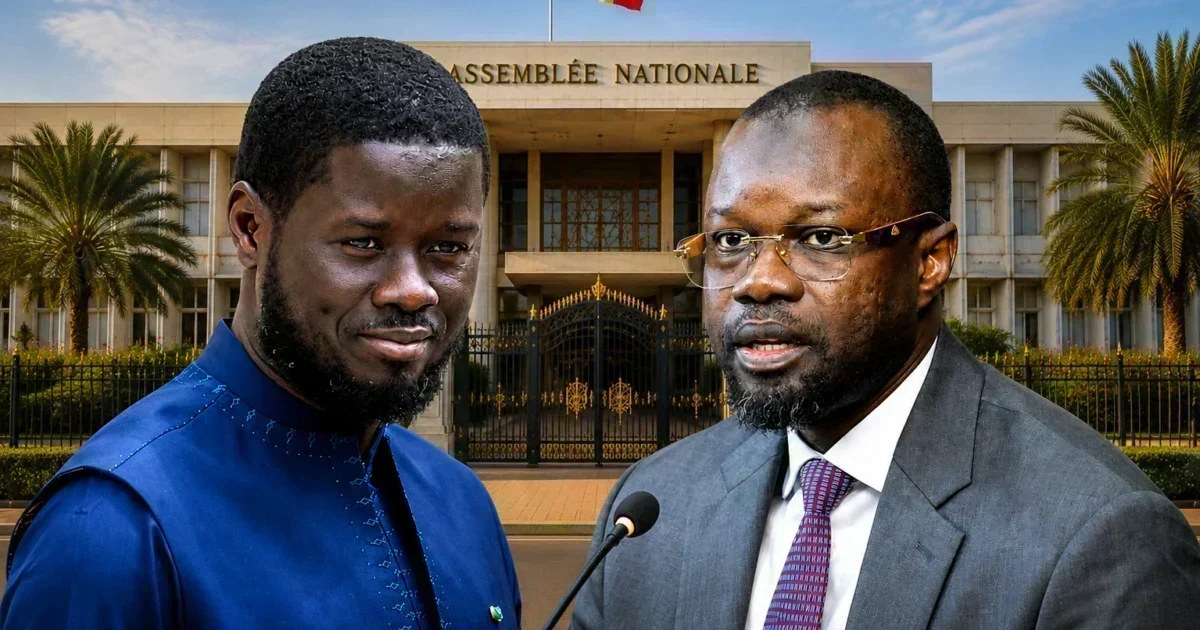
Dakar — Ousmane Sonko, the outspoken leader of the Pastef party, has sent shockwaves through Senegal’s political landscape by declaring his party’s capacity to topple the government at any moment.
Speaking to journalists, Sonko emphasized the numerical strength of his party in the National Assembly, positioning Pastef as a decisive force capable of triggering a vote of no confidence. His remarks have intensified speculation about the stability of the current administration and the shifting dynamics within Senegal’s parliament.
The announcement follows months of political tension, with opposition figures increasingly vocal about governance challenges and policy disputes. Sonko’s statement underscores a bold strategy to challenge the ruling authority, leaving many to question the immediate future of Senegal’s political trajectory.
How a motion of no confidence could reshape Senegal’s leadership
In Senegal’s parliamentary system, a vote of no confidence requires a majority of legislators to support the motion. With Pastef holding significant influence, Sonko’s confidence in their ability to secure the necessary votes highlights a potential turning point.
The process typically involves:
- Formal submission of the motion by opposition lawmakers;
- Debate and deliberation in the National Assembly;
- Voting requiring an absolute majority to pass.
If successful, such a move could force the resignation of the prime minister and trigger a reshuffle of the government, altering the balance of power in Dakar.
What this means for Senegal’s political future
The possibility of an imminent government collapse has heightened political awareness among citizens and stakeholders. Analysts suggest that Sonko’s declaration may be a calculated move to pressure the administration into concessions or reforms.
While the outcome remains uncertain, one thing is clear: Senegal stands at a crossroads, with the opposition poised to challenge the status quo. The coming days will reveal whether Sonko’s bold assertion translates into tangible political action.