Mali’s northern conflict: understanding the FLA and its alliances
Mali’s northern conflict: understanding the FLA and its alliances
The Front de libération de l’Azawad (FLA), a prominent separatist movement, has recently launched a second military offensive this weekend, aligning with the Groupe de soutien à l’Islam et aux musulmans (JNIM). Their objective is to reclaim control over northern and central regions of Mali currently under government authority. This aggressive push highlights the persistent security challenges in the political Sahel.
This latest offensive follows closely on the heels of a coordinated series of attacks on April 25, when the FLA first partnered with the Al-Qaeda-affiliated JNIM. Those initial assaults targeted northern, central, and southern Mali, demonstrating the groups’ expanding operational reach across West Africa Sahel news zones.
The April attacks particularly impacted Kati, a crucial stronghold for Mali’s military leadership, severely shaking the government led by Assimi Goïta. The Minister of Defense, Sadio Camara, was killed, and the head of intelligence services, Modibo Koné, sustained serious injuries. These events underscore the fragility of the political situation in Mali.
During the earlier offensive, the FLA managed to recapture Kidal, a city that had become a highly symbolic victory for the Malian army and the Africa Corps (Corps des forces russes pour l’Afrique) after its capture in 2023, marking their military success in the country’s northern reaches. However, the Malian army swiftly announced its reassertion of control over Kidal following a counter-offensive in the aftermath of the April 25 attacks.
Social media platforms and specialized security blogs focusing on the Sahel have extensively reported on the FLA’s renewed mobilization, noting significant recruitment of local residents in northern Mali in preparation for this latest offensive. This surge in activity contributes to the dynamic Sahel security landscape.
In response, Malian authorities announced on June 4 a substantial reward of 12.4 million dollars for information leading to the apprehension or demise of JNIM and FLA leaders. Concurrently, the Malian army and Africa Corps have intensified their operations in the northern region, backed by considerable investments in military equipment to preempt future assaults.
Understanding the FLA’s structure and origins
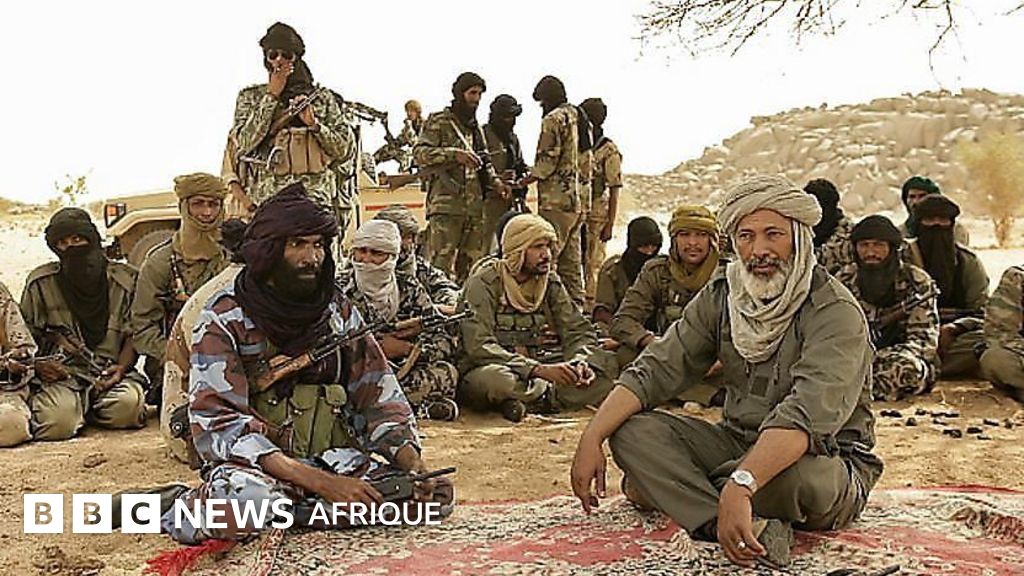
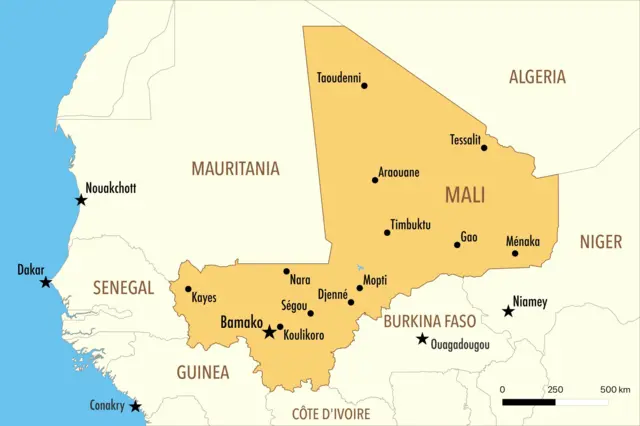
The Forces de libération de l’Azawad (FLA) emerged on November 30, 2024, in Tinzaouatene, a small town in northern Mali near the Algerian border. It was formed through the merger of various Tuareg and Arab separatist armed groups, all united by the common goal of Azawad’s independence.
Azawad refers to a vast territory spanning the cities of Gao, Timbuktu, Kidal, and Ménaka. This region was unilaterally declared an independent state in 2012 by the Mouvement national de libération de l’Azawad (MNLA), one of the foundational groups that later constituted the FLA.
The FLA is the successor to the Permanent Strategic Framework for Peace, Security, and Development (CSP-PDA), which itself was an amalgamation of several separatist factions. These organizations included the MNLA, the High Council for the Unity of Azawad (HCUA), rebel segments of the Arab Movement of Azawad (MAA), and the pro-government Imghad Tuareg Self-Defense Group and Allies (Gatia).
The roots of Tuareg unity movements, however, trace back to 1988 in Libya, where the Popular Movement for the Liberation of Azawad (MPLA) was established by Algerian and Libyan exiles under the leadership of Iyad Ag Ghali, who now heads the JNIM.
Bilal Ag Acherif, born in Kidal in 1977, serves as the president of the FLA, playing a pivotal role in the movement’s political direction and governance. His right-hand man, Alghabass Ag Intalla, is the FLA’s military chief, responsible for reconciliation efforts and managing relations with the JNIM. Intalla is the son of the late Ifoghas traditional leader, Intallah Ag Attaher, who passed away in 2014. Mohamed Ramadane acts as the group’s spokesperson.
The FLA’s aspirations for an independent Azawad
Since Mali gained independence in 1960, certain Arab and Tuareg communities have been in opposition to the Malian government, leading to armed rebellions in 1962, 1990-1996, and most recently in 2012. These historical grievances fuel the current political Sahel instability.
The FLA’s primary goal is the establishment of an “Azawad Republic,” envisioned as a homeland for the approximately two million Tuaregs dispersed across West and North Africa, a consequence of colonial fragmentation. The group alleges systemic political, economic, and cultural marginalization by the Malian government.
Despite the northern regions of Mali possessing rich reserves of salt, uranium, gold, diamonds, and phosphates, government investments in essential infrastructure such as schools, health centers, water and electricity supplies, and roads remain meager. This disparity is a key driver of discontent within the region.
Acherif recently articulated the movement’s independence efforts, stating that Azawad “was annexed to Mali without regard for its history as an independent civilization.” This sentiment underscores the historical narrative underpinning the FLA’s struggle.
The Malian government has accused neighboring Algeria and Mauritania of supporting the FLA. Algeria previously mediated the Algiers Agreement, signed in 2015 between the Malian government and northern armed groups, an agreement Mali abandoned in January 2024. Additionally, Ukraine, Mauritania, and France have also faced accusations of backing the FLA’s cause.
The exact number of FLA fighters is unknown, though Ramadane has stated the group maintains a “strong military presence extending from the Mauritanian to the Algerian border.” Their primary camps are situated near the Algerian frontier, notably in Kidal and Tinzaouatine. Between 2024 and 2025, the FLA primarily utilized kamikaze drones in their attacks, but they frequently release images of armed fighters on long convoys of pick-up trucks traversing the desert, showcasing their conventional capabilities.
The evolving relationship between the FLA and JNIM
Iyad Ag Ghali, the leader of JNIM, was a prominent figure in the Tuareg rebellion before shifting towards radical Islamist groups in the late 1990s. The current relationship between JNIM and the FLA, however, solidified around mid-2024. This alliance significantly impacts the Sahel security dynamics.
In May 2024, Ag Intalla reportedly indicated that the CSP-DPA, the FLA’s predecessor, had initiated discussions for rapprochement with JNIM. Ramadane later clarified that the FLA and JNIM had reached a “tacit non-aggression pact.”
By July 2024, the CSP-DPA, with assistance from JNIM, was involved in the battle of Tinzaouatene, which resulted in the deaths of dozens of Malian soldiers and Russian mercenaries from the Wagner group. However, the armed group subsequently criticized the FLA for not acknowledging JNIM’s “sacrifices and generosity” during these confrontations.
Malian media reported in March 2025 that the two groups had agreed to jointly combat the Malian army and Russian troops, following talks held in late February 2025. This partnership was openly acknowledged by both groups after the widespread attacks across Mali on April 25.
The Forces de libération du Mali (FLA) framed this agreement as a “strategic convergence” aimed at overthrowing the Malian military government. Conversely, the Front national islamique du Mali (JNIM) asserted that this partnership became viable after the Tuaregs expressed readiness for the “establishment of Sharia law.”
Acherif informed Al Arabiya Al Hadath that the FLA and JNIM operate in the same region and confront a common adversary. He acknowledged ideological differences but affirmed, “we are discussing local solutions.” The long-term viability of this partnership remains uncertain, given the distinct ideological positions and ultimate objectives of the two groups, a key aspect of the evolving political Sahel landscape.