A recent detention in Bamako has spotlighted the growing sensitivity of Mali’s transitional authorities to any form of opposition targeting the Russian presence in the country. Ibrahima Tamega, a prominent pro-democracy activist advocating for a return to constitutional order, was apprehended on May 23 and held at the Third Arrondissement police station. Investigators allege his involvement in the creation of anti-Moscow graffiti found across the capital.
Nearly a week after his arrest, Tamega remained in custody awaiting a hearing before the prosecutor in Bamako’s Commune II court, who would determine whether to release him or initiate formal judicial proceedings. However, the standard 48-hour detention period—extendable once with prosecutorial approval—has been significantly exceeded. This unusual delay has raised concerns among his supporters, who argue the detention lacks a clear legal foundation.
Unprecedented extension of detention defies Mali’s legal norms
Mali’s penal code strictly regulates pre-trial detention, mandating that authorities present detainees to a magistrate within a set timeframe. Any delay without formal justification is considered a violation of due process. In Tamega’s case, no official document has been disclosed to explain his prolonged confinement. His family reports restricted access to case details and uncertainty about the specific charges against him.
This procedural gap reflects a broader pattern observed since the military’s rise to power in 2020 and 2021. Critics of the transitional government—including activists, judges, and political figures—have faced arrests whose legality has been questioned by human rights organizations. The recent dissolution of political parties has further narrowed public discourse.
Anti-Russian graffiti emerges as a rare voice of dissent in Bamako
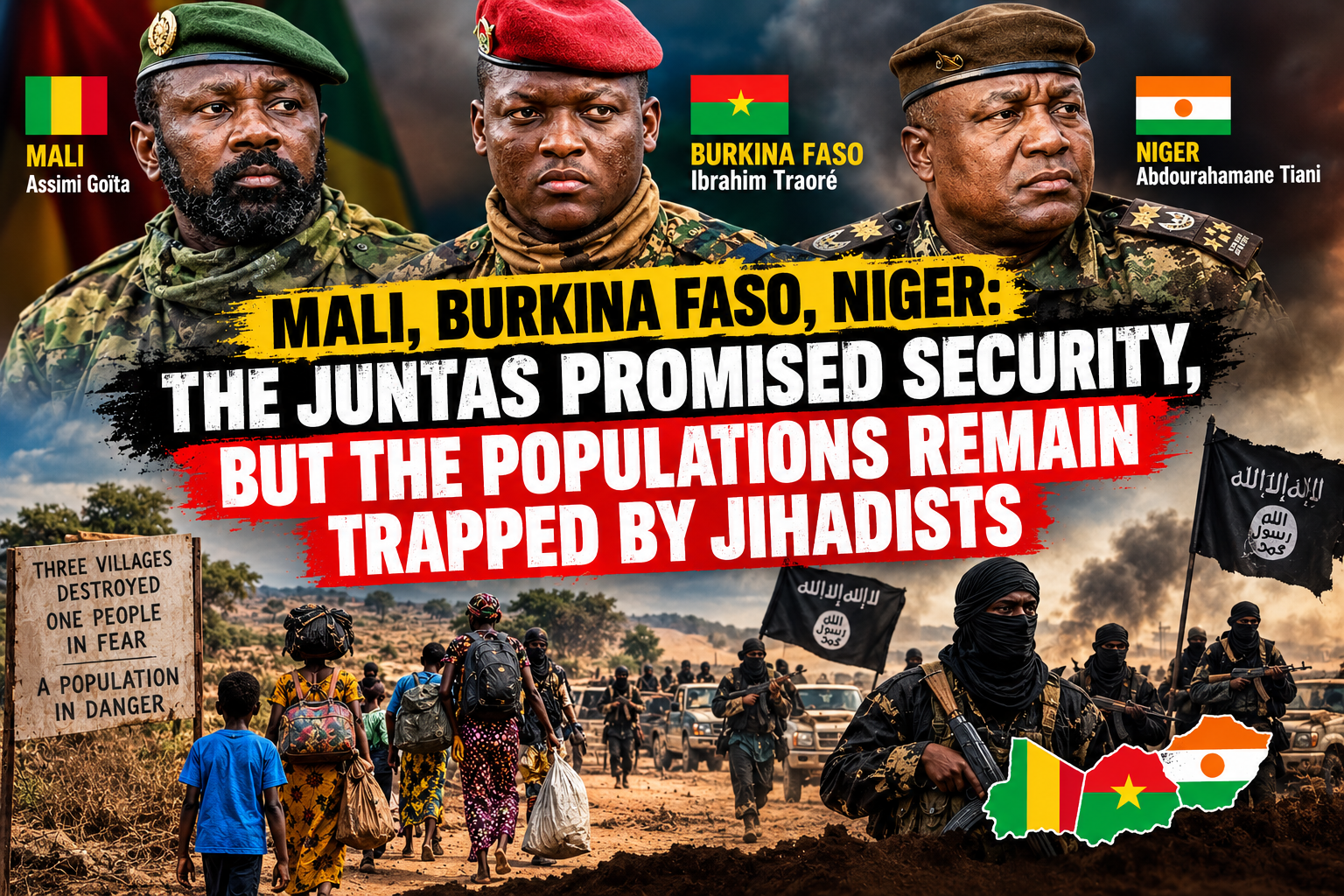
The appearance of anti-Russian graffiti in Bamako marks a notable shift in the city’s political landscape. Since the withdrawal of French forces (Barkhane) and the UN mission (MINUSMA), Mali’s transitional leadership under General Assimi Goïta has deepened its security ties with Moscow. The deployment of Russian paramilitary groups—first Wagner, now Africa Corps—has expanded, supporting Malian armed forces in countering jihadist and separatist threats.
While international NGOs have repeatedly condemned alleged abuses by Russian fighters and local allies, public opposition to Russia remains scarce in Bamako. The graffiti incidents represent one of the few visible signs of dissent in a city where official rhetoric frames the Russian alliance as a pillar of regained sovereignty.
Arrest exposes shrinking civic space in Mali
Ibrahima Tamega’s profile amplifies the political stakes of his detention. A vocal advocate for credible elections, he belongs to a network of civil actors pushing for the junta to honor its transition commitments. His arrest follows a wave of detentions, house arrests, and forced exiles targeting opposition figures in recent months.
For Western diplomats still operating in Bamako amid deteriorating relations, Tamega’s treatment will serve as a litmus test for Mali’s political direction. The Economic Community of West African States—whose membership Mali left alongside Burkina Faso and Niger to form the Alliance of Sahel States—closely monitors regional freedom of expression. The outcome of Tamega’s detention will reveal whether authorities pursue formal prosecution or opt for a discreet release, as seen in past cases.
The prolonged detention itself sends a clear message, perceived locally as a warning to anyone daring to publicly challenge the Russian-Malian partnership.