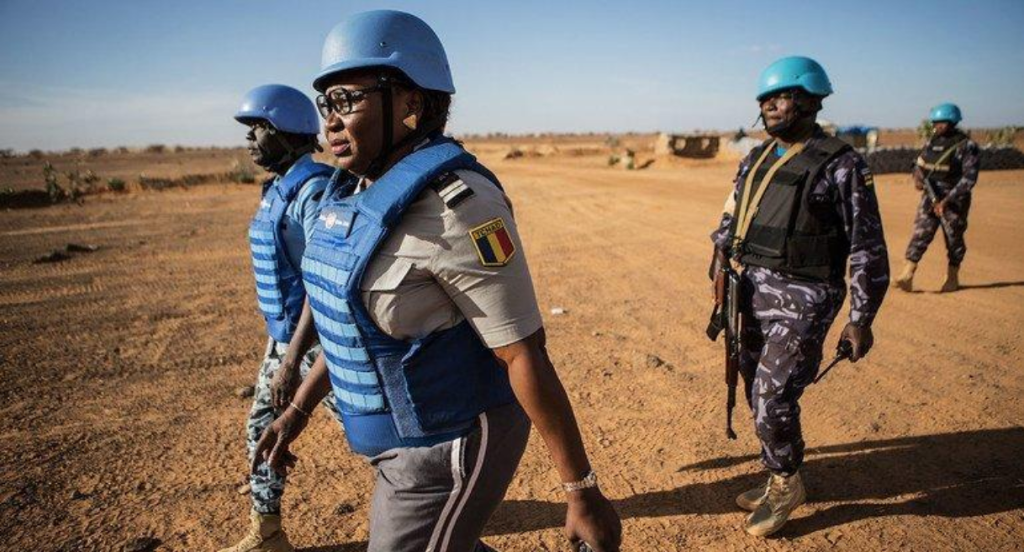
Bamako is tightening its grip on national territory. The Malian transitional authorities have formally declared 39 zones of military interest across the country off-limits to civilians. This measure, presented as a safeguard for ongoing operations, comes as the Malian Armed Forces (FAMa) increase their deployments to counter active armed terrorist groups in the central and northern regions. It aligns with a strategy to secure sites deemed critical for conducting asymmetric warfare.
Mali’s evolving military landscape
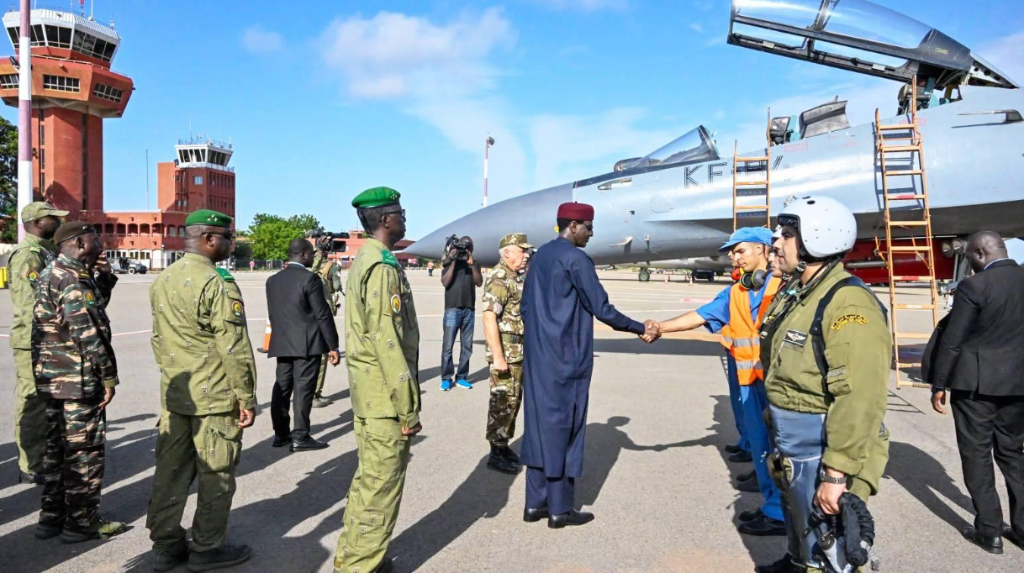
The designation of 39 military interest zones represents a significant administrative action. Beyond conventional facilities like barracks, military airfields, or logistics depots, these perimeters likely encompass operational corridors, forward bases, and locations where recently acquired air and ground assets are deployed. Mali has significantly bolstered its arsenal since 2022, notably with aircraft and drones aimed at regaining tactical initiative. Protecting these sensitive assets has become a paramount concern for the general staff.
This directive also reflects a deliberate effort to control information. In a conflict where human intelligence and observation of military movements serve as strategic resources for adversarial groups, restricting circulation around vital sites is a counter-intelligence imperative. Authorities seek to curb information leaks that could potentially fuel complex attacks against military installations, similar to those that have targeted several garrisons in recent years.
A political signal to citizens and international partners
This announcement emerges within a context where the military-led transition is consolidating its command over the security apparatus. Following the complete withdrawal of the United Nations Multidimensional Integrated Stabilization Mission in Mali (MINUSMA) at the end of 2023, and the termination of the French Barkhane force, Bamako asserts full operational sovereignty. The nation now relies on its own capabilities, strengthened by collaboration with Russian partners and through the framework of the Alliance of Sahel States (AES), which unites Mali, Burkina Faso, and Niger.
For civilian populations, this measure will have tangible consequences. Restricted access to certain areas could disrupt commercial routes, pastoral migrations, and agricultural activities, particularly in regions where military installations are adjacent to inhabited lands. Humanitarian organizations, already navigating a challenging security environment, will face an even more constrained operational framework. The critical questions of providing advance information to affected communities and precisely delineating these perimeters remain pressing.
Extended tension across the Sahel region
Bamako’s action is part of a broader regional dynamic. Burkina Faso and Niger, fellow members of the AES, have also implemented measures to safeguard their military infrastructure and regulate movement in areas deemed sensitive. The convergence of security doctrines among these three states reflects a shared understanding of the threat and a commitment to harmonize operational responses. This coordination is progressively extending to the pooling of resources and the envisioned deployment of a joint force, as announced by the bloc’s heads of state.
Nevertheless, this strategy of establishing protected zones raises medium-term concerns. When military interest zones proliferate, they can effectively place parts of the territory under an exceptional status, complicating the return of civil administration and the resumption of economic activities. Achieving a balance between urgent security imperatives and the continuity of national life becomes a delicate exercise, especially in a country where nearly two-thirds of the territory has been impacted to varying degrees by insecurity since 2012.
The evolution of this new framework will be closely monitored by diplomatic missions across the sub-region and by international donors, who remain attentive to conditions for humanitarian access and the respect for population rights. The practical management of these 39 zones, their exact boundaries, and the penalties for violations will significantly shape the perception of this measure, both domestically and across the continent.