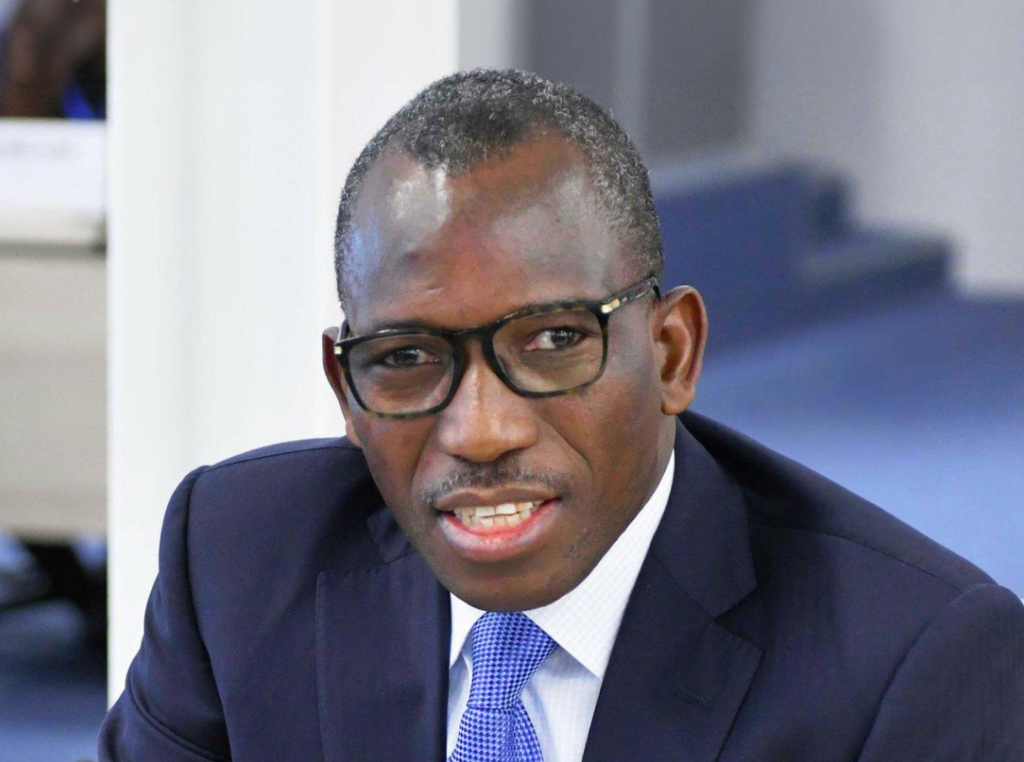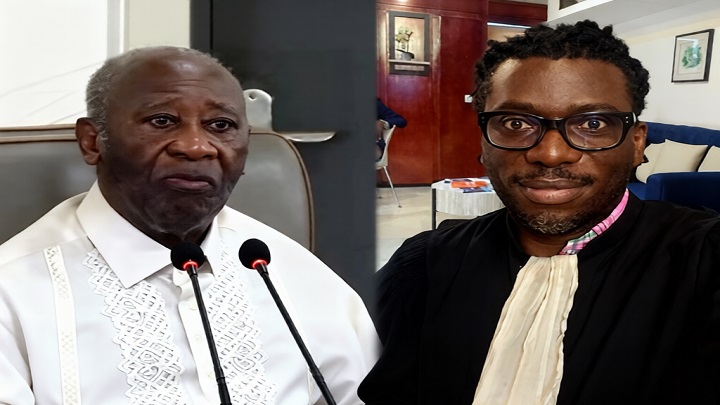
The recent re-election of Laurent Gbagbo as leader of the Parti des Peuples Africains – Côte d’Ivoire (PPA-CI) has reignited discussions across the Ivorian political landscape. Following the party’s inaugural ordinary congress in Abidjan, prominent lawyer Ange Rodrigue Dadjé asserted that the ongoing criticism directed at President Alassane Ouattara for his continued involvement in politics is no longer warranted.
“Ultimately, one should no longer fault President Ouattara for choosing to remain active in politics, despite his earlier indications of retirement,” the lawyer stated on Friday, May 15, 2026. This declaration has already generated significant buzz within political circles and across social media platforms.
This pronouncement emerges amidst a distinctive period defined by Laurent Gbagbo’s assertive return to the core of Ivorian political dynamics. Many had anticipated the former head of state would gradually transition into political retirement; however, the PPA-CI congress ultimately opted to retain him at the party’s helm through acclamation. Interestingly, just months prior, Laurent Gbagbo had hinted at stepping back. In an interview on October 22, 2025, with journalist Alain Foka for AFO Media, the former Ivorian president explicitly declared his intent to refrain from seeking further political responsibilities following the December 2025 legislative elections.
“There is no retirement in politics, but I will prohibit myself from holding political functions, whether within my party or the state. I have given enough,” he had asserted. At 81 years old, the former president, definitively acquitted by the International Criminal Court (ICC) in 2021, appeared poised to gradually pass the torch to a new cohort of PPA-CI leaders. Nevertheless, the party’s first ordinary congress, convened on May 14 and 15, 2026, in Abidjan, charted a different course.
Addressing party militants and officials, Laurent Gbagbo ultimately agreed to continue his political struggle. “I remain for the fight,” he declared to the applause of congress attendees, thereby concluding speculation about a definitive withdrawal. For many observers, this decision inevitably reignites the discussion surrounding the sustained political presence of prominent Ivorian figures, particularly President Alassane Ouattara.
As early as 2020, the head of state had sparked considerable controversy by announcing his candidacy for a third term, despite having previously indicated his intention to yield power to a younger generation. At that time, the opposition, including Laurent Gbagbo’s PPA-CI, vehemently condemned this reversal, arguing that the Ivorian president had gone back on his word. However, Ange Rodrigue Dadjé contends that the current circumstances within the PPA-CI illustrate how political realities frequently supersede leaders’ initial commitments.
In July 2025, Alassane Ouattara officially declared his candidacy for the October 2025 presidential election, seeking a fourth mandate. At 83 years old, he justified his choice by emphasizing the imperative to guarantee the nation’s stability amid regional challenges spanning security and economic sectors. “This carefully considered decision is a duty,” the Ivorian president asserted, affirming his actions were in the “supreme interest of the Nation.”
Laurent Gbagbo’s continued leadership of the PPA-CI now appears to redefine the contours of the Ivorian political debate. Many interpret this as a clear demonstration of the influence wielded by party militants and partisan realities in shaping the decisions of political leaders, even those who had previously announced their intention to withdraw. Both within political headquarters and among the general public, this development rekindles a persistent question in Côte d’Ivoire: can historical political titans truly exit the stage as long as their supporters continue to demand their leadership?