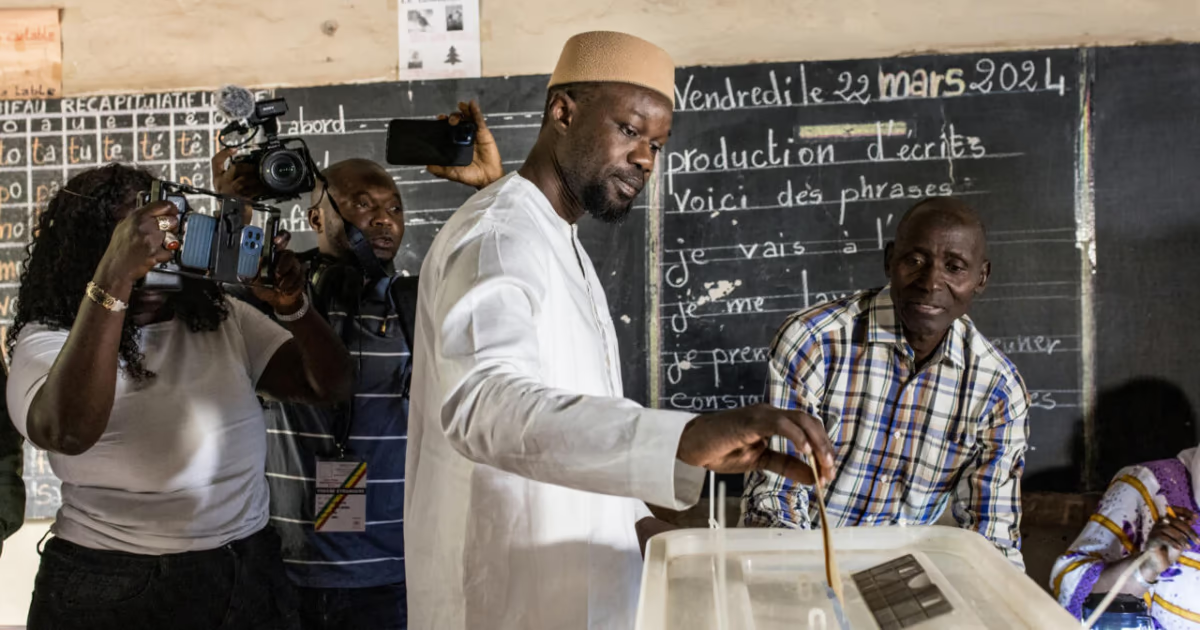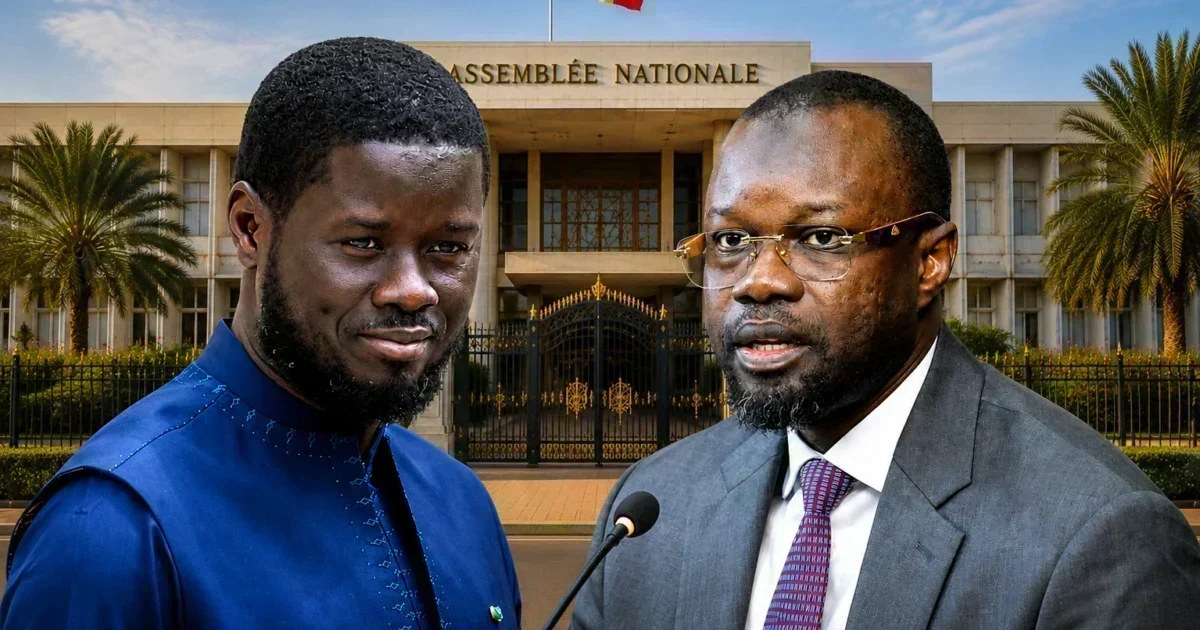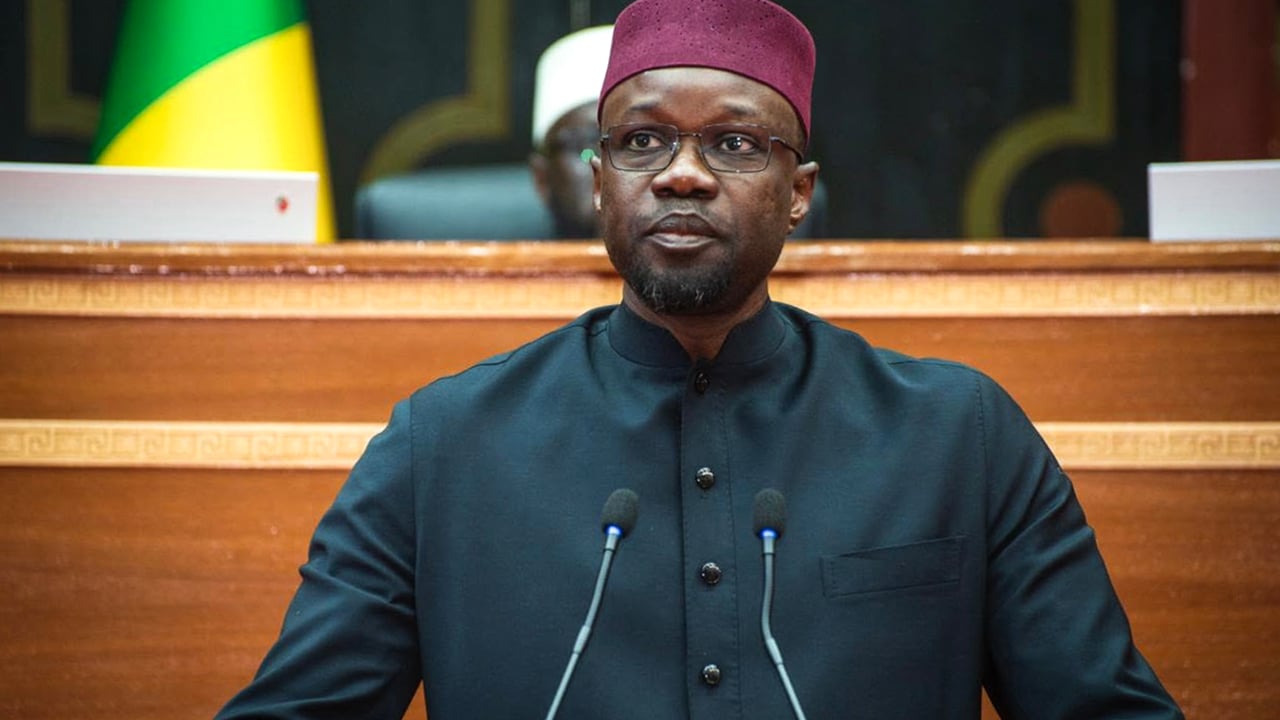
The political landscape in Senegal has taken a dramatic turn this week, with the unexpected rise of Ousmane Sonko as the new President of the National Assembly—despite his recent dismissal as Prime Minister by President Bassirou Diomaye Faye. This development has intensified the already complex power dynamics within the country’s ruling party, Pastef, raising critical questions about governance and reform in a nation grappling with economic challenges.
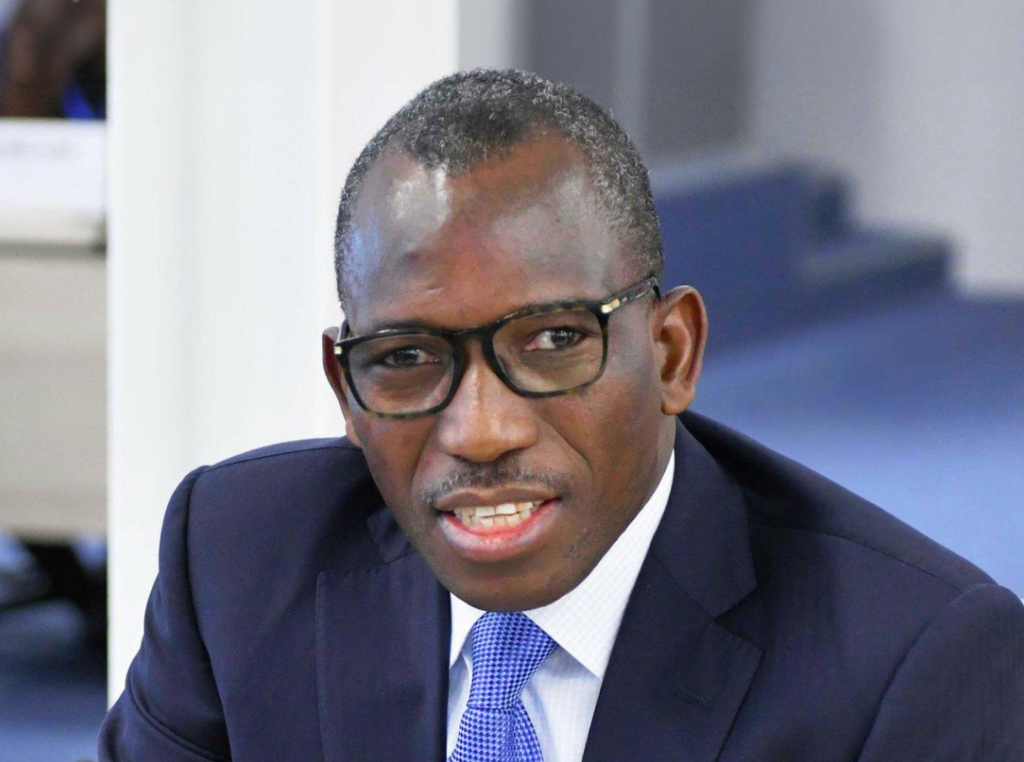
Sonko’s election to the second-highest position in the state marks a significant shift in Senegal’s political hierarchy. His return to the forefront of the National Assembly, backed by a robust majority from his party, underscores the deep divisions within Pastef. Meanwhile, Ahmadou Al Aminou Lô, a former executive at the West African Central Bank, has been appointed as the new Prime Minister, adding another layer of complexity to the evolving political scene.
With these changes, President Bassirou Diomaye Faye now faces a pressing challenge: Can he effectively govern and implement much-needed reforms while navigating the internal strife that threatens to undermine his leadership? The stakes are high, as Senegal continues to confront severe economic pressures that demand decisive action.
Key figures shaping the debate
To dissect these unfolding events, a panel of prominent analysts and thought leaders gathered to share their insights:
- Mamoudou Ibra Kane, a seasoned journalist and author of Troisième alternance au Sénégal : mon double regard, offers a unique perspective as a leader of the political movement Demain. His deep understanding of Senegal’s constitutional history provides valuable context for the current crisis.
- Karine Oriot, a respected geopolitical analyst, brings a global lens to the discussion, highlighting how regional dynamics and international relations could influence Senegal’s future.
- Moussa Diaw, a professor emeritus of political science at the Gaston Berger University in Saint-Louis, specializes in international relations and offers a critical examination of the broader implications of these political shifts.
The discussion delves into the nuances of Senegal’s political environment, exploring the potential consequences of this power struggle on governance, economic stability, and the country’s long-term trajectory.