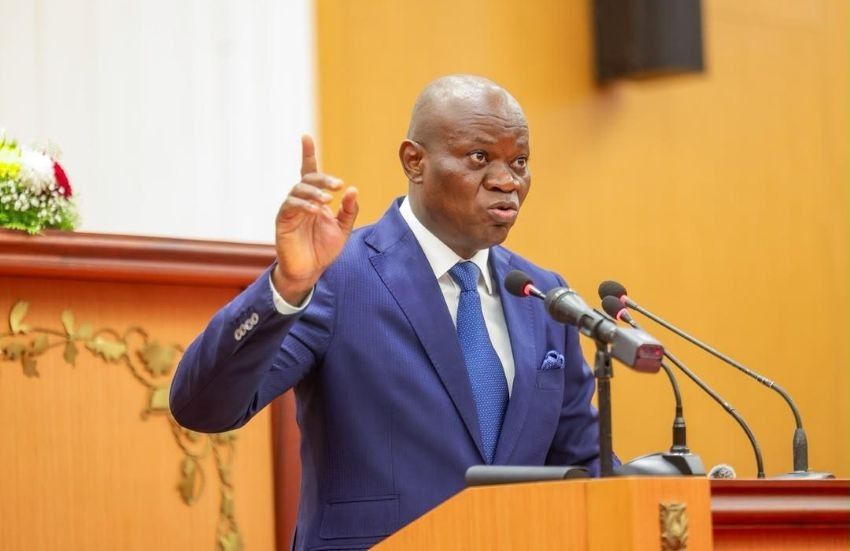
Libreville, Tuesday, June 16, 2026 — June 15, 2026, marks a turning point in Gabon’s political history. For the first time since the Fifth Republic’s Constitution came into force, President Brice Clotaire Oligui Nguema delivered a national address to Parliament convened in Congress at the Léon Mba Palace.
Beyond the institutional exercise, this address signaled the emergence of a new political culture rooted in accountability, transparency, and democratic consolidation. In a country accustomed to a vertical relationship between the executive branch and representative institutions, this annual event introduces profound change. The head of state is no longer merely governing but is now required to account for actions. This constitutional obligation reshapes power dynamics and places Parliament at the heart of the republic’s functioning.
A bold institutional reshaping
The Fifth Republic’s defining innovation lies in the creation of an annual State of the Nation Congress. Mandated by Article 59 of the Constitution—adopted following the Inclusive National Dialogue—this mechanism compels the president to present an annual assessment and future outlook before the people’s representatives each year.
The significance of this provision extends far beyond symbolism. It establishes a permanent institutional dialogue between the Executive and Legislative branches. In modern democracies, legitimacy is no longer derived solely from elections. It also depends on leaders’ ability to justify their decisions and take responsibility for outcomes.
Selecting the Léon Mba Palace as the Congress venue reinforces this logic. For decades, political life revolved around the Palais du Bord de Mer. Now, the national representation becomes the stage for the president’s address. This institutional shift reflects a clear intent to rebalance power and strengthen Parliament’s role in public life.
A transformative agenda unveiled
Addressing lawmakers, President Oligui Nguema presented an ambitious assessment of actions taken since August 2023. His speech centered on one core message: Gabon has entered a phase of accelerated reconstruction aimed at restoring the state, modernizing the economy, and improving living conditions.
Social initiatives took center stage. Among the highlights were the creation of a fourth CNAMGS fund for informal sector workers, the construction of 3,100 social housing units for civil servants, the disbursement of the third phase of back pay for public agents totaling 35 billion CFA francs, and the reimbursement of Post Office savers to the tune of 10 billion.
The head of state also highlighted the regularization of over 60,000 administrative situations and the creation of 22,000 private-sector jobs. These figures underscore the commitment to addressing social expectations while restoring trust between administration and citizens.
On the economic front, the address emphasized national sovereignty. The recovery of strategic oil assets such as Assala and Tullow Oil, alongside the opening of new wells, demonstrates a drive to better control the country’s resources. In transport, the expansion of Fly Gabon, acquisition of new urban buses, and rehabilitation of the railway network are part of a broader modernization strategy for infrastructure.
Building a new national compact
Beyond figures and achievements, the address’s true significance lay in the political vision it conveyed. President Oligui is seeking to establish a new social contract between the state and citizens—one founded on responsibility, efficiency, and participation.
The announced reforms in water and electricity sectors exemplify this commitment to tackling structural weaknesses that directly impact daily life. Similarly, investments in public infrastructure, youth empowerment programs like Taxi Gab, and the strengthening of Gabonese diplomacy reflect a comprehensive strategy to reposition the country on the regional stage.
This inaugural State of the Nation address arrives at a time when many African states are striving to strengthen institutions while meeting development demands. By making the Congress an annual mandatory exercise, Gabon’s Fifth Republic is attempting to institutionalize a practice rarely seen on the continent.
The real test, however, will not be the speech’s quality but the institutions’ ability to uphold this accountability requirement over time. Because a democracy is built less on promises than on the consistency of reporting and the coherence of results.
On June 15, 2026, in Libreville, President Oligui Nguema did more than present a report. He inaugurated a republican ritual poised to become a defining feature of Gabon’s new political architecture. For Gabon, the challenge now is to prove that the Fifth Republic can transform the exercise of power into a permanent commitment to the nation.