Libreville, June 11, 2026 – President Brice Clotaire Oligui Nguema’s recent inspection of the capital’s coastal development projects marks a turning point in Gabon’s urban transformation. These ambitious initiatives aim to revitalize Libreville’s shoreline, positioning it as a key driver of economic growth and urban renewal.
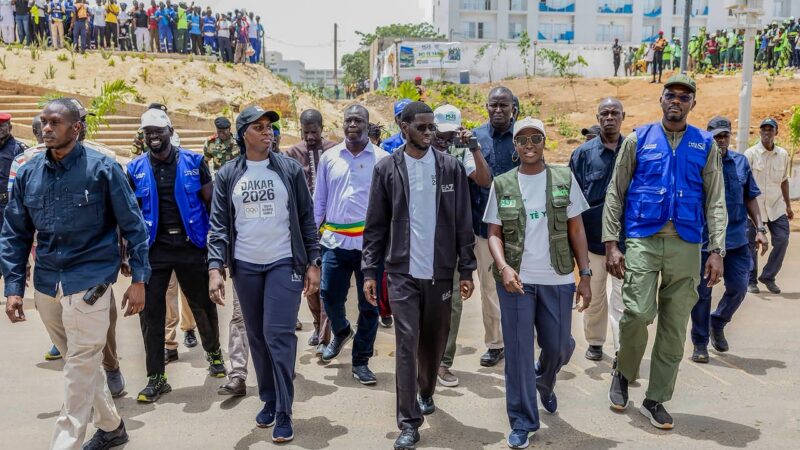
Urban progress is often defined by tangible results rather than mere promises. In Libreville, the coastline is emerging as the most visible testament to this philosophy. Just hours after distributing 200 new taxis to local drivers, President Oligui Nguema personally visited the coastal construction sites, demonstrating a hands-on approach to governance that prioritizes direct oversight of major infrastructure projects.
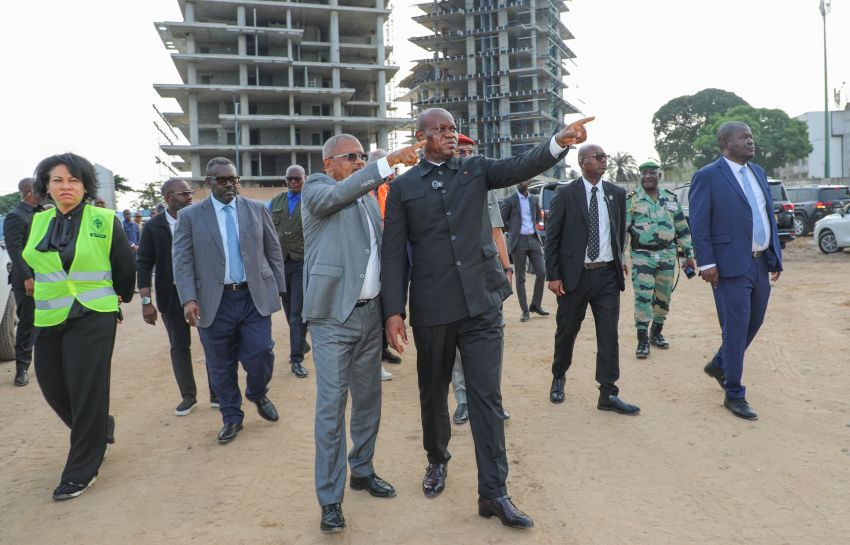
During this inspection, the Head of State assessed the progress of several transformative developments designed to reshape Libreville’s urban landscape while boosting its economic appeal.
The coastline at the heart of a bold urban strategy
The presidential tour began at the Gué-Gué bridge, where a modern mixed-use building is taking shape. This project, spearheaded by Mika Service under Alain-Claude Kouakoua’s leadership, exemplifies Libreville’s broader modernization agenda. More than just a structure, this development signals a fundamental shift in how the capital views its future—no longer merely addressing immediate needs, but actively shaping tomorrow’s opportunities.
The choice to tour the site in a newly launched Taxi Gab driven by a female entrepreneur was deliberate. It underscores the administration’s commitment to linking major urban projects with local economic inclusion policies, particularly those empowering women.
A coastal promenade designed as an economic engine
The inspection continued along the expansive shoreline development stretching from Gué-Gué bridge to Baie des Rois. This flagship project represents one of the most ambitious undertakings in Gabon’s capital today.
Beyond aesthetics, this initiative aims to create a multifunctional space blending recreation, tourism, business activities, and natural heritage preservation. Globally, waterfront developments have proven to be powerful catalysts for private investment, job creation, and enhanced international visibility for cities.
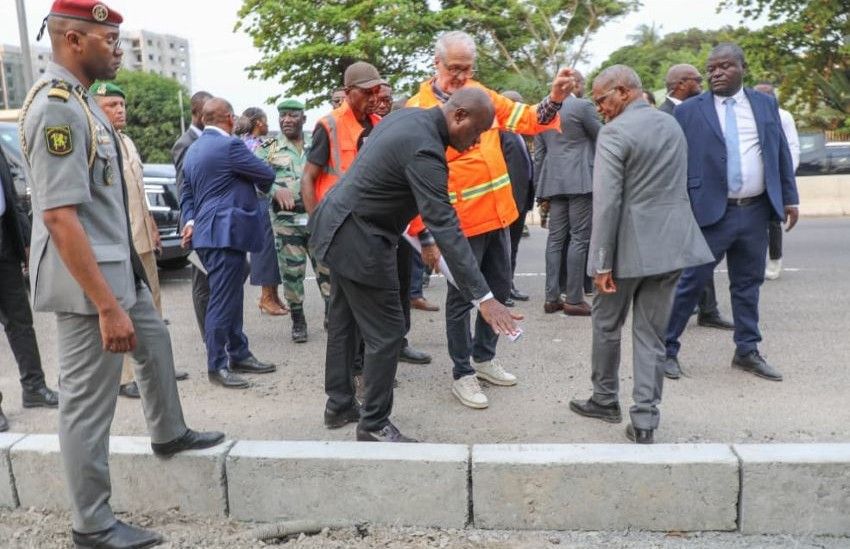
By issuing key directives to optimize the future use of this strategic space, the President reaffirmed his vision of positioning Libreville as a competitive urban center. Yet this vision comes with a critical requirement: sustainable maintenance. He emphasized the need for municipal authorities to intensify efforts in waste management, cleanliness, and public space preservation.
Local entrepreneurship as a development partner
A highlight of the visit was the President’s interest in a Gabonese entrepreneur’s initiative providing equipment and services for waterfront sports facilities. This interaction reflects a significant evolution in public policy—where infrastructure projects are no longer seen solely as state-led initiatives but as platforms enabling national economic actors to create services, jobs, and shared prosperity.
Engagements with citizens during the tour further illuminated this vision: one that prioritizes public space enhancement, improved quality of life, and inclusive wealth creation. Through this ground-level inspection, Brice Clotaire Oligui Nguema has reinforced a governing approach where rigorous project monitoring is not mere protocol but a tool for national transformation.
What is being built along Libreville’s shores today is far more than a coastal promenade. It is a new vision of Gabon—one that redefines its economic, tourism, and urban trajectory for generations to come.