Gabon’s 2025 budget adjustment slashes mining tax revenue by billions
The Gabonese government has quietly implemented one of the most significant budget adjustments in its 2025 financial plan, with mining sector corporate tax revenues plummeting by 97%. Expected earnings from this tax category have plunged from 53.2 billion CFA francs to just 1.47 billion, a reduction that stands unmatched in scope across all taxpayer categories. This drastic cut translates to a staggering loss of 51.8 billion CFA francs—nearly 80 million euros—leaving a substantial void in the state’s revenue projections.
Budget revision challenges Gabon’s post-oil mining strategy
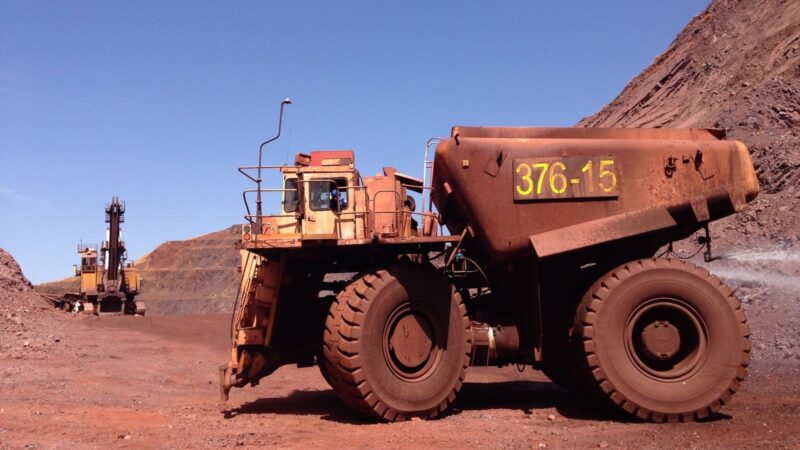
Manganese mining remains a cornerstone of Gabon’s economic diversification efforts, alongside timber and oil. The country ranks as the world’s second-largest manganese producer, with extraction concentrated in the Haut-Ogooué region. Major players like Comilog—owned by French group Eramet—and Nouvelle Gabon Mining dominate operations in the area. Since the 2023 military transition led by the Committee for the Transition and Restoration of Institutions (CTRI), officials have repeatedly emphasized the need to maximize fiscal returns from mining concessions. Yet the latest budget revision starkly contradicts these ambitions.
Several factors contribute to this stark decline. Global manganese prices have experienced a sharp correction since mid-2024, following a temporary surge triggered by a mine fire in Australia earlier that year. The price drop has directly impacted the profitability of Gabon’s mining operators, shrinking their taxable bases. However, the stark discrepancy between initial projections and actual outcomes raises questions about the precision of the government’s original budget assumptions.
Fiscal transparency under scrutiny as Gabon re-engages with extractive transparency initiative
The revenue shortfall takes on added significance as Gabon re-engages with the Extractive Industries Transparency Initiative (EITI) after years of inactivity. The 51.8 billion CFA franc gap represents several months’ worth of civil service salaries in key ministries. This shortfall occurs as Libreville negotiates a new financial support framework with the International Monetary Fund, amid liquidity constraints and increased reliance on Central African States Bank (BEAC) regional markets to cover monthly expenditures.
Local analysts highlight a growing disconnect between the government’s rhetoric on tightening fiscal terms for multinational mining firms and the practical reality reflected in the budget revision. Since late 2023, officials have vowed to review all mining and oil conventions, aiming to renegotiate terms perceived as unfavorable to the state. Yet two years later, the effective corporate tax yield from the mining sector barely reaches 3% of initial targets, with no official explanation provided regarding the macroeconomic or contractual assumptions behind this revision.
A mixed signal for investors and development partners
The timing of this adjustment coincides with critical fiscal decisions. Gabon must finalize its multi-year budget framework and decide between advancing major infrastructure projects or curbing its growing deficit. A 51.8 billion CFA franc revenue shortfall forces the government to make difficult choices, either through spending cuts or increased domestic borrowing. Multilateral lenders will closely monitor how the transitional government justifies this gap before the National Transitional Council.
For mining operators, the move sends conflicting signals. While a reduced tax burden offers temporary relief amid a low-price cycle, it also fuels political debate over resource revenue distribution. The upcoming 2026 budget, expected this autumn, will need to clarify whether this adjustment reflects a temporary anomaly or a lasting shift in Gabon’s mining fiscal framework.