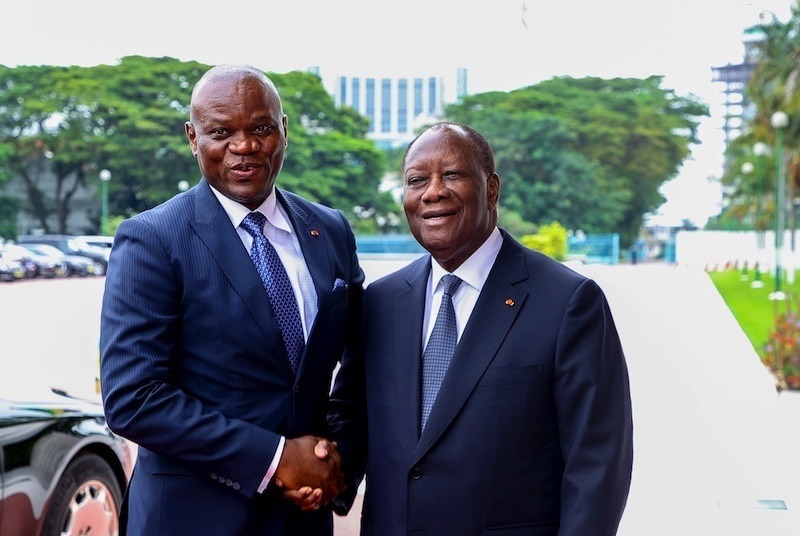
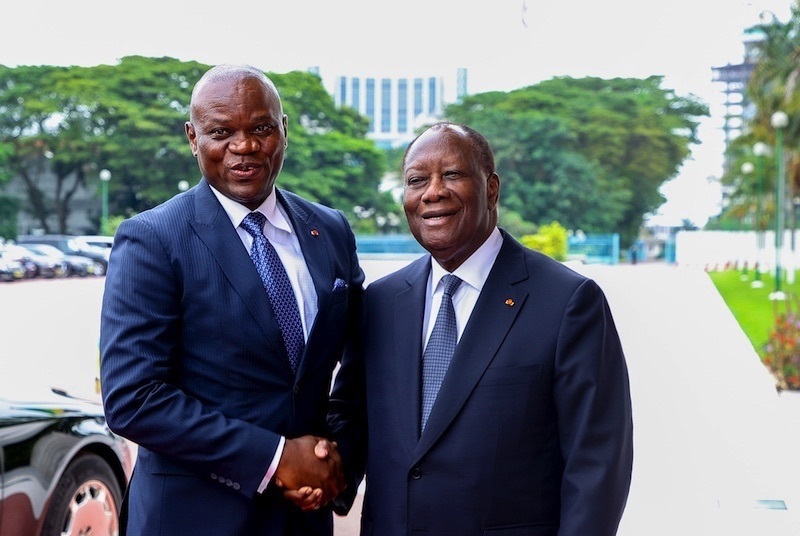
Gabon and Côte d’Ivoire deepen strategic partnership
Libreville, Friday, July 17, 2026 – As Africa’s security dynamics undergo significant shifts and nations across the continent seek to fortify their cooperation mechanisms against complex transnational challenges, certain symbolic acts acquire profound political significance.
The announced presence of Gabon at Côte d’Ivoire’s 66th independence anniversary military parade extends far beyond standard ceremonial protocol. It signals the emergence of a more robust defense diplomacy between Libreville and Abidjan, revealing the clear intention of both capitals to consolidate a strategic partnership destined to wield greater influence over regional stability.
This coming August 7, the commune of Yopougon will, for the first time, host the official Ivorian independence festivities under the unifying theme of “Peace, Unity, Development.” Alongside Guinea, Bénin, and India, Gabon is slated to be among the invited nations participating in the military parade, a traditionally pivotal moment of this national republican celebration.
The involvement of a contingent from the Gabonese Defense and Security Forces, coupled with the anticipated attendance of President Brice Clotaire Oligui Nguema, imbues this event with a gravity that transcends mere military pomp.
An expanding bilateral relationship
For several decades, the relationship between Gabon and Côte d’Ivoire has been built upon strong political foundations, nurtured by a shared vision for regional stability and pan-African cooperation. However, the current period appears to mark a significant acceleration in this dynamic.
In an environment shaped by a proliferation of security crises, the expansion of cross-border criminal networks, and ongoing geopolitical realignments across the continent, military cooperation is steadily becoming a primary instrument of shared sovereignty among African states.
Gabon’s participation in the Yopougon parade thus stands as a vivid demonstration of mutual trust and a visible expression of a strategic rapprochement between two countries committed to enhancing their exchanges in critical areas such as defense, intelligence, maritime security, and crisis management. This deepened cooperation also aligns with a broader strategy of strengthening African mechanisms for conflict prevention and securing regional spaces, contributing to West Africa’s overall stability.
A display of regional strength
This year’s Ivorian celebration is notable for its exceptional scale. More than 5,400 personnel from Côte d’Ivoire’s defense and security forces will be deployed, supported by substantial land, air, and naval assets.
The decision to hold this ceremony in Yopougon, one of West Africa’s most densely populated communes, itself conveys a powerful political message. It aims to foster closer ties between republican institutions and the populace while unequivocally affirming the Ivorian state’s operational capabilities.
Within this context, the inclusion of foreign contingents plays a crucial role in staging African security solidarity. Gabon’s selection as an invited guest reflects the growing acknowledgment of Libreville’s vital contribution to the continent’s strategic balance, particularly in Central Africa, where the nation remains a key player in regional stability. This invitation also coincides with a specific moment in Gabonese foreign policy, characterized by a clear desire to strengthen African partnerships and diversify the country’s security collaborations.
Military diplomacy for African integration
African military cooperation, traditionally confined to classical bilateral agreements or frameworks inherited from older security architectures, is currently undergoing a profound transformation. The continent’s armies are increasingly compelled to cooperate more closely against threats that disregard national borders, whether they involve terrorism, maritime piracy, illicit trafficking, or transnational armed movements.
From this perspective, joint exercises, expertise exchanges, cross-training programs, and demonstrations of institutional solidarity are gaining unprecedented strategic importance.
Gabon’s involvement in the August 7 parade precisely embodies this evolving trend. It underscores that African security can no longer be conceptualized solely at the national level but necessitates robust mechanisms of trust and cooperation among the continent’s states.
Beyond merely commemorating Ivorian independence, the image that will emerge from Yopougon will therefore be one of an Africa progressively constructing its own collective security architectures. In a world marked by geopolitical rivalries and a return to power-based dynamics, this capacity of African states to strengthen their regional partnerships could very well become one of the most significant factors for stability in the decades to come.
Consequently, the August 7 parade will not only celebrate national independence but will also illustrate the gradual affirmation of an African security sovereignty founded on cooperation, trust, and strategic solidarity among the continent’s nations.