Libreville, June 18, 2026 — For decades, Gabon’s growth has been marked by stark contrasts. Blessed with abundant natural wealth, modest population density, and substantial financial resources, the country has nonetheless seen widening disparities between its bustling urban centers and its vast rural hinterlands.
In many provinces, access to essential services—reliable infrastructure, healthcare, education, and economic opportunities—has consistently fallen short of public expectations. President Brice Clotaire Oligui Nguema has now made bridging this territorial divide a cornerstone of his administration’s agenda.
Addressing the nation’s Parliament in a special joint session, the Head of State delivered a clear message: “No community will be left behind.” Behind these words lies a broader vision—one where geography no longer dictates destiny, where every region contributes to national prosperity, and where the state reclaims its role as a unifying force across the country.
Healing longstanding regional imbalances
The challenges are formidable. Historically, public investment has favored a handful of urban hubs, particularly Libreville and Port-Gentil. This concentration has fueled rural exodus, deepened regional inequalities, and fostered a sense of neglect in remote areas.
The consequences extend far beyond individual hardship. When a province lacks passable roads, functional hospitals, adequate schools, or accessible administrative services, its economic potential remains stifled. Development economists widely agree that territorial disparities are among the most significant obstacles to sustainable growth in Africa. Without infrastructure, attracting investment, harnessing local resources, and creating stable jobs becomes nearly impossible.
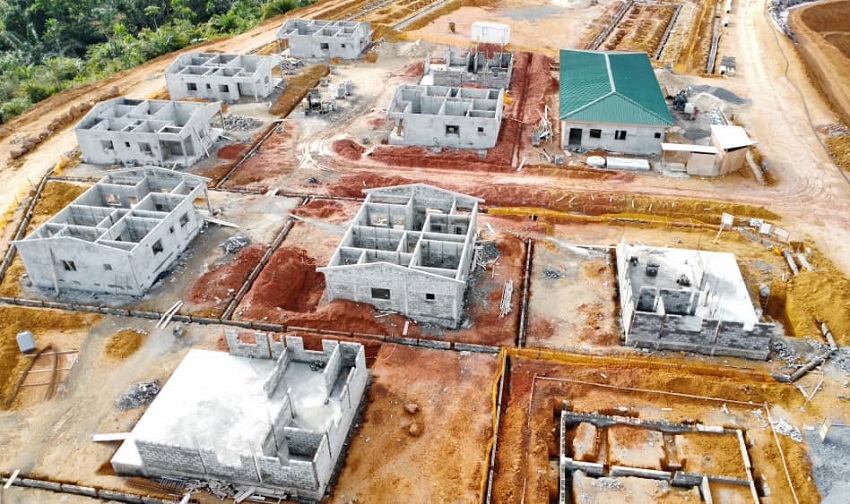
This is the context in which the presidential strategy unfolds. Projects underway in Cocobeach, Makokou, Oyem, Bifoun, and across several Libreville neighborhoods reflect an unprecedented push for balanced territorial development.
Building inclusive local economies
The impact of this policy transcends concrete structures like roads or buildings—it reflects a fundamental economic conviction: national progress cannot rely solely on a few decision-making centers.
Each new infrastructure is designed as a catalyst for local activity. A new road unlocks agricultural markets. A modern hospital boosts regional appeal. A university keeps skilled workers in their communities. Housing programs revitalize construction sectors. These initiatives create ripple effects that can transform entire territories.
This approach aligns with global best practices. Countries like Morocco, Rwanda, and Senegal have shown how targeted territorial policies can accelerate growth while easing social tensions.
For Gabon, this strategy could foster the rise of new regional economic hubs, complementing the roles long played by Libreville and Port-Gentil.
A renewed social contract
Beyond economics, this policy carries deep political significance. It seeks to restore trust between the state and its citizens.
Presidential field visits and project monitoring missions have brought local concerns to the forefront of public action, challenging perceptions of a distant, disconnected government. Yet the true test lies ahead. The public will measure success not by speeches, but by tangible outcomes: roads completed on schedule, hospitals fully operational, schools fully staffed, and reliable access to water and electricity. These are the benchmarks by which the president’s promise will be judged.
The declaration that “no community will be left behind” is more than a development slogan—it embodies a vision of the Republic. A vision that rejects the idea that some regions should remain isolated from national progress.
If this vision takes root, it could mark one of the most profound transformations in Gabon’s modern history. The strongest nations are not those that develop a few cities—they are those that enable every territory to shape its own future. President Oligui Nguema’s gamble is clear: to turn territorial equity into a driver of national cohesion and shared prosperity.