In a decisive move to foster national cohesion, President Félix Tshisekedi has unveiled plans for a comprehensive inclusive national dialogue in the Democratic Republic of the Congo (DRC). The historic initiative will be spearheaded by the country’s leading religious figures, marking a significant step toward unity and stability.
During an official meeting held at the Cité de l’Union africaine in Kinshasa, the President outlined the framework for this apolitical and republican process, emphasizing its role in strengthening institutional trust and upholding constitutional integrity. A presidential statement confirmed that the dialogue aims to consolidate national unity while addressing critical challenges facing the nation.
Religious leaders endorse the initiative
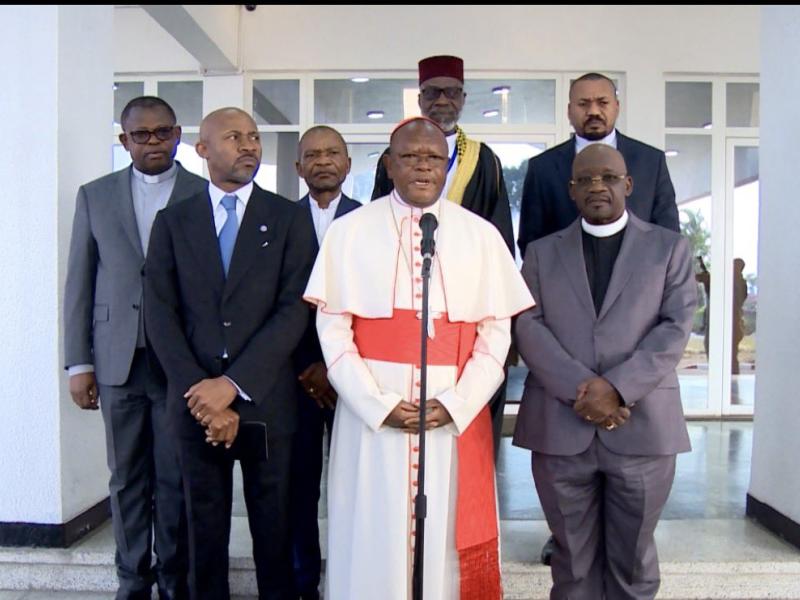
Cardinal Fridolin Ambongo, Archbishop of Kinshasa and spokesperson for the religious delegation, expressed strong support for the President’s vision. Speaking on behalf of the interfaith group, he declared, “We wholeheartedly welcome this initiative and extend our deepest gratitude to the Head of State.”
The cardinal highlighted the dialogue as a pivotal moment in President Tshisekedi’s commitment to peace, national unity, and the collective resilience of the Congolese people. He underscored the urgent need for unity to confront the ongoing conflict in the eastern DRC, attributing the crisis to external interference. “Our nation requires unity among its sons and daughters to effectively address the challenges in the East,” he stated.
Religious leaders have accepted their mandate to guide and facilitate the dialogue, viewing it as a moral and spiritual mission. “We commit to advancing this process with unwavering dedication, calling on all political actors—both in power and opposition—to actively participate,” Ambongo added.
Key figures and next steps
The meeting brought together prominent religious representatives, including:
- Bishop André Bokundoa, representing the Église du Christ au Congo
- Archbishop Ejiba Yamampia of the Église de Réveil du Congo
- Sheikh Abdallah Mangala of the Muslim Community
- Bishop Donatien Nshole, spokesperson for the Catholic Church
- Pastor Éric Senga, spokesperson for the Église du Christ au Congo
While the exact modalities of the dialogue remain under discussion, a roadmap is expected to be released in the coming days. This announcement follows extensive consultations with political and civil society stakeholders, reflecting the government’s determination to foster an environment of collaboration and reconciliation.
Challenges and expectations
Despite the optimism surrounding the initiative, opposition factions continue to demand concrete measures, including the release of political prisoners, the cessation of politically motivated prosecutions, and the restoration of public freedoms. Additionally, there are calls to abandon any constitutional amendments prior to the dialogue’s commencement.
President Tshisekedi has reiterated his openness to dialogue but cautioned against any attempts to undermine the country’s institutions or subvert the constitutional order. “Dialogue must not serve as a tool to bypass democratic processes or reverse the will of the people,” he emphasized during earlier remarks.
The President’s announcement comes amid heightened regional diplomatic efforts, including engagements with neighboring countries and the African Union, to address the persistent security crisis in the DRC’s eastern provinces. As the nation stands at a crossroads, the success of this inclusive dialogue could shape the future trajectory of peace and stability in the region.