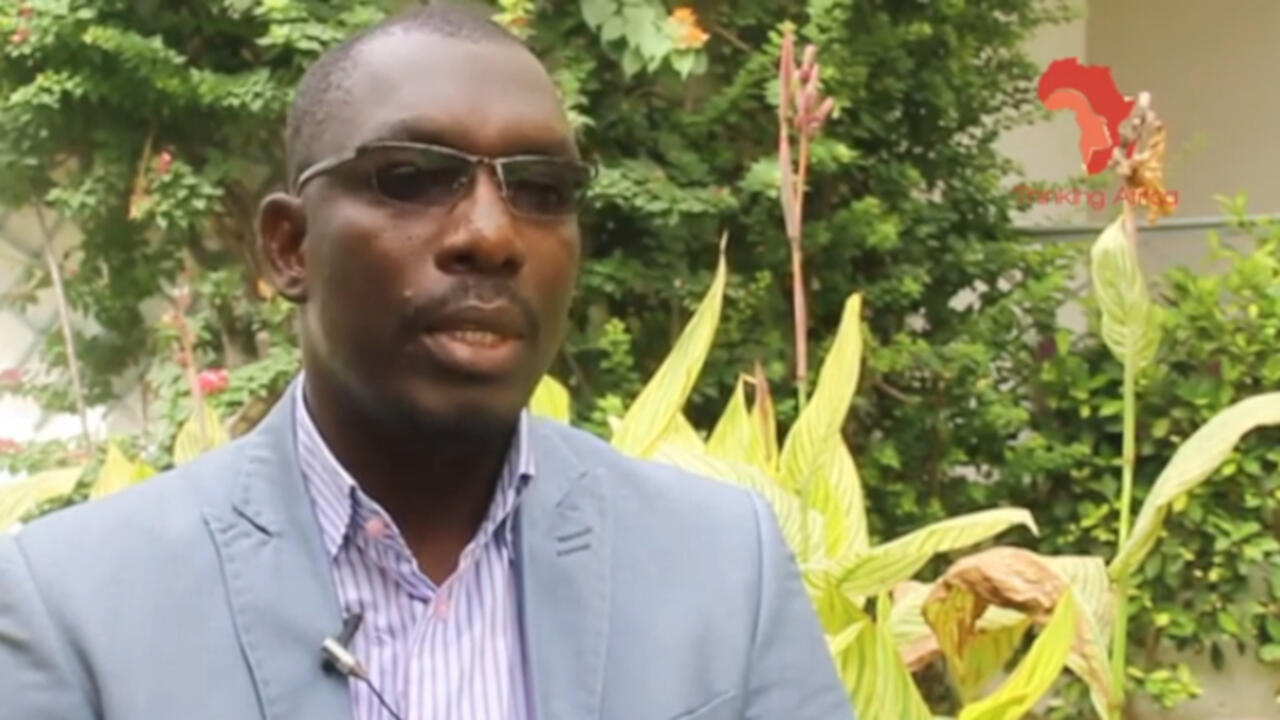
The political landscape in Côte d’Ivoire is currently dominated by the ruling RHDP party following a successful electoral cycle. Not only has Alassane Ouattara secured a controversial fourth term, but his party now controls over 75% of the seats in the National Assembly. This dominance comes at the expense of the PDCI, which saw its parliamentary presence halved, and the PPA-CI, which chose to boycott the vote. As internal divisions plague the opposition and the ruling party struggles to find a consensus successor for the president, many wonder if Côte d’Ivoire is finally closing a thirty-year chapter defined by the trio of Henri Konan Bédié, Laurent Gbagbo, and Alassane Ouattara. Dr. Séverin Kouamé, a sociologist and researcher at the University of Bouaké, provides analysis on these shifts.
The PPA-CI recently confirmed that Laurent Gbagbo will remain at the helm of the party for their upcoming congress in May. Despite his advanced age and health concerns, and the sidelining of several prominent figures, is the era of this historical figure coming to a close?
Dr. Séverin Yao Kouamé: His physical condition is a major factor. However, determining if an era is ending requires deeper thought. Laurent Gbagbo himself seems to be looking for rest. He was the iconic opponent during the Houphouët Boigny years and played a key role in bringing about a multi-party system. He has been part of every significant struggle in the political Sahel context. Yet, it is evident that he must eventually step aside. The real challenge is identifying who is prepared to carry on the fight he started over thirty years ago.
Elsewhere on the left, Simone Ehivet and her MGC failed to win any seats in the National Assembly, despite a coalition with the PDCI and Charles Blé Goudé’s Cojep. Why are these major opposition names struggling to gain traction?
Groups like the MGC are still in their infancy. Building voter loyalty takes time. Furthermore, the electorate has evolved. Younger voters, particularly those aged 18 to 35, are increasingly disillusioned with the electoral process. This isn’t just a problem for the left; it’s a crisis for the entire political class. We need to find a way to re-engage people. For too long, politics has relied on identity and fear—the idea that without someone from your own circle in power, you won’t get roads or schools. This type of political marketing is losing its effectiveness.
The PDCI is also facing difficulties. Internal friction and the frequent absence of its new leader, Tidjane Thiam, have resulted in the loss of half its deputies. Is the party failing to move past the legacy of Henri Konan Bédié?
The question is whether the party can reinvent itself. What does the PDCI actually offer today? Are they still relying on the idea of a captive Akan ethnic vote? I believe the public wants something different. A large portion of the youth feels ignored. Relying on historical legacy or a famous name is no longer enough to get people to the polls. This is a recurring theme in West Africa Sahel news regarding aging leadership.
The ruling RHDP is more powerful than ever, yet Alassane Ouattara has no clear, unanimous successor. Does this signal a turning point in a history that has revolved around Ouattara, Gbagbo, and Bédié for three decades?
The difficulty in finding new faces is evident across the board. To me, this represents the crisis of a system and a model of governance that is no longer working. The proof is in the results: we are seeing incredibly low voter turnout, even in traditional party strongholds. This is a significant indicator for those monitoring Sahel news English reports on regional stability.
We have seen a record number of independent candidates in recent elections. While they didn’t win many seats, do they represent a new political force driven by youth and civil society?
These young people deserve credit for trying. Many are entrepreneurs who have proven themselves outside the political establishment. When someone builds a reputation over a decade by helping their community, they eventually earn the people’s vote. Traditionally, candidates say they were “sent” by the head of state or the party leader. These independents are showing that they can stand on their own merit without needing a high-level endorsement.
Understanding these shifts is crucial for grasping the security Sahel situation and the broader humanitarian Sahel implications in Côte d’Ivoire.