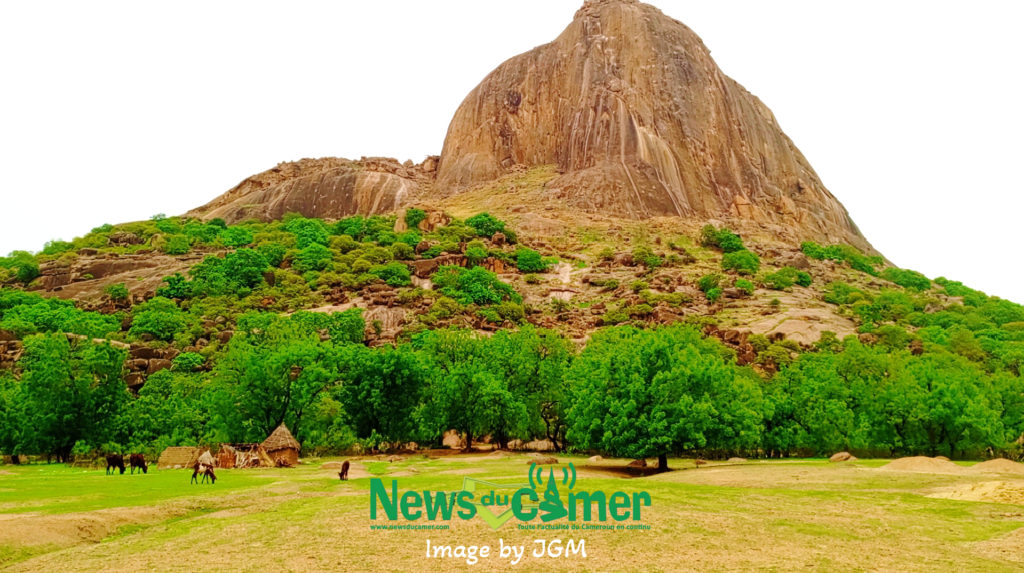
Cameroon’s tourism sector faces a decade of decline
Between 2014 and 2026, Cameroon’s tourism sector endured an unprecedented financial and structural hemorrhage. While the government cites insecurity as the primary cause for this stagnation, experts strongly criticize a failing management approach that has squandered twelve years of potential. What was once a promising destination has become a neglected landscape, with official figures consistently revealing chronic underperformance.
In 2014, the Ministry of Tourism and Leisure’s relevant departments reported 100 million FCFA in losses attributed to insecurity in Cameroon. However, evidence suggests a deeper issue of mismanagement. Even before the Boko Haram conflict impacted the Far North region, no robust framework existed for effectively managing and promoting tourism. The sector largely operated without dedicated support or strategic oversight.
Indeed, since 2014, Cameroon’s tourism landscape has been characterized by a downward spiral. Although authorities frequently point to the Boko Haram threat in the Far North and the sociopolitical crisis in the North-West and South-West regions as justifications for this sluggishness, economists dismiss this interpretation as misleading. This security-focused narrative serves as a smokescreen, obscuring the fact that the majority of the national territory remains untouched by these conflicts. Sociologists argue that this inaction stems from systemic negligence, where the security alibi allows the state to avoid re-evaluating its national appeal. Why, then, do the coastal areas, the mountainous West, and the southern forests remain underexploited when only 20% of Cameroon’s 930 recognized tourist sites are actively developed?
Twelve years of lost revenue and neglected heritage
Data from the National Institute of Statistics (INS) and international observers confirm a mixed performance, underscoring the sector’s inherent weaknesses. Despite claims of a 4% contribution to the national GDP, the reality is far more complex: Cameroon struggles significantly to attract global tourist flows. Between 2014 and 2023, per-tourist revenues faced escalating inflation and external shocks, notably the COVID-19 pandemic, which caused a sharp 34% drop in income in 2020. Economists emphasize that the revenue shortfall is not solely due to local crises but also to massive fiscal erosion and the underutilization of existing infrastructure, a direct consequence of inadequate targeted promotion.
The period from 2014 to 2026 further exacerbated the deterioration of natural sites and disheartened private stakeholders. The tourism sector, which nonetheless generates approximately 60,000 jobs, suffers from a pervasive lack of professionalism and poor coordination among its various actors. Local guides find themselves idle, and artisans are neglected due to the absence of concrete ecotourism strategies. This systemic neglect, by failing to valorize Cameroon’s rich heritage, has led to both cultural and economic identity loss. Essential equipment lies in disrepair from lack of maintenance, and the human element, crucial for hospitality, dwindles in a sector widely perceived as having no future.
Urgent need for a break from bureaucratic inertia
After twelve years of stagnation, what is the true mandate of the supervisory ministry? The question of its relevance is now critically pressing. A ministry should ideally be the primary architect of a country’s brand image, an orchestrator capable of mobilizing Public Works, Culture, and Transport to enhance every region. Instead, tourism in Cameroon is managed like a static administration rather than a dynamic industry. To overcome this lethargy, simply allocating budgets is insufficient; a strong political will is required to decentralize the sector and cease using crisis zones as shields for inaction. Cameroon possesses abundant sites; what it lacks is a compelling vision capable of positioning the nation on the global tourism map.
Considering these twelve years of underperformance, do you believe the current administrative model for tourism management can still reinvent itself, or has a complete restructuring, actively involving the private sector, become indispensable?