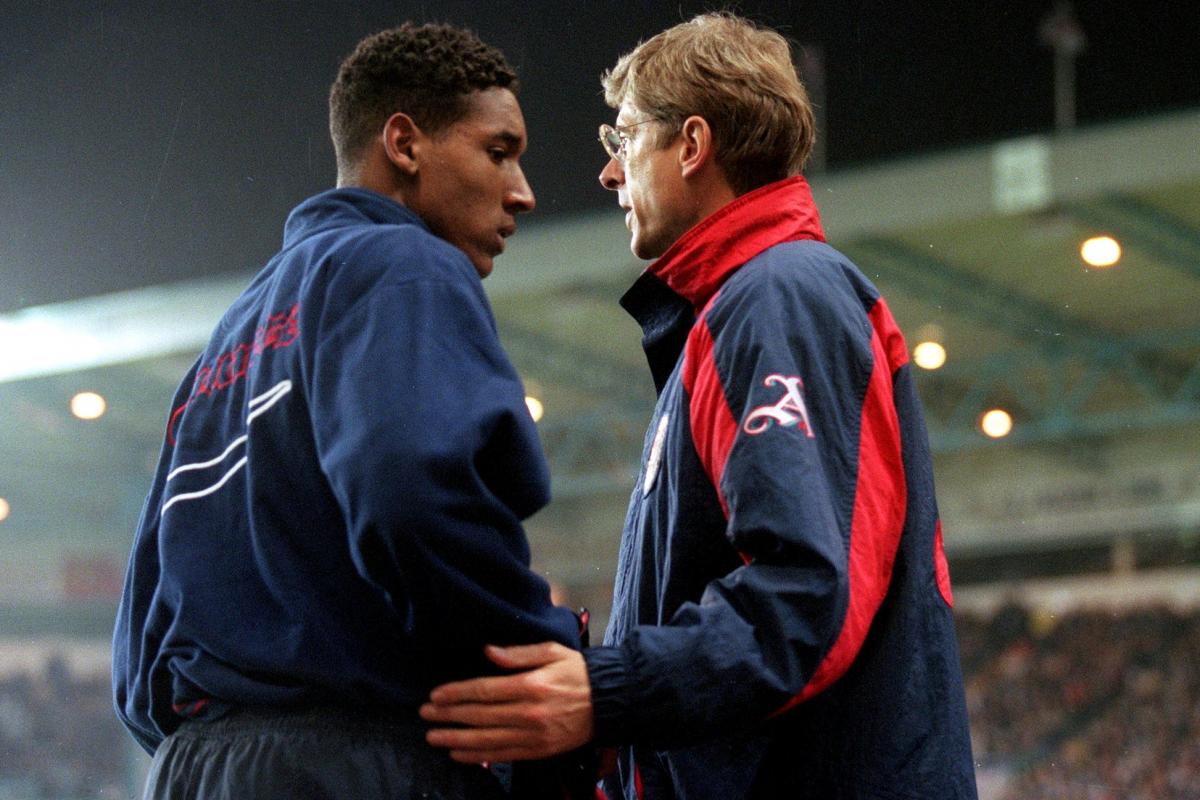
In the winter of 1997, French football witnessed a transfer saga that would become the stuff of legend. Nicolas Anelka, a 17-year-old striker on the cusp of stardom, made headlines not for his performances on the pitch, but for a legal and sporting battle that pitted his ambitions against the club that nurtured him: Paris Saint-Germain.
The story began when Anelka, trained at France’s prestigious Clairefontaine academy, signed with Arsenal in a move that sent shockwaves through the footballing world. His departure from PSG was far from smooth—it was a clash of wills, regulations, and financial stakes that exposed deep tensions in the relationship between young talents and their formative clubs.
A golden opportunity and a stubborn refusal
At the time, Anelka was already turning heads in French football. After making his professional debut in February 1996 with PSG, he had caught the eye of club manager Ricardo just months later. Following a standout performance against Lens—a game where he scored and provided an assist—Ricardo famously told reporters, “You wanted a joker? You’ve got one.”
Yet despite the promise on display, Anelka found himself languishing on the bench. With the club featuring a star-studded attack including Rai, Leonardo, and Patrice Loko, opportunities were scarce. His frustration grew when PSG opted to loan striker Cyrille Pouget from Servette FC mid-season, a move Anelka interpreted as a lack of faith in his future. It was a turning point.
During the winter break, Anelka and his father visited London. There, they met with Arsenal manager Arsène Wenger—who had long admired the young Frenchman—and toured the club’s facilities. By January 11, 1997, the decision was made: Anelka would leave PSG for Arsenal upon the expiration of his youth contract in June. The next day, in a discreet hotel in Paris’s 16th arrondissement, father and son signed a six-year deal with the English club.
A contract signed in secret
The timing could not have been worse for PSG. Just hours after the agreement was finalized, news broke in the press. Anelka, who had been scheduled to play in the Super Cup match against Juventus that very evening, was barred from the team’s pre-match preparations and sent back to his apartment in Saint-Germain-en-Laye. Club officials, including then-deputy president Michel Denisot, were incensed. He publicly denounced Anelka’s “unprecedented act of insolence” and removed him from the professional squad indefinitely, even threatening to send him on loan to Servette for the remainder of the season.
The club’s stance was clear: Anelka was not free to leave. PSG had invested in his development and expected him to honor his contract as an apprentice. Club president Noël Le Graët went further, urging the French Football Federation (FFF) to block Anelka’s international transfer certificate, citing French football’s internal charter that required young players to sign their first professional contract with their training club.
But Anelka was defiant. Speaking to France Football, he declared: “PSG doesn’t trust young players. Very few have broken through, and those who have—like Pascal Nouma or Francis Llacer—were still substitutes at 24.” He refused to sign the six-year contract offered by his home club, insisting he had no intention of staying.
Wenger’s legal gamble and the shadow of Bosman
Arsenal’s move was not just sporting—it was strategically audacious. Wenger, ever the astute tactician, sensed an opportunity to exploit a loophole in European football’s evolving legal landscape. His argument hinged on the Bosman ruling, the landmark 1995 European Court of Justice decision that had just reshaped the transfer system. It stipulated that once a player’s contract expired, they were free to join any club within the EU without the need for a transfer fee.
Wenger dismissed the French charter as irrelevant beyond national borders. “European law gives me peace of mind,” he told L’Équipe. “We are acting within the law. The internal French regulation requiring clubs not to approach players before they sign their first professional contract has no basis outside France.”
The controversy drew international attention. FIFA’s then-secretary general, Sepp Blatter, weighed in with a provocative statement: “The French seem upset about their young players leaving. Yet they don’t seem as troubled when young African or South American players head to big European clubs. I believe it’s healthy for 16-year-olds to move to top teams to build their careers and reputations.”
With the French Football League (LNF) preparing to take the case to FIFA, and the clock ticking toward a hearing, PSG and Arsenal faced a stark choice: embark on a lengthy, uncertain legal battle or reach a compromise. In a dramatic twist just days before the FIFA hearing, the two clubs finalized Anelka’s transfer in under 48 hours.
Reflecting years later, Denisot admitted: “There was a gap in the system. It wasn’t a pleasant moment for either club. It turned out everyone had the right to do what they did. The noise was made because a great player was leaving for free after his training. Nicolas was young. Ricardo and I wanted to take him as far as possible while protecting him. But he wanted to go. That’s just how it was. We had very little room to maneuver.”
The aftermath: a transfer that changed everything
Anelka’s move to Arsenal marked a turning point in European football. It demonstrated the power of young players to challenge the status quo and highlighted the limitations of national regulations in the face of European law. For PSG, it was a bitter pill: they received a reported 5 million francs (about €760,000 today) in compensation, but lost a player they had groomed—only to welcome him back three years later for a transfer fee of 220 million francs (over €50 million) paid to Real Madrid.
For Anelka, the gamble paid off. Though he made only four appearances in his first season at Arsenal due to competition from Dennis Bergkamp and Ian Wright, he soon blossomed into one of the Premier League’s most exciting talents. In the 1998–99 season, he became the first non-British player to win the PFA Young Player of the Year award, cementing his reputation as a future superstar.
The transfer saga of 1997 remains a defining moment in football history—a clash of ambition, law, and loyalty that reshaped the landscape of player mobility in Europe.