Mali’s Russian security spending: the hidden mechanics behind the 514 billion FCFA drain
The structural roots of a spiralling security budget
Mali’s national treasury is buckling under a combination of international sanctions and sluggish economic growth, but the most persistent pressure comes from an unusual line item: payments to Russian paramilitary forces. What began as a limited deployment has evolved into one of the heaviest financial commitments on Bamako’s books, with consolidated estimates and regional financial disclosures placing the total outlay at more than 514 billion FCFA — roughly $850 million.
The figure has ignited fierce debate among Malian economic and military circles, not simply because of its size but because of what it reveals about the deeper dynamics reshaping the country’s fiscal architecture.
Inside the cost structure: more than $10,000 per fighter each month
Since the paramilitary organisation first deployed in late 2021, the monthly bill has expanded relentlessly. The original arrangement called for average monthly disbursements of around 6 billion FCFA ($10 million). But as the contingent grew beyond 2,000 personnel, and as specialised equipment purchases and support logistics multiplied, expenditure spiralled well beyond initial projections.
On average, every Russian fighter or instructor now costs the Malian state approximately $10,000 per month. That total breaks down into two principal components:
- Direct mercenary salary: set at roughly $3,000 per month.
- Command, equipment and combat bonus fees: nearly $7,000 in additional charges collected by Russian command structures.
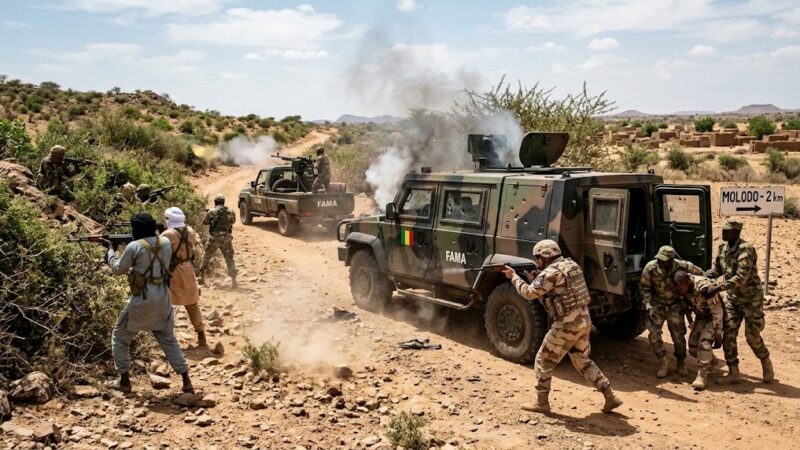
By way of comparison, the full cost of supporting a Malian Armed Forces (FAMA) soldier in the field represents only a tiny fraction of that sum — a disparity that has bred quiet resentment within local barracks.
Mining concessions and financial offsets: how the bill is actually paid
Faced with an overwhelming financial burden amid severe budgetary constraints, transitional authorities have had to diversify payment channels. Beyond direct bank transfers routed through secured circuits, a significant share of the cost is covered through the allocation of mining exploitation titles, particularly in gold deposits across the country’s southern and western regions.
The recent restructuring that brought the organisation under the direct control of the Russian Ministry of Defence — now operating under the Africa Corps label — has done nothing to reduce the tab. Plans to expand troop levels to 3,500 men could push the annual bill up by more than 210 billion FCFA.
The security ledger: what has the money actually delivered?
While the Russian presence has enabled high-profile operations — most notably the symbolic recapture of Kidal in late 2023 — analysts are increasingly questioning the value for money given the steadily deteriorating security environment. Vital road corridors face regular blockades, the country’s central regions remain under intense pressure from JNIM-affiliated groups, and Malian forces continue to suffer losses in complex ambushes.
For many economic observers in Bamako, the allocation of over 514 billion FCFA to foreign praetorian guards and mercenaries has starved essential public services — electricity, healthcare, education — of vital resources, while locking the transitional government into total financial and security dependence on Moscow.
Behind the numbers: a sovereignty paradox
The underlying dynamic is difficult to ignore. A government that came to power promising to restore national sovereignty has, in practice, mortgaged a substantial portion of its financial autonomy to sustain a foreign security arrangement. The root cause lies in a convergence of factors: shrinking fiscal space, limited alternative security partnerships, and the urgent need to hold territory against armed insurgencies.
Yet the cost is not measured only in francs. Each monthly transfer, each mining title signed over, deepens a relationship that leaves Bamako with diminishing room to manoeuvre — a structural reality that the headline figure of 514 billion FCFA only begins to capture.