Economy
Caisse des Dépôts et Consignations: unlocking infrastructure funding through domestic savings in Cameroon
Like many African economies, Cameroon has faced a tightening of traditional external financing options in recent years. Multilateral concessional loans, official development aid, and increasingly expensive international bond markets have become less accessible, pushing the country to explore alternative funding mechanisms.
“Cameroon, like most African economies, has seen a sharp reduction in access to traditional external financing over recent years. Concessional multilateral loans, official development assistance, and increasingly costly international bond markets have become less viable. In this context, mobilizing domestic savings—both public and private—has emerged as a strategic necessity. This is precisely the role the Caisse des Dépôts et Consignations (CDEC) is designed to fulfill,” explains economic analyst Patrick Duprix Anicet Mani.
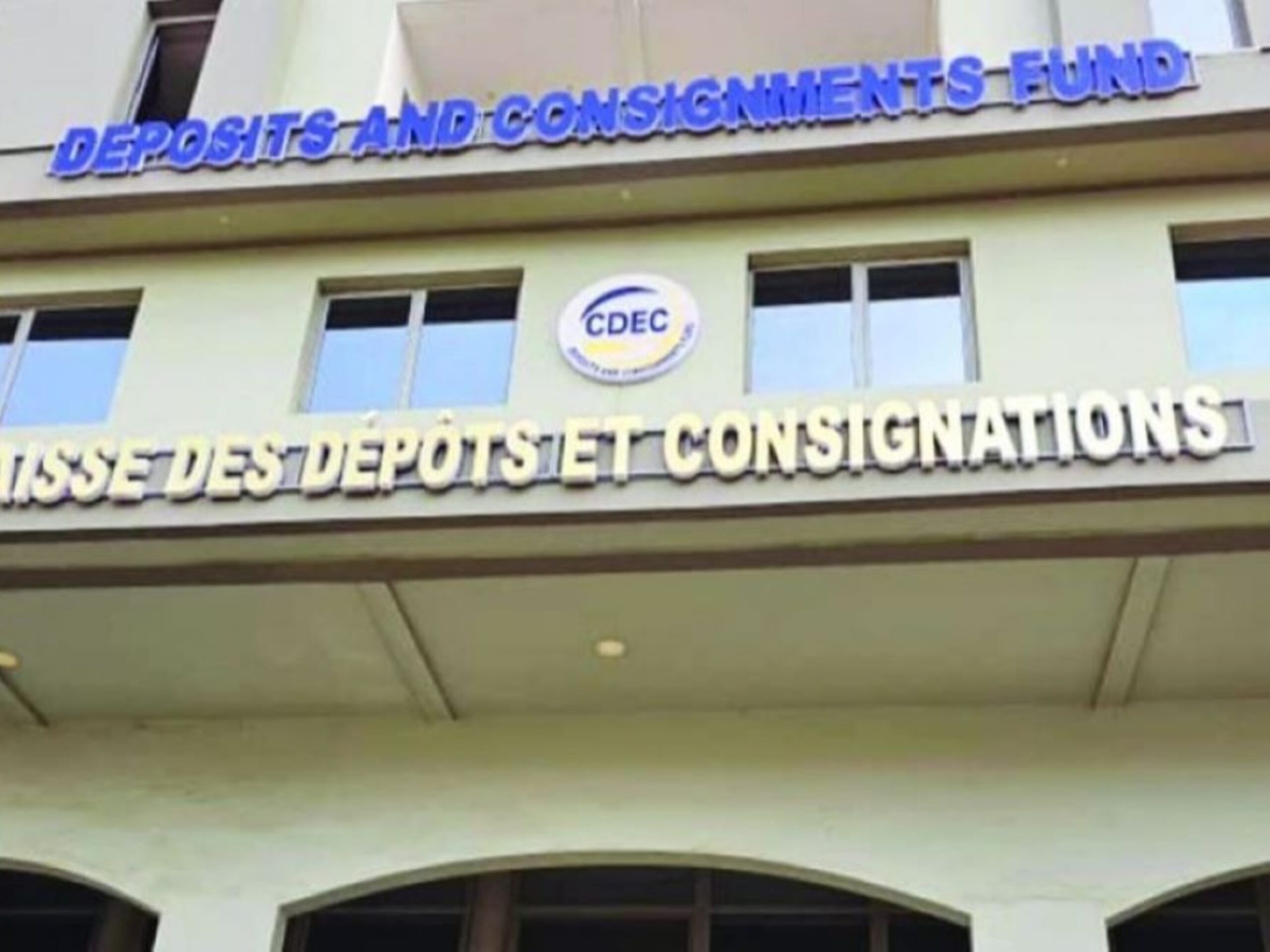
The CDEC, officially launched on January 20, 2023 through a presidential decree—fifteen years after its legal creation via the 2008 law—represents Cameroon’s answer to this funding challenge.
Learning from France’s proven model
The French Caisse des Dépôts has demonstrated how a public savings institution can convert dormant deposits into structural development tools through three key mechanisms:
- Centralization of regulated savings: Collecting funds such as Livret A deposits, notary funds, and inactive accounts into a secure public institution.
- Long-term transformation of short-term deposits: Leveraging state guarantees to convert these funds into long-term loans.
- Leverage effect: Each unit of centralized savings is reinvested into foundational infrastructure—social housing, urban renewal, fiber optics, and transportation.
The CDEC mirrors this structure by collecting, securing, and optimizing long-term returns on otherwise idle resources, channeling them toward public policy priorities.
CDEC’s progress: measurable momentum
Data confirms the institution is already gaining traction:
Legal framework and mobilizable resources
The 2008 law and its 2011 implementing decree classify CDEC resources into four categories: deposits (notary funds, inactive bank accounts), administrative consignments (performance bonds for public contracts), judicial consignments (bail payments, court settlements), and a fourth residual category.
Enforced collection mechanisms
A December 1, 2023 prime ministerial decree mandated banks, insurers, notaries, and court registries to transfer consigned funds within defined timelines. Non-compliance triggers external audits and penalty interest rates set at the BEAC’s marginal lending facility rate plus two percentage points—creating a powerful legal incentive for resource mobilization.
Three-year performance highlights
General Director Richard Evina Obam reported that over 151 billion FCFA (approximately $260 million) has been centralized within three years of operations. While significant, this figure remains a fraction of the estimated potential—earlier assessments suggested over 1,000 billion FCFA in dormant funds within Cameroon’s banking system.
The infrastructure transformation engine: a dedicated banking subsidiary
The most transformative development is the planned banking subsidiary, with feasibility studies launched in February 2025. Designed to:
- Support state agencies, decentralized local governments, and businesses in raising funds for infrastructure projects.
- Assist SMEs seeking to participate in public procurement.
- Facilitate IPOs and business opportunity evaluations.
- Offer long-term financial products (loans, guarantees, leasing) tailored to Cameroon’s economic landscape.
This initiative aligns the CDEC with France’s Banque des Territoires, shifting its role from a passive depositary to an active, long-term investor in real economy projects.
Cameroon’s infrastructure priorities: aligning with CDEC’s capabilities
The CDEC’s model offers clear applications for Cameroon’s development agenda:
- Housing: Financing social housing through programs like the 10,000 Homes initiative.
- Urban infrastructure: Improving road networks and sanitation in major cities like Yaoundé and Douala.
- Digital connectivity: Expanding high-speed internet access beyond metropolitan areas.
- Local governance: Funding decentralized territorial collectivities to strengthen local development.
- Transportation: Investing in road corridors, the Kribi port, and rail hubs to enhance national connectivity.
Critical success factors and potential pitfalls
Comparative analysis reveals key prerequisites for success:
- Effective collection: Persistent resistance from some banks to transfer owed funds—Allianz Cameroun being the only institution to comply by late 2023—underscores that resource mobilization remains a work in progress.
- Governance and transparency: The institution’s credibility with depositors and consignors directly impacts the volume of voluntary deposits.
- Technical expertise: Infrastructure financing demands specialized skills in project finance, risk assessment, and guarantee structuring—far beyond basic deposit management.
- Coordination with partners: Aligning with other financiers (including implicit local institutions and multilateral partners) to avoid duplication and maximize impact.
In summary, the CDEC possesses the legal, institutional, and operational foundations to become a powerful driver of infrastructure development, modeled after France’s Caisse des Dépôts. By transforming dormant regulated savings—currently estimated in the hundreds of billions of FCFA—into long-term infrastructure financing, it offers a credible endogenous solution to external funding constraints. The launch of a dedicated infrastructure banking subsidiary marks a decisive shift from mere collection to strategic investment. Success now hinges on enforcing mandatory fund transfers and rapidly building internal project finance expertise.

François Mvondo
Journalist