Ashoka Buildcon emerges as key contender for Yaoundé bypass project
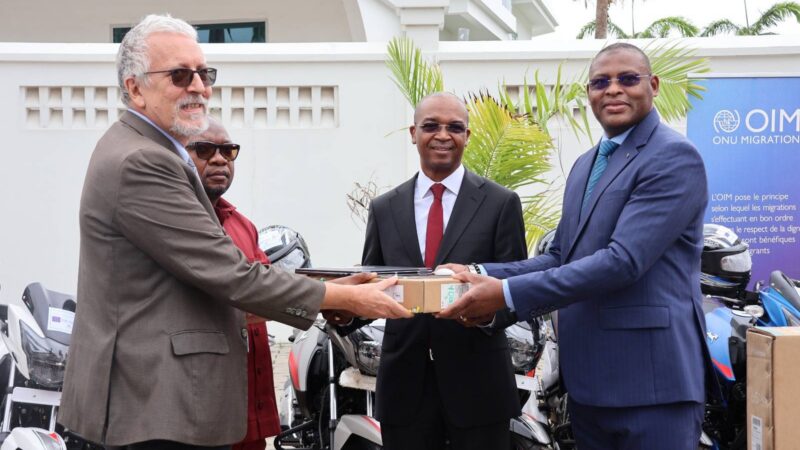
The Yaoundé bypass, a landmark urban road project in Cameroon, has drawn the attention of a new major player. India-based Ashoka Buildcon Limited has submitted a comprehensive proposal for the initiative, valued at over 1.26 trillion FCFA (excluding taxes), featuring an integrated approach covering design, construction, and financial structuring. The proposal was formally presented to the Ministry of Housing and Urban Development, the government body overseeing the project, on June 9.
During the meeting, Vinit Chitale, Global Business Development Head for Ashoka Buildcon, outlined a turnkey EPC model—where a single contractor handles engineering, procurement, construction, and delivery. The Indian firm has also expressed readiness to assist in securing financing, a critical factor given the project’s incomplete funding structure.
The 90-kilometer bypass designed to ease traffic congestion in Yaoundé
Spanning 90.54 kilometers with dual two-lane carriageways, the bypass will traverse four departments: Mfoundi, Lékié, Mefou-et-Afamba, and Mefou-et-Akono. Its expansive profile is intended to accommodate future upgrades, including express lanes or dedicated public transport corridors. The route is divided into four segments: from Mbankomo to Nkolméyang, then to Nkozoa, Minkoameyos, and back to Mbankomo.
The project includes 16 interchanges, multiple bridges, and hydraulic works to enhance safety along the alignment. According to the latest ministry assessments, the core road infrastructure alone requires 794.7 billion FCFA (excluding taxes). An additional 469 billion FCFA is earmarked for urban development in Mbankomo, Mfou, Soa, and Okola, bringing the total estimated cost to 1.26 trillion FCFA.
These figures translate to staggering per-kilometer costs: nearly 8.8 billion FCFA for the road alone, and around 14 billion FCFA when factoring in associated urban poles. Such an investment places this project among the most ambitious ever launched in the subregion.
T3 segment: a showcase for European lenders
With all four sections unable to launch simultaneously, the T3 segment has been designated as the project’s immediate priority. Stretching 22.8 kilometers, it connects Nkozoa (on National Road 1) to Minkoameyos, near the Yaoundé-Douala highway. This stretch is deemed vital as it would intercept a significant portion of transit traffic before it reaches central Yaoundé, easing pressure on the capital’s congested roads.
The European Union and the European Investment Bank have signaled strong interest in funding T3. However, their involvement hinges on meeting strict technical, environmental, and social prerequisites—such as compensation settlements, impact studies, and finalization of resettlement action plans. Ashoka Buildcon’s integrated proposal could provide additional flexibility for Yaoundé’s authorities in navigating these requirements.
Unresolved questions remain, including the exact legal framework for the contract, financial terms, potential guarantees sought from the Cameroonian government, and how the Indian firm’s proposal aligns with European funders already engaged on T3. A hybrid financing model—combining concessional European funds with Indian contributions for other sections—could be a viable pathway.
Ashoka Buildcon: a diversified Indian infrastructure giant
Ashoka Buildcon Limited is one of India’s leading road infrastructure developers, operating across multiple models: EPC, public-private partnerships, Build-Operate-Transfer (BOT), and the Hybrid Annuity Model (where the state covers part of the investment, and the operator repays the balance via annuities). Beyond roads, the group is active in energy, rail, and construction sectors.
For Cameroonian authorities, Ashoka’s appeal lies in its ability to deliver a single, cohesive package encompassing design, execution, and financing—a rarity in large-scale infrastructure tenders. While its proposal marks a significant step forward, no decision has been made yet. The project’s technical maturity contrasts sharply with its lingering financial hurdles, and transforming years of planning into groundbreaking work remains the ultimate test for Yaoundé.