Anié market fire: Togo’s moment of reckoning as a broken system finally faces the music
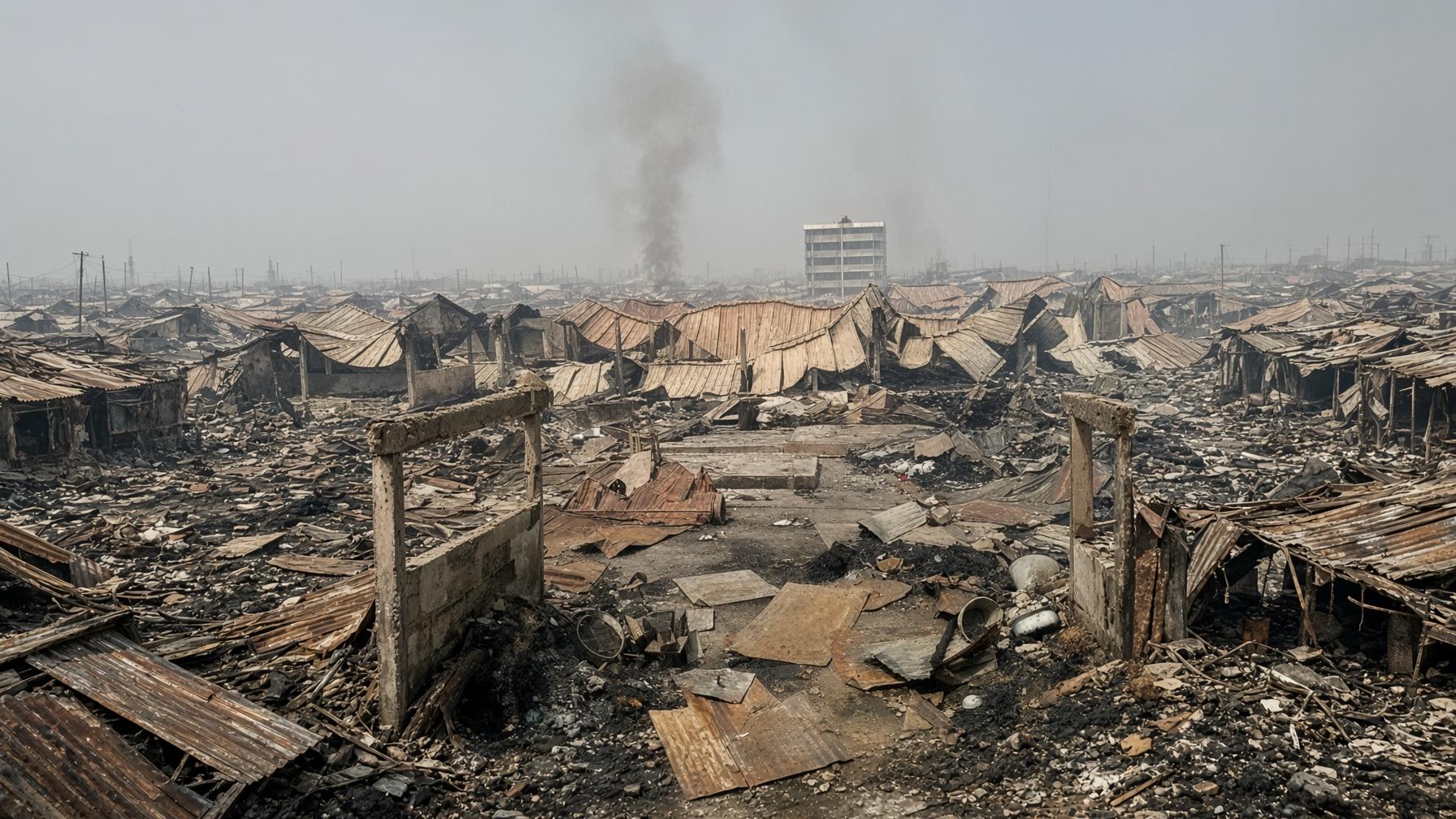
The main building of the Grand Marché d’Anié went up in flames overnight, reduced to ashes while traders could only stand and watch. No lives were lost, but the material toll is staggering: hundreds of families are now ruined, their goods, stock and savings gone up in smoke. This is not merely another tragedy — it is a turning point that exposes a state that has run out of excuses.
A catastrophe foretold, not a random accident
Beyond the shock and grief of the victims, this fire is no simple misfortune. It is the loudest symptom yet of state neglect and a chronic lack of foresight that have come to define governance in Lomé. The warning signs were there for years; the response, as always, was silence.
Crumbling infrastructure from another era
How is it possible that in 2026, a market of such strategic importance still has no modern fire safety system, no working water points and no clear access routes for emergency crews? The answer lies in the political record of the ruling power.
Since coming to power in 2005, Faure Gnassingbé’s regime has proven incapable of sustainably modernising Togo’s local infrastructure. More than sixty years after his father, the late Gnassingbé Eyadéma, took power, the current executive still operates on structures built in the last century, with no deep investment to adapt them to today’s demographic and economic realities.
The ’emerging Togo’ slogan vs. daily life
While official speeches endlessly praise major projects, digitalisation and foreign investment, the reality on the ground remains dramatically archaic:
- No prevention: Most of the country’s major markets — from Lomé to Kara, and now Anié — remain logistical powder kegs, lacking compliant electrical standards and risk prevention plans.
- Under-equipped emergency services: Firefighters, often alerted too late or hampered by a lack of suitable equipment in the regions, can only stand by as the damage unfolds.
- Living off the past: The current leadership coasts on the security reputation and political foundations of the previous regime, without building a modern public policy to protect citizens and their property.
The urgent need to break with neglect
After the historic fires that gutted major markets in Lomé and Kara a few years ago, the Anié tragedy proves that no lessons were learned. The Togolese state cannot limit itself to sending ministerial delegations to hand out supplies or promise symbolic aid after every disaster.
A government’s true responsibility is to protect its citizens before catastrophe strikes. By leaving informal-sector economic actors to work in vulnerable, ageing infrastructure, the regime reveals the limits of a worn-out political model — one more concerned with its own survival than with the safety and well-being of the Togolese people.