Algeria and Mali restore diplomatic ties after prolonged crisis
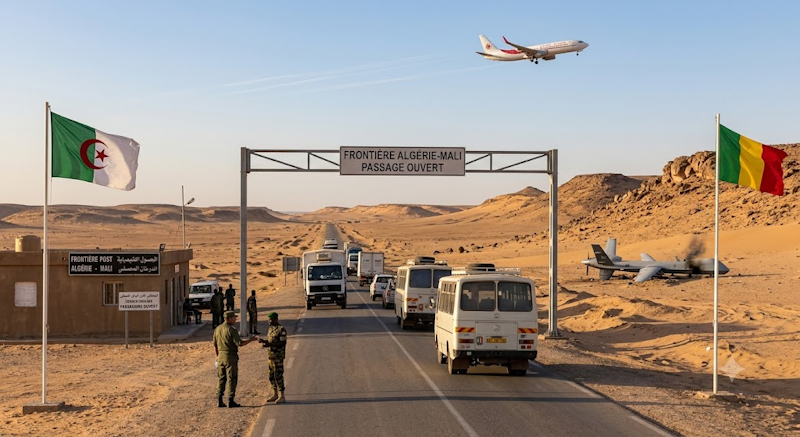

After 15 months of intense diplomatic confrontation sparked by a disputed military incident, Algeria and Mali have formally agreed to restore full bilateral relations, marking the end of one of the most severe standoffs in recent Sahel history.
In a joint announcement issued Friday, both governments confirmed the immediate reopening of their shared airspace to civilian and military flights, alongside the planned return of ambassadors to their respective capitals. The decision follows the lifting of reciprocal sanctions that had severed diplomatic and logistical cooperation since early 2025.
Root cause of the dispute: a fatal drone incident
The crisis originated on March 31, 2025, near Tinzaouaten, a critical border town in the Kidal region—an area long contested by Tuareg separatist factions opposed to Bamako’s authority. Algerian defense forces reported intercepting a Turkish-made military drone operating inside Algerian airspace. While Algerian radar data confirmed the violation, Malian authorities rejected the claim, condemning the interception as an unprovoked act of aggression.
The incident escalated rapidly into a full-blown diplomatic crisis:
- Unified Sahel response: Supported by fellow members of the Sahel Confederation—Niger and Burkina Faso—Mali recalled its ambassador from Algiers in protest, framing the attack as a direct assault on regional sovereignty.
- Algeria’s decisive countermeasure: In response, Algeria suspended all flights to and from Mali and withdrew its ambassador from Bamako, citing what it called “unfounded and inflammatory accusations” from Malian leadership.
A fracture in regional security cooperation
Over the months, the dispute evolved from a bilateral feud into a rupture with broader implications. In September 2025, Mali escalated the matter by filing a complaint with the International Court of Justice, accusing Algeria of deliberately targeting the drone to undermine Mali’s counterinsurgency operations. This move coincided with Bamako’s withdrawal from the Joint Operational Staff Committee (CEMOC), a long-standing Algerian-led initiative designed to coordinate counterterrorism efforts across the Sahel.
Key context: For over a decade, Algeria played a pivotal role as a mediator in the conflict between Mali and Tuareg rebel groups, culminating in the historic Algiers Accords signed in 2015.
Shifting geopolitics in the Sahel
The thaw in relations comes at a pivotal moment in regional politics. Since the military takeovers in Mali, Niger, and Burkina Faso between 2020 and 2021, the juntas in power have increasingly distanced themselves from traditional Western allies—including France and Algeria—in favor of deepening military and economic ties with Russia.
Despite these realignments, the security landscape remains volatile. Since 2012, Mali has been grappling with a dual insurgency led by Al-Qaeda-affiliated and Islamic State-linked factions. Recent months have seen a surge in coordinated attacks, with jihadist groups and Tuareg separatists launching synchronized offensives across northern and central Mali. The resumption of dialogue between Algiers and Bamako could prove instrumental in restoring stability to a region under severe strain.