Mali’s fragile stability under Assimi Goïta’s leadership
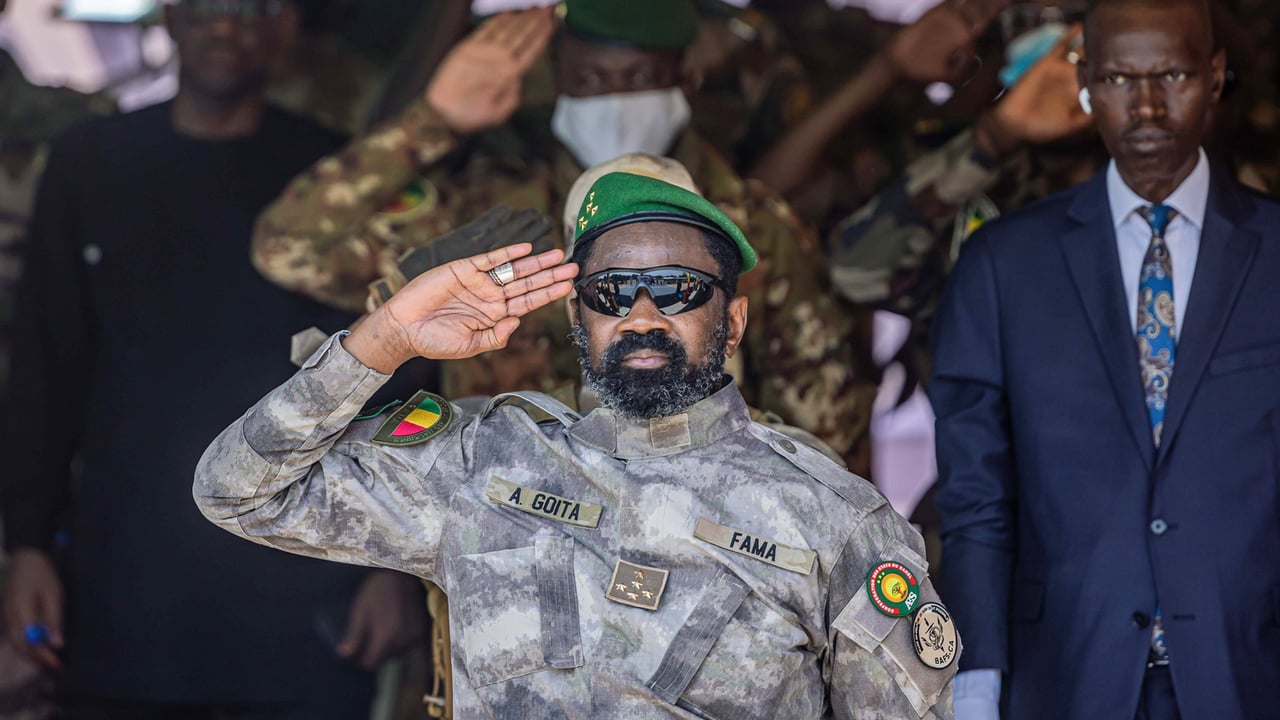

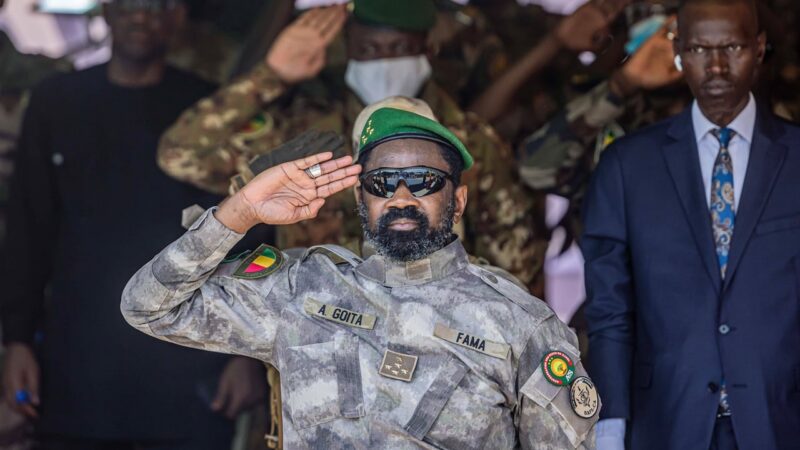
Since ascending to power in 2020, Colonel Assimi Goïta has steered Mali through turbulent waters, positioning himself as the country’s unchallenged leader amid escalating security and political challenges. His recent public appearances, including the solemn ceremony honoring Defense Minister Sadio Camara in Bamako, underscore the fragile balance he maintains in a nation still grappling with instability.
From transitional leadership to entrenched rule
The trajectory of Assimi Goïta’s rise has been marked by decisive moves, beginning with the ousting of President Ibrahim Boubacar Keïta in August 2020. Initially, his leadership was framed as a transitional response to widespread discontent. However, the colonel’s grip on power has since tightened, with constitutional revisions and delayed elections raising questions about his long-term intentions.
Under his stewardship, Mali has intensified its collaboration with regional security forces, particularly in combating the Jama’at Nusrat al-Islam wal Muslimin (JNIM), a militant group linked to Al-Qaeda. Despite these efforts, the security landscape remains precarious, with insurgent activities persisting in the northern and central regions.
Navigating Mali’s complex political terrain
The political landscape in Bamako has evolved into a high-stakes arena where Goïta’s authority is both a stabilizing and divisive force. His administration has faced criticism from domestic and international observers alike, particularly regarding its approach to governance and adherence to democratic norms. Yet, the colonel’s ability to consolidate power suggests a strategy rooted in pragmatism rather than ideology.
Key appointments, such as Sadio Camara’s role as Defense Minister, reflect Goïta’s reliance on trusted allies to navigate the nation’s crises. Camara’s untimely death in 2026 further highlighted the vulnerabilities within Mali’s leadership structure, prompting a period of reflection on the country’s future direction.
A nation at a crossroads
Mali’s path forward hinges on Goïta’s capacity to reconcile security imperatives with the demands of its people. The recent funeral procession for Camara served as a poignant reminder of the human cost of instability, drawing thousands of mourners in a display of national solidarity. As Mali grapples with these challenges, the world watches closely to see whether Goïta’s leadership can steer the country toward lasting peace and prosperity.
The stakes could not be higher. With neighboring Sahel nations facing similar struggles, Mali’s trajectory will likely influence the broader regional security agenda, making Goïta’s decisions all the more consequential.